Grapefruit Juice Interactions: What You Need to Know About Dangerous Drug Combos
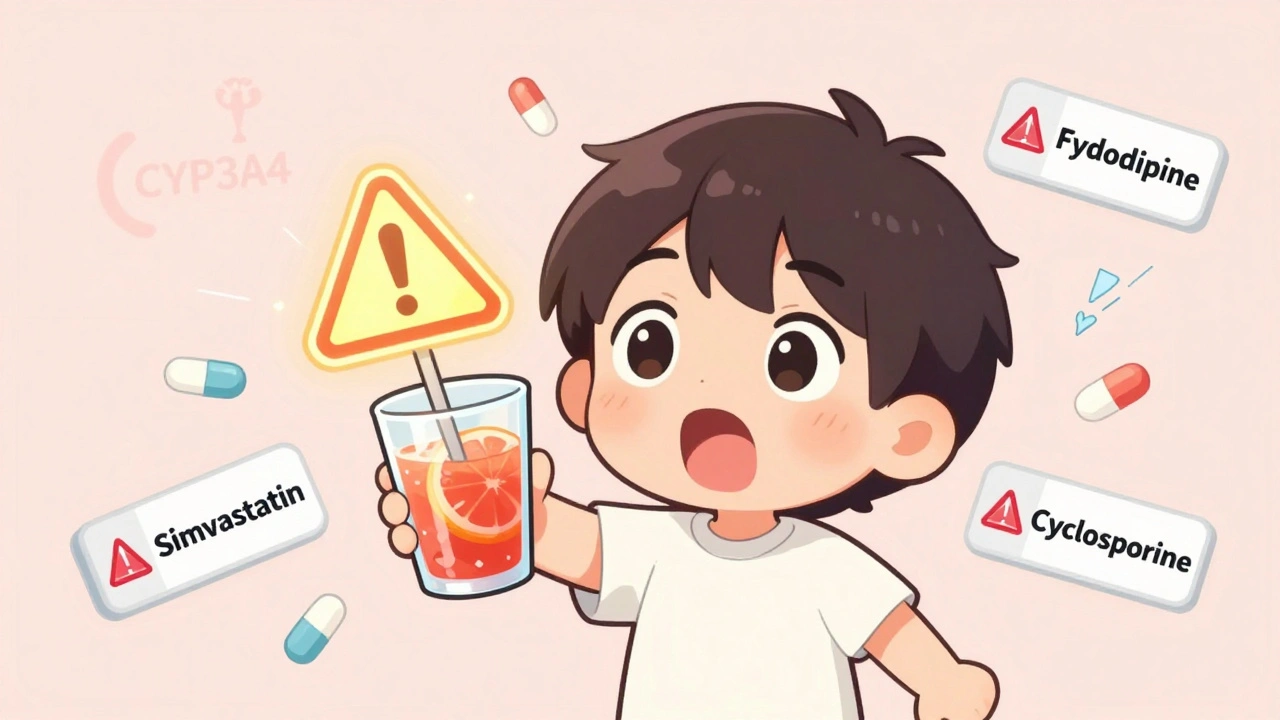
When you drink grapefruit juice, a common breakfast drink that can interfere with how your body processes certain medications. Also known as citrus fruit interaction, it’s not just a myth—it’s a real, documented risk that sends people to the ER every year. This isn’t about allergies or stomach upset. It’s about your liver and intestines. Grapefruit juice blocks an enzyme called CYP3A4 that normally breaks down drugs before they enter your bloodstream. When that enzyme is shut down, the drug builds up to dangerous levels—like turning a 5mg pill into a 20mg dose without you knowing.
That’s why blood pressure medications, like nifedipine and other calcium channel blockers can cause your heart rate to drop too low or your blood pressure to crash. It’s why cholesterol drugs, especially simvastatin and atorvastatin can lead to muscle damage so severe it causes kidney failure. Even sedatives, like some anti-anxiety pills and sleep aids, become stronger and longer-lasting, leaving you dizzy, confused, or worse. The problem? You can’t taste the difference. One glass of juice is enough. And it doesn’t matter if it’s fresh, frozen, or concentrate—it’s all the same.
It’s not just grapefruit. Seville oranges, pomelos, and some tangelos do the same thing. But regular oranges? Safe. Lemon? Fine. That’s why checking your meds isn’t enough—you need to check your breakfast. Pharmacists see this all the time: people on statins drinking juice, then showing up with muscle pain they can’t explain. Or someone on a heart rhythm drug feeling faint after a smoothie. These aren’t rare cases. The FDA and other health agencies have issued warnings for over 85 drugs linked to grapefruit. And many of those drugs are taken daily—by older adults, by people with chronic conditions, by people who think they’re being careful.
The fix? Simple. If you’re on any prescription, ask your pharmacist: "Does this interact with grapefruit?" If they say yes, skip it. No exceptions. No "just a little." No "I’ve been drinking it for years." Your body doesn’t build up a tolerance to this interaction—it just gets riskier over time. And if you’re not sure? Look up your medication on DailyMed or ask for a printed handout. Better safe than sorry. Below, you’ll find real-world examples of how this plays out with common meds—from heart pills to painkillers—and what to do when you’re already taking them.