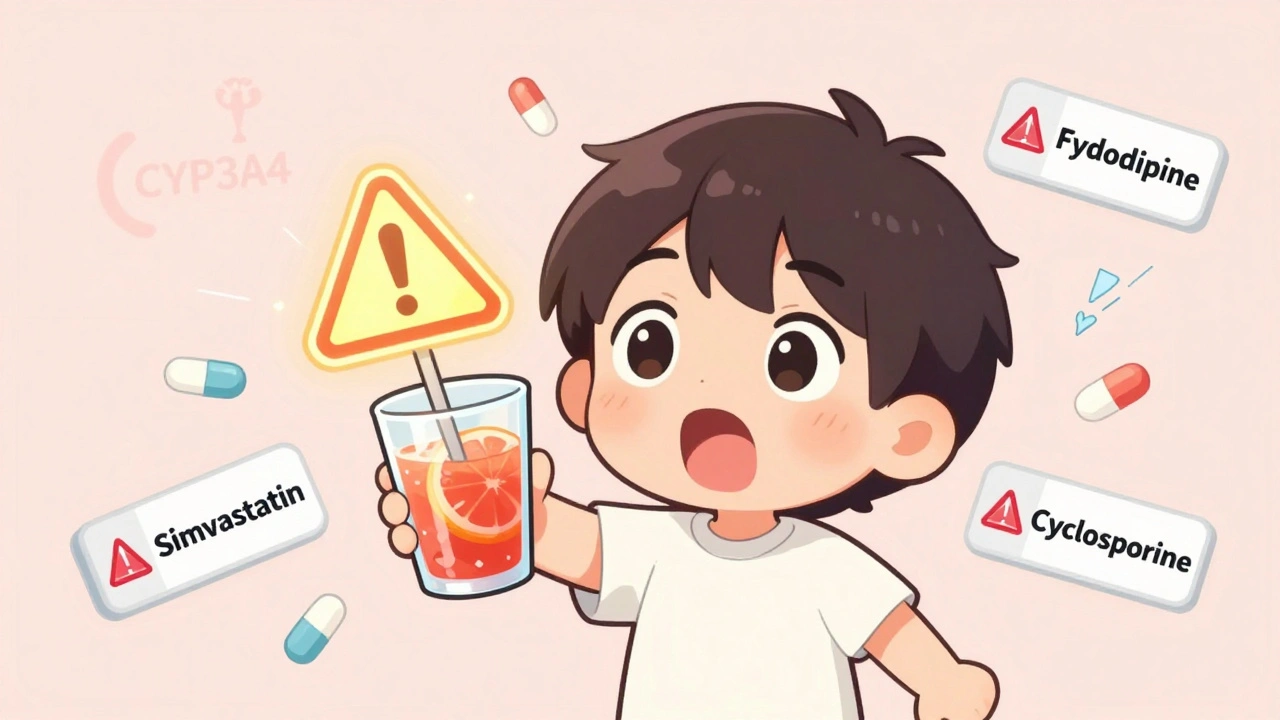
Drinking a glass of grapefruit juice in the morning might seem like a healthy habit-until it turns dangerous. For people taking certain medications, that refreshing citrus drink can turn into a silent threat. It doesn’t matter if you drink it with your pills or hours before. Once you start taking a medication that interacts with grapefruit, even a single glass can change how your body handles the drug-sometimes with life-threatening results.
Why Grapefruit Juice Changes How Your Medication Works
It’s not about the sugar or the vitamin C. The real culprit is a group of natural chemicals called furanocoumarins, found mostly in the pulp and peel of grapefruit. These compounds shut down an enzyme in your gut called CYP3A4, which normally breaks down about half of all oral medications before they enter your bloodstream. When that enzyme is blocked, your body absorbs way more of the drug than it should.
This isn’t a temporary glitch. Once furanocoumarins disable CYP3A4, your body needs 24 to 72 hours to make new enzymes. That means if you drink grapefruit juice on Monday, your system is still affected on Wednesday-even if you didn’t drink any on Tuesday. The FDA says this isn’t just a "don’t take them together" warning. It’s a "don’t drink it at all while you’re on this medication" rule.
And it’s not just grapefruit juice. Seville oranges (used in marmalade) and pomelos have the same chemicals. Sweet oranges, lemons, and limes? Safe. You can still enjoy those.
Medications That Can Become Dangerous With Grapefruit
More than 85 prescription drugs in the U.S. are known to interact with grapefruit. About 43 of them can cause serious, even fatal, side effects. Here are the most common and dangerous ones:
- Statins (cholesterol drugs): Simvastatin (Zocor) is the biggest risk. Just one glass of grapefruit juice can triple the amount of simvastatin in your blood. That raises your chance of rhabdomyolysis-a condition where muscle tissue breaks down and can damage your kidneys. Atorvastatin (Lipitor) has a smaller but still risky interaction. Pravastatin and rosuvastatin? No significant interaction. If you’re on simvastatin, talk to your doctor about switching.
- Calcium channel blockers (blood pressure meds): Felodipine (Plendil) and nifedipine (Procardia) can see their levels spike 5-fold and 3-fold, respectively. That can drop your blood pressure too low, cause dizziness, or even trigger heart rhythm problems. Amlodipine (Norvasc)? Minimal risk. Your doctor can switch you if needed.
- Immunosuppressants: Cyclosporine (Neoral), used after organ transplants, can increase by 50-60% with grapefruit. That raises the risk of kidney damage. Tacrolimus is a safer alternative for many patients.
- Antiarrhythmics: Amiodarone (Cordarone) can cause dangerous heart rhythms if grapefruit raises its levels. A 30-40% increase may not sound like much-but for your heart, it’s enough.
- Other high-risk drugs: Some anti-anxiety meds, certain opioids like fentanyl, and even some cancer drugs like docetaxel can be affected. Always check your label.
On the flip side, some medications show little to no interaction. Trazodone (for sleep or depression), zolpidem (Ambien), and many antibiotics like amoxicillin are generally safe. But don’t assume. Always ask.
Who’s at the Highest Risk?
You might think, "I only drink grapefruit juice once a week-it can’t hurt." But the risk isn’t about frequency. It’s about your body’s natural enzyme levels. Some people have more CYP3A4 in their gut than others. That means one person might get a 2-fold increase in drug levels, while another gets an 8-fold increase from the same glass. There’s no way to test for this before you start.
Older adults are especially vulnerable. People over 65 make up 40% of grapefruit juice drinkers in the U.S., and they’re also the group most likely to be taking 3 to 5 medications at once. Many of those meds-blood pressure pills, cholesterol drugs, painkillers-are on the dangerous list. The American Geriatrics Society says this group should avoid grapefruit entirely unless their doctor says otherwise.
Even if you’re young and healthy, if you’re on a high-risk medication, you’re not immune. The interaction doesn’t care about age, fitness, or diet. It’s purely biochemical.
What Should You Do If You’re on Medication?
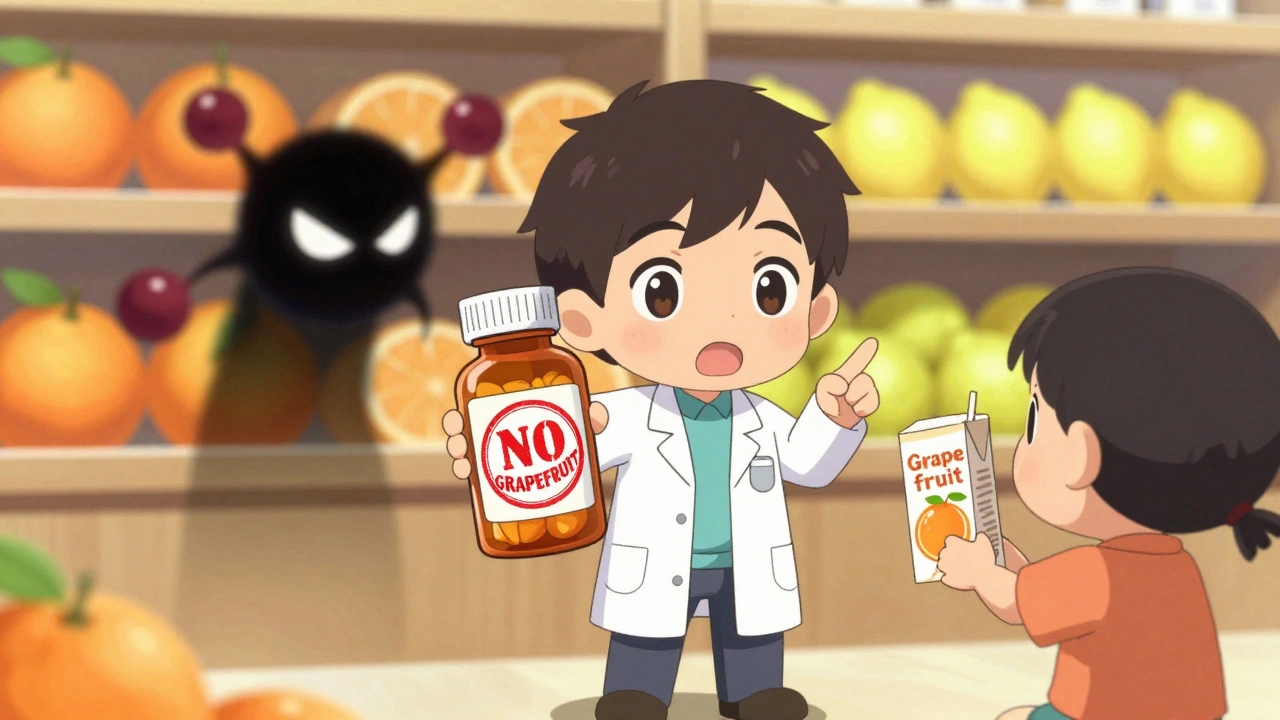
Step one: Don’t guess. Check your medication’s prescribing information. Since 2014, the FDA has required drugmakers to include grapefruit warnings on labels for affected drugs. If you’re unsure, look at the patient information sheet that came with your prescription. The wording will usually say: "Avoid grapefruit and grapefruit juice while taking this medication."
Step two: Talk to your pharmacist. They’re trained to catch these interactions. A 2021 study found that 89% of community pharmacists screen for grapefruit interactions when filling prescriptions. Ask them: "Does this medicine interact with grapefruit?" Don’t just rely on the doctor’s visit-pharmacists are your last line of defense.
Step three: Make a full list of everything you take. Include prescription drugs, over-the-counter meds, and supplements. Some herbal products, like St. John’s Wort, also affect CYP3A4. Bring this list to every appointment. If you’re taking a new drug, ask: "Is grapefruit safe with this?"
Step four: If you’re on a high-risk drug like simvastatin or cyclosporine, ask about alternatives. Switching from simvastatin to pravastatin or rosuvastatin removes the risk entirely. Switching from cyclosporine to tacrolimus can be safer too. These aren’t "better" drugs-they’re just safer with your habits.
What If I’ve Already Been Drinking Grapefruit Juice With My Meds?
If you’ve been drinking grapefruit juice with your medication and haven’t had any side effects, that doesn’t mean it’s safe. The interaction is silent. You won’t feel it happening. The danger shows up as muscle pain (from rhabdomyolysis), sudden dizziness (from low blood pressure), or irregular heartbeat (from arrhythmias)-often after days or weeks of exposure.
If you’ve been combining them, stop the juice immediately. Then call your doctor or pharmacist. Don’t wait for symptoms. They may want to check your drug levels or adjust your dose. For some drugs, like statins, even a single episode of grapefruit consumption can increase long-term risk.
And don’t think you can "outsmart" it by spacing out your doses. The enzyme stays blocked for days. Drinking grapefruit juice at breakfast and taking your pill at night? Still risky. The clock doesn’t reset after 8 hours.

What’s Being Done About It?
Regulators are catching up. Since 2017, the FDA has required all new oral drugs metabolized by CYP3A4 to be tested with grapefruit juice during development. The European Medicines Agency has similar rules. Drugmakers now have to prove their product is safe-even with grapefruit.
There’s also hope on the horizon. In October 2023, the USDA announced that CRISPR-edited grapefruit with 90% less furanocoumarin had passed early safety trials. These "safe grapefruits" aren’t on shelves yet, but they could one day let people enjoy the fruit without the risk.
Still, until then, the rule stays the same: if your drug has a grapefruit warning, avoid it completely.
What About Other Citrus Fruits?
Not all citrus is the same. Seville oranges (bitter oranges, used in marmalade) and pomelos contain the same furanocoumarins as grapefruit. Avoid them too.
Sweet oranges (like navel or Valencia), tangerines, lemons, and limes? They don’t contain those compounds. You can drink orange juice with your meds without worry. Same with lemon water. Just stay away from anything labeled "grapefruit" or "Seville orange."
And don’t assume "natural" means safe. Some grapefruit-flavored sodas, candies, or supplements may contain concentrated furanocoumarins-even if they don’t have real juice. Read labels.
Final Advice: When in Doubt, Skip It
There’s no safe amount of grapefruit juice if you’re on a high-risk medication. No timing trick. No "just one glass" loophole. The science is clear: the interaction is unpredictable, long-lasting, and potentially deadly.
If you’re taking any medication for high blood pressure, high cholesterol, heart rhythm, depression, anxiety, or after an organ transplant-ask your doctor or pharmacist if grapefruit is safe. If you’re not sure, skip it. Your body doesn’t need the juice. But it absolutely needs your meds to work the way they’re supposed to.
It’s not about giving up your morning routine. It’s about protecting your health. And sometimes, the safest choice isn’t the tastiest one.


Been on Lipitor for years and never knew grapefruit was even a thing until my pharmacist flagged it last month. Turned out my neighbor was giving me juice every Sunday ‘for the vitamin C’ - no idea it was a silent killer. Now I drink orange juice and feel way better. Simple swap, huge difference.
Let’s be real - the CYP3A4 enzyme isn’t just some biochemical footnote. It’s the gatekeeper of your pharmacokinetic destiny. Grapefruit doesn’t ‘interact’ - it hijacks. It’s like someone reprogramming your liver’s firewall while you’re asleep. And the FDA’s warning? Too little, too late. We’ve known this since the 90s. The real scandal is that drug companies still don’t redesign formulations to bypass this. Profit over physiology, always.
Wait… so you’re telling me the government knows this… and still lets them sell grapefruit juice next to statins at CVS? This isn’t negligence - it’s intentional. Big Pharma + Big Juice = corporate collusion. They want you sick. They want you dependent. The ‘safe alternatives’ they push? All patented. Everything’s a trap.
How quaint. You Americans treat medication like a vending machine snack. ‘Oh, I’ll just switch to rosuvastatin’ - as if biology is a menu option. In India, we’ve known for generations that citrus disrupts Ayurvedic formulations. The West only cares when it’s patented. Furanocoumarins? A buzzword for a problem your culture refuses to see until it’s monetizable.
lol ur all wrong. grapefruit dont even have furanocoumarins its the pesticides! the USDA is lying. i drank 3 glasses with my blood pressure med and felt fine. they just want you to buy their fake juice. also i heard the FDA is funded by orange juice lobbies. #truth
my grandma took simvastatin for 8 years and drank grapefruit juice every morning. she’s 89 and still hikes. you people act like this is some universal death sentence. maybe it’s not the juice - maybe it’s the fear you’re selling. i get it, fear sells clicks. but real people live with this every day. don’t scare folks into panic.
My dad’s on cyclosporine after his transplant. We stopped grapefruit cold turkey. No drama, no ‘what ifs.’ Just swapped to lemon water and called it a win. Honestly? The real takeaway isn’t the science - it’s the habit. If you’re taking meds, treat your diet like a safety protocol. No guesswork. No ‘just this once.’ Just clean. Simple. Safe.
💀 The enzyme is DEAD. 🍊 The juice is LIT. 🧬 The science is REAL. 🚫 No more ‘maybe’ - it’s a bio-weapon. You’re not ‘just drinking juice.’ You’re playing Russian roulette with your hepatocytes. Wake up. 🌞💊
It is imperative to underscore that the inhibition of the cytochrome P450 3A4 isoform by furanocoumarin derivatives constitutes a pharmacokinetic interaction of profound clinical significance. The temporal persistence of this effect - extending beyond 72 hours - renders temporal separation of ingestion and administration an ineffective risk mitigation strategy. Consequently, abstinence is not merely advisable - it is biochemically obligatory.
So let me get this straight - we’re supposed to believe that a fruit from a foreign country is more dangerous than the 12 pills we take daily? We’ve got Americans on statins, eating fast food, drinking soda, and now we’re blaming a citrus fruit? This is why our healthcare system is broken. You want to live longer? Stop taking so many drugs. Or better yet - move to a country that doesn’t turn every snack into a lawsuit waiting to happen.