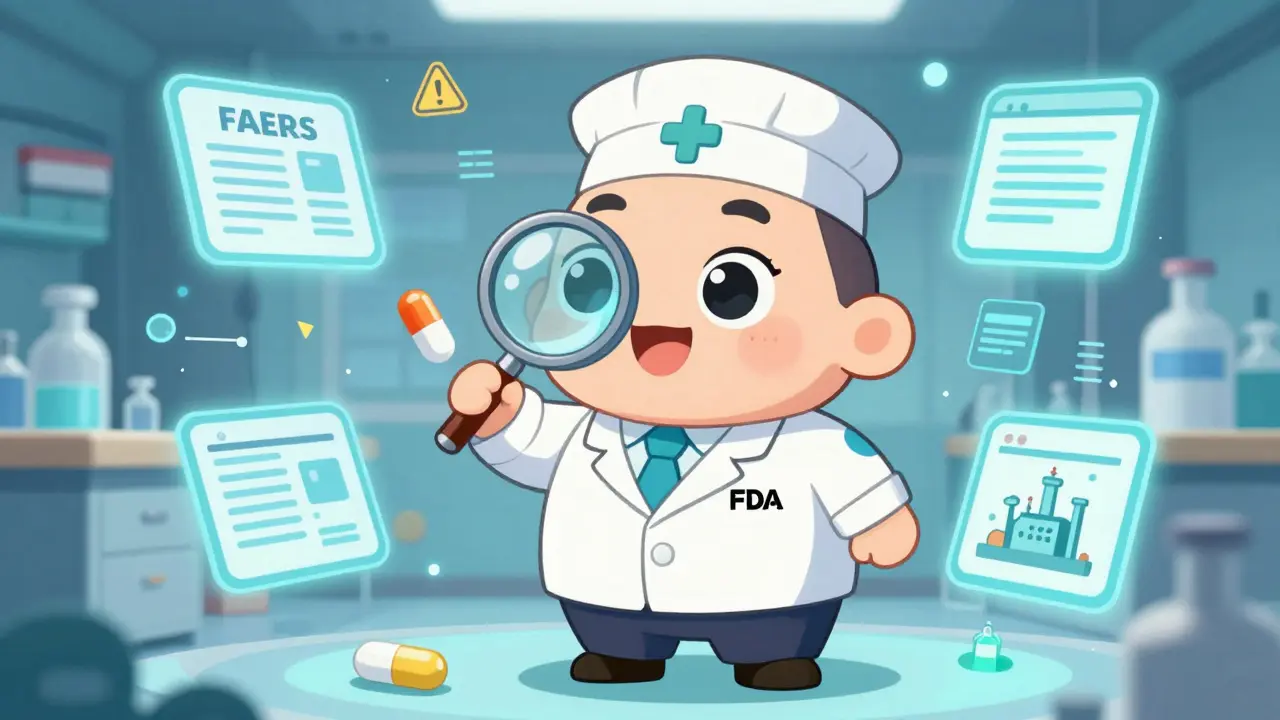
When you pick up a generic pill at the pharmacy, you expect it to work just like the brand-name version. And for the most part, it does. But how does the FDA make sure it stays safe after that pill hits the shelf? It’s not enough to approve a drug based on a few dozen healthy volunteers. Real-world use-thousands of people, different ages, other medications, chronic conditions-can reveal problems no lab ever caught. That’s where the real work begins.
How the FDA Tracks Problems After Approval
The FDA doesn’t just walk away after signing off on a generic drug. Its job shifts from checking if a drug works the same way, to watching what happens when millions start taking it. The backbone of this effort is the FDA Adverse Event Reporting System (a national database that collects reports of harmful side effects from doctors, pharmacists, patients, and drug makers). Every year, over 2 million reports flood into FAERS. These aren’t just random complaints-they’re data points. A spike in liver damage reports for a specific generic blood thinner? That’s a red flag. A cluster of dizziness cases linked to a new batch of generic seizure medication? That gets looked at immediately.
Behind the scenes, teams of epidemiologists, pharmacologists, and data scientists dig into these reports. They don’t just count them-they look for patterns. Did the problem show up only in older patients? Only after the drug was switched from one manufacturer to another? Was it tied to a specific lot number? The system is designed to catch signals, not just noise.
Why Generics Need Special Attention
Generic drugs aren’t exact copies. They’re required to have the same active ingredient, strength, and route of delivery as the brand-name version. But they can differ in fillers, coatings, dyes, or how quickly the pill breaks down in the body. These differences are tiny-often fractions of a percent-and legally allowed. But in rare cases, they matter.
Take a patient on a narrow therapeutic index drug-like warfarin or levothyroxine. A slight change in how the body absorbs the medicine can mean the difference between a safe dose and a dangerous one. That’s why the Office of Generic Drugs (the FDA unit responsible for overseeing the safety and quality of all generic medications) doesn’t just rely on reports. It actively screens data from multiple sources, including hospital records and pharmacy claims, looking for unusual trends.
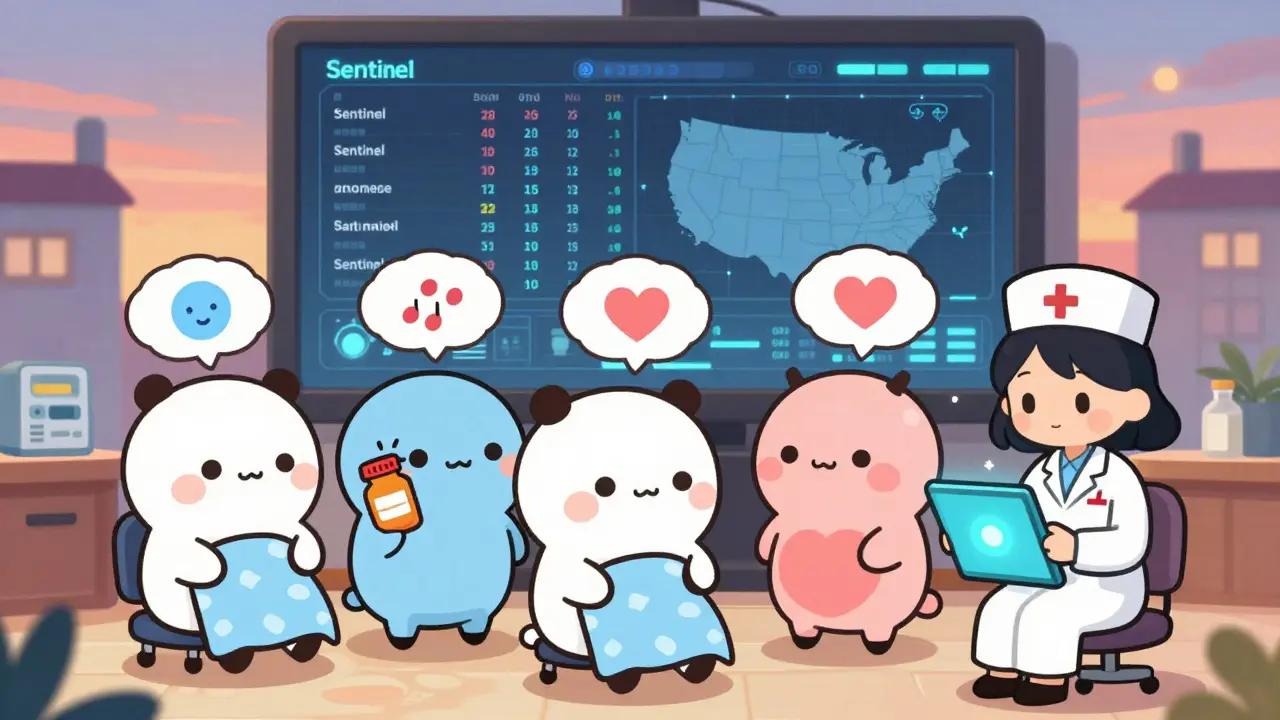
Manufacturers are required to report any quality issues they find. But the FDA also uses its own tools. The Sentinel Initiative (a real-time surveillance network using electronic health records from over 100 million patients across U.S. healthcare systems) lets FDA scientists look for adverse events as they happen-without waiting for someone to file a report.
Factory Checks: Quality Isn’t Just About the Ingredient
Most people think safety is about what’s inside the pill. But what happens on the factory floor matters just as much. The FDA inspects over 1,800 drug manufacturing sites every year-about 1,200 in the U.S. and 600 overseas. These aren’t scheduled visits. Many are unannounced.
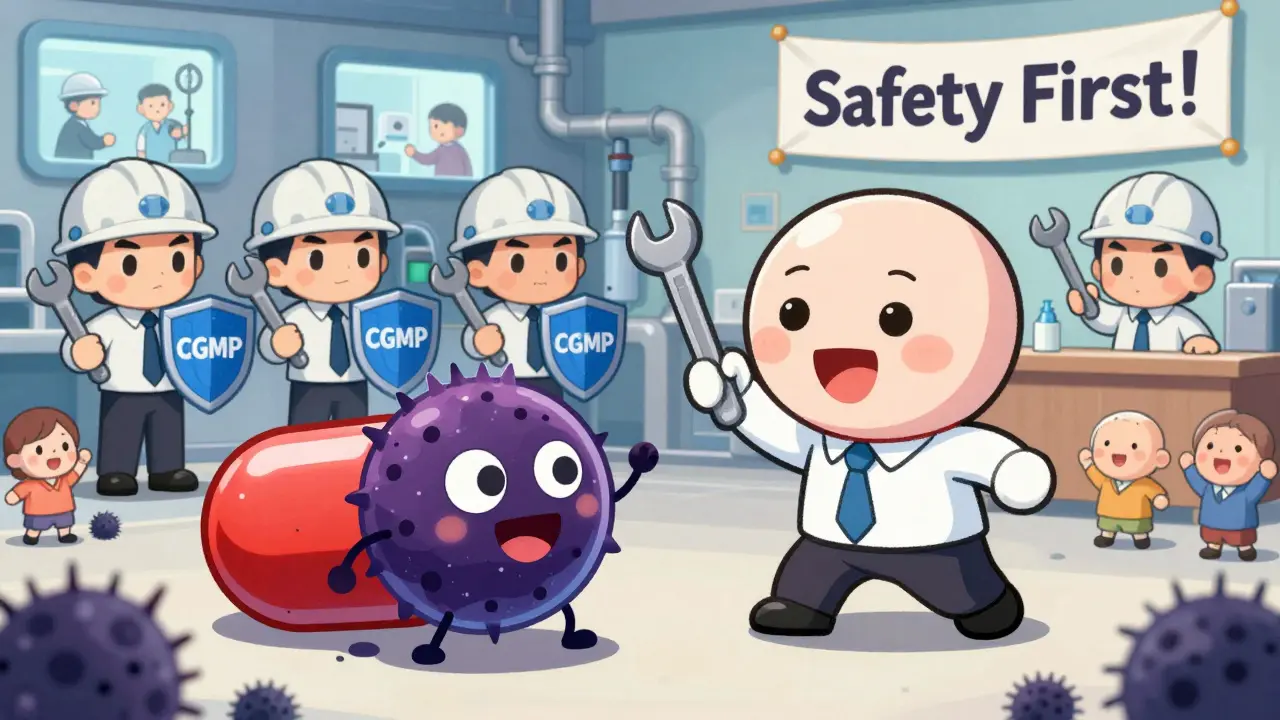
Inspectors check everything: Are raw materials stored properly? Are machines calibrated? Is the lab testing each batch for purity? Even a small contamination-like a trace of mold or a wrong chemical-can turn a safe drug into a dangerous one. The Current Good Manufacturing Practices (the FDA’s strict rules for how drugs must be made, tested, and packaged) are enforced with real consequences. Factories that fail inspections can be shut down. Products can be recalled. Companies can be barred from selling in the U.S.
Reporting Is Everyone’s Job
Here’s something most people don’t know: you can report a bad reaction to a generic drug. The MedWatch (the FDA’s online portal for reporting adverse events from patients and healthcare providers) system is open to anyone. A patient who felt dizzy after switching generics? A nurse who saw a rash appear after a new batch? These reports matter. In fact, over half of all safety signals for generics start with a report from a patient or clinician.
But here’s the catch: only about 1% to 10% of adverse events are ever reported. Most people don’t know they can, or think it’s not worth it. That’s why the FDA doesn’t wait. It uses algorithms to scan millions of records, looking for clusters that no one has flagged yet. It’s like having a digital watchdog that never sleeps.
What Happens When Something Goes Wrong?
When the FDA finds a real problem, it doesn’t just issue a warning. It acts.
- Label updates: New warnings get added to the drug’s package insert. Doctors and pharmacists see them immediately.
- Dear Healthcare Provider letters: These are direct emails or mailings to prescribers, telling them about a risk they might not know.
- Product recalls: If a batch is contaminated or mislabeled, it’s pulled from shelves. Sometimes, the entire product line is pulled.
- Manufacturing shutdowns: If a plant repeatedly fails inspections, the FDA can stop it from producing drugs until fixes are made.
These aren’t rare. In 2023 alone, over 300 generic drug recalls were issued by the FDA. Most were small-like a single lot of pills with the wrong label. But some were big. In 2022, a generic version of a popular heart medication was pulled after reports of irregular heart rhythms. The FDA traced it to a change in an inactive ingredient that affected how the drug dissolved in the stomach.
The Bigger Picture: Why This Matters
Generic drugs make up 90% of all prescriptions filled in the U.S. But they cost only 23% of what brand-name drugs do. That’s huge for patients, insurers, and the health system. If these drugs aren’t safe, the ripple effect is massive.
That’s why the FDA’s system is funded through user fees paid by generic manufacturers. Under the Generic Drug User Fee Amendments (a funding framework that requires manufacturers to pay fees to support FDA review and monitoring), companies pay over $65 million a year to keep the surveillance system running. That money pays for staff, technology, inspections, and data analysis.
And it’s working. Since 2012, when GDUFA was first introduced, the number of quality-related recalls has dropped by nearly 40%. The time it takes to respond to a safety signal has shrunk from months to weeks.
What’s Next?
The FDA isn’t resting. With more complex generics hitting the market-like inhalers, patches, and injectables-the challenges are growing. These drugs are harder to replicate exactly. A tiny difference in particle size or spray pattern can change how well a drug works.
The 2023 GDUFA III (the latest funding and oversight agreement between the FDA and generic drug manufacturers, effective through 2027) includes new rules specifically for these complex products. The Sentinel Initiative is expanding to include more data sources, including Medicare and Medicaid records. By 2025, it aims to cover 100 million patients.
There’s still room for improvement. Experts say better reporting tools for patients, more transparency about which manufacturers produce which generics, and clearer labeling on therapeutic equivalence could help. But right now, the system is the most advanced in the world.
Generic drugs are one of the biggest success stories in modern medicine. But their safety isn’t automatic. It’s monitored, tested, and defended-every single day.
Are generic drugs as safe as brand-name drugs?
Yes, for the vast majority of people, generic drugs are just as safe and effective as their brand-name counterparts. The FDA requires them to meet the same strict standards for quality, purity, and strength. But because generics can have different inactive ingredients or manufacturing methods, rare side effects or absorption issues can occur in specific individuals. That’s why ongoing monitoring is critical.
Can I report a side effect from a generic drug?
Absolutely. Anyone-patients, caregivers, doctors, or pharmacists-can report adverse events through the FDA’s MedWatch system. Reports can be filed online, by mail, or by phone. These reports are vital to detecting safety issues early. Even if you’re unsure whether the drug caused the problem, report it. The FDA uses patterns, not single cases, to make decisions.
Why do some people say generics don’t work the same?
Sometimes, it’s not that the generic doesn’t work-it’s that the body reacted to a change. Switching from one generic to another, or from brand to generic, can cause noticeable differences in how a drug feels, especially for drugs with a narrow therapeutic index (like thyroid meds or blood thinners). These aren’t failures of the system-they’re signals the FDA tracks. The agency investigates whether the issue is due to formulation, manufacturing, or individual sensitivity.
How often does the FDA inspect generic drug factories?
The FDA inspects over 1,800 manufacturing sites each year, with roughly half of those inspections happening without notice. Domestic facilities are inspected every 2 to 4 years on average, while foreign sites-especially those supplying a large portion of U.S. generics-are inspected more frequently. Facilities that fail inspections can be blocked from selling in the U.S. until they fix the issues.
What’s the difference between FAERS and Sentinel?
FAERS relies on voluntary reports from doctors and patients, which means many events go unreported. Sentinel uses real-time data from electronic health records across millions of patients, letting the FDA spot trends as they happen. FAERS is good for catching unusual reactions; Sentinel is better for spotting patterns in large populations. Together, they give the FDA a full picture.
Do all generic drugs come from the same place?
No. Over 70% of generic drugs sold in the U.S. are made overseas, mostly in India and China. The FDA inspects these facilities just like U.S. ones, but distance and language barriers make oversight harder. That’s why the agency has increased its foreign inspection capacity and now uses third-party auditors to help verify compliance.

I've been on generic levothyroxine for 5 years. Switched brands once, and my heart started racing like I'd chugged 3 energy drinks. Took me 3 weeks to figure out it was the pill. FDA needs to force manufacturers to list the filler ingredients on the bottle. People are dying because we're in the dark. 🤬
Oh wow, the FDA actually does something useful? 🤯 I thought they just took selfies with pharma CEOs and called it a day. Guess I'm just naive. 😘
The system described here is remarkably robust. The integration of FAERS and Sentinel creates a feedback loop that is both reactive and predictive. What is often overlooked is that the statistical power of real-world data far exceeds that of clinical trials. The FDA's approach is a model for global regulatory bodies.
So basically, the FDA watches your meds like a hawk. If something weird happens after you switch generics, they’re already looking. That’s kinda comforting. Most people don’t even know they can report side effects. Just go to MedWatch. Takes 2 minutes. Do it.
I work in a pharmacy. People freak out when their generic looks different. I tell them: same active ingredient. Same dose. Just a different dye. But yeah, I’ve seen a few cases where the switch messed with people on blood thinners. Not often. But when it happens? It’s scary. Report it. Even if you think you’re overreacting.
It’s easy to feel like generics are a gamble. But the truth? Most of them are rock solid. The FDA doesn’t just approve them and forget. They’re watching. They’re checking factories. They’re tracking side effects in real time. You’re safer than you think. Keep taking your meds. You’re doing the right thing.
I'm not convinced. I mean, REALLY? 1,800 inspections a year? That's less than 1 per facility every 2 years. And half are unannounced? That's not oversight. That's a game of hide-and-seek. Also, why are we letting China make 70% of our pills? 🤔
This whole system is a performance. A theatrical illusion of safety. The FDA doesn't 'watch' - it reacts. And only after hundreds, maybe thousands, are harmed. The data is collected, yes. But the power to act? It’s buried under bureaucracy, lobbying, and funding cycles. We're not protected. We're being used as test subjects for a broken model. The truth? It's not that generics are unsafe. It's that we're not supposed to know how fragile this system really is.
USA thinks it's the only one with regulatory oversight? LOL. India has been manufacturing 70% of the world's generics for decades. Our facilities are ISO-certified, FDA-inspected, and more transparent than your local Walgreens. You think your 'Sentinel Initiative' is revolutionary? We've been using AI-driven batch analytics since 2018. Your 'real-time surveillance'? We call it Tuesday. Stop acting like you're saving lives - we've been doing it while you were still arguing over label fonts.