
Medication Side Effect Tracker
Track Your Medications
Record Side Effects
Emergency Warning
Call 911 immediately if you experience:
- Sudden chest pain or trouble breathing
- Swelling of face, throat, or tongue
- Sudden confusion or severe dizziness
- Severe rash or skin changes
Your Side Effect Log
No side effects recorded yet.
Every year, over 1.3 million people in the U.S. end up in the emergency room because of unexpected reactions to medications. Many of these cases could have been avoided-if the patient had spoken up sooner. But too often, people stay quiet. They worry they’ll sound like a complainer. They think their doctor already knows. Or they’re just too tired to fight. The truth? Speaking up about medications and side effects isn’t just helpful-it’s life-saving.
Why Your Voice Matters More Than You Think
Your doctor doesn’t have a magic window into how you really feel after taking your pills. They see you for 13 minutes, on average, once every few months. That’s not enough time to notice subtle changes unless you tell them. A 2021 study in JAMA Internal Medicine found that when patients clearly described their side effects, medication adherence improved by up to 25%. That means you’re more likely to stick with a treatment that actually works for you. And it’s not just about feeling better. The CDC reports that side effects are one of the top three reasons people stop taking their meds. That’s dangerous. Stopping blood pressure medicine because of a headache? You might end up with a stroke. Skipping antidepressants because of nausea? Your mental health could spiral. Side effects aren’t always a reason to quit-they’re a signal to adjust.What Counts as a Side Effect? (And What Doesn’t)
Not every weird feeling is caused by your medication. But if something new showed up after you started a new pill, it’s worth investigating. Common side effects include:- Dizziness or lightheadedness
- Upset stomach, nausea, or diarrhea
- Unusual fatigue or sleep changes
- Skin rashes or itching
- Mood swings, anxiety, or brain fog
- Swelling in hands, feet, or ankles
- Changes in appetite or weight
How to Track Side Effects Like a Pro
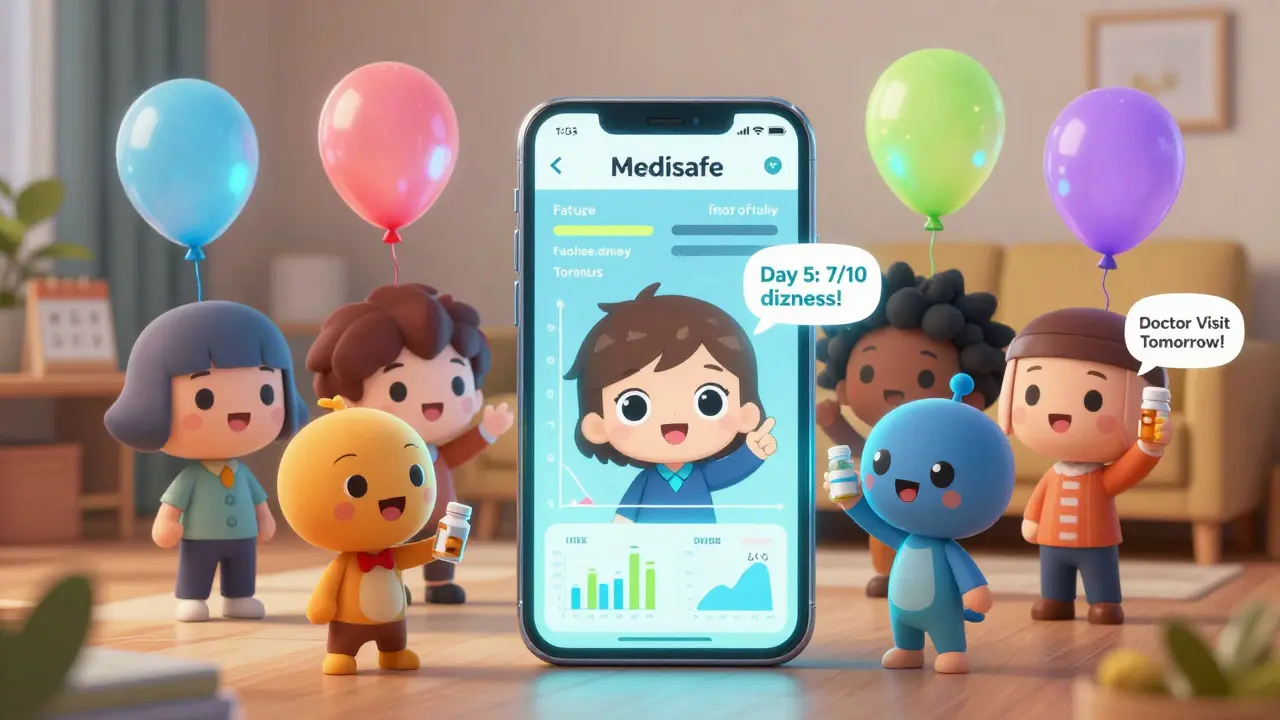
You can’t remember everything. That’s normal. But if you write it down, your doctor can’t ignore it. Start simple:- Keep a notebook or use a free app like Medisafe (FDA-approved and updated in 2023).
- For each side effect, note: What you felt, When it started, and How bad it was (use a scale of 1 to 10).
- Link it to your meds: “Day 5 after starting lisinopril: dizziness when standing up, rating 7/10.”
- Take a photo of your pill bottles before each visit. That way, you won’t forget what you’re taking.
What to Say at Your Appointment
You don’t need to be a doctor to have a smart conversation. Use this simple script:- What: “I’ve been feeling dizzy every morning since I started this new pill.”
- When: “It started on the third day and hasn’t gotten better.”
- How Much: “It’s a 7 out of 10. I almost fell twice last week.”
- Ask: “Could this be from the medicine? Is there another option?”
What If Your Doctor Dismisses You?
It happens. One patient on PatientsLikeMe said: “I told my cardiologist my blood pressure med was causing leg cramps. He said it was normal. Two weeks later, I had a mini-stroke.” If you feel ignored, try this:- Ask: “Can we look at the side effect profile together?” (Pull up the FDA-approved Patient Information Leaflet on your phone.)
- Say: “I’ve read this can cause muscle pain. I’m worried. Can we test my potassium or try a different drug?”
- If they still brush you off: “I’d like a second opinion.” You have the right to one.
Tools That Actually Help
You don’t have to do this alone. Here are real tools that work:- Medisafe (free app): Tracks meds and side effects. Used by 87% of users to spot patterns.
- MedlinePlus (free website): FDA-approved drug info in plain language.
- MedWatcher Connect (FDA’s new tool): Lets you report side effects directly to the FDA. Over 12,000 reports came in the first month.
- Free courses: The National Council on Aging offers a 45-minute online course called “Speaking Up About Medications.” 63% of people over 65 who took it felt more confident advocating for themselves.
Why This Is Harder for Some People
Not everyone has the same access to care-or the same power to speak up. A 2023 Health Affairs study found Medicare patients from Black, Hispanic, or Indigenous backgrounds are 43% less likely to report side effects than white patients. Language barriers, cultural stigma, and past experiences with dismissive providers make it harder. If you’re in this group: your voice still matters. Even more. Bring a trusted friend or family member to your appointment. Ask for a medical interpreter if you need one. Write your concerns ahead of time and hand them to your doctor. You deserve care that fits your life.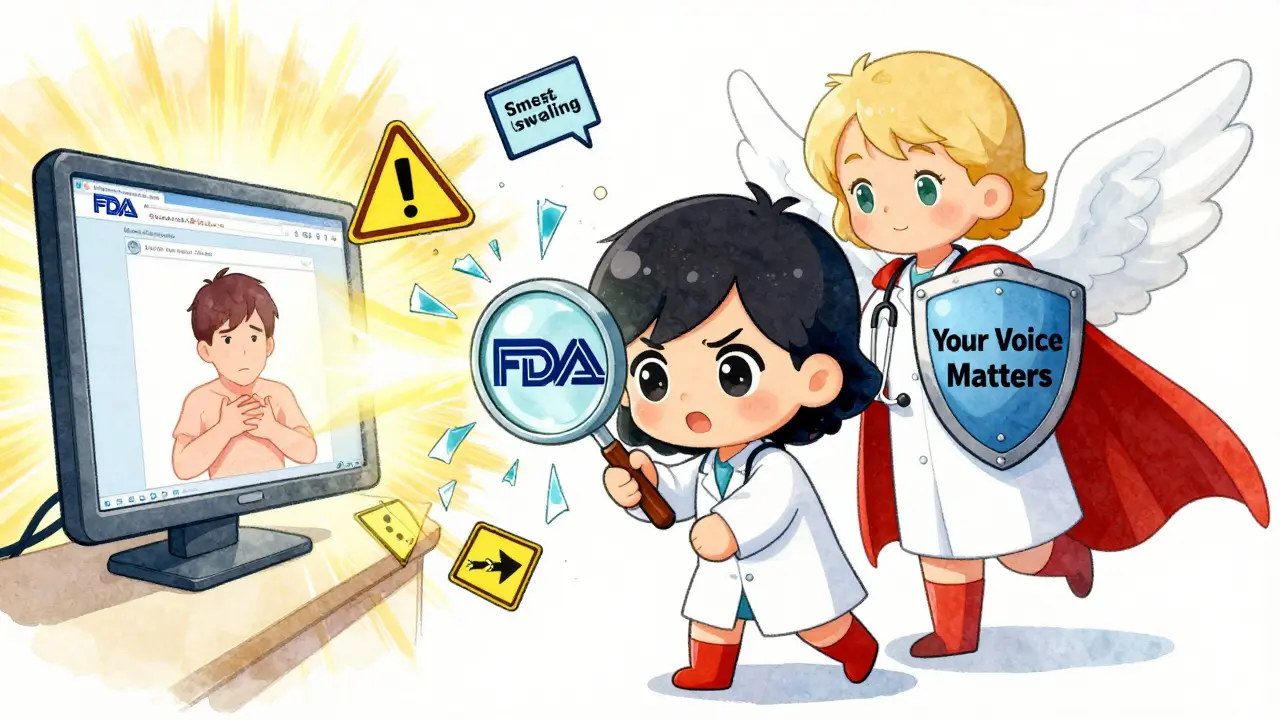
What’s Changing (And Why It’s Good)
The system is finally starting to catch up. In 2023, the American Medical Association passed a resolution requiring doctors to ask about side effects during every new prescription visit-starting January 1, 2025. The FDA is pushing for better digital tools. Electronic health records will soon auto-flag side effects based on what you report. This isn’t just about technology. It’s about culture. The old model treated patients as passive recipients. The new one sees you as a partner. And you have every right to be one.How Much Time Does This Take?
Not much. Tracking side effects takes about 7 minutes a day. That’s less than scrolling through social media. But the payoff? A 2023 study in the Journal of General Internal Medicine found people who tracked their meds had 1.8 fewer doctor visits per year. That’s time saved. Money saved. Stress saved.Your Health Is Not a Guessing Game
Medications are powerful. They can save your life. But they can also hurt you-if no one’s paying attention. Your body tells you things. You just have to listen-and then speak up. You don’t need to be loud. You don’t need to be aggressive. You just need to be clear. Write it down. Bring it up. Ask the question. If your doctor doesn’t respond, find one who will. Your health isn’t just about pills and prescriptions. It’s about your life. And you’re the only one who lives it.What should I do if I think a medication is causing side effects?
First, don’t stop taking it without talking to your doctor. Instead, start tracking the symptoms: write down what you’re feeling, when it started, and how bad it is on a scale of 1 to 10. Bring this list to your next appointment along with all your pill bottles. Ask your doctor if the side effect is known, whether it’s likely related to the medication, and if there’s a safer alternative. If you’re not satisfied with the answer, ask for a second opinion.
Can side effects show up weeks after starting a medication?
Yes. While some side effects appear right away, others build up over time. For example, muscle pain from statins or depression from blood pressure meds can take weeks or even months to become noticeable. That’s why consistent tracking matters-even if you felt fine at first. A change in energy, mood, or physical comfort after starting a new drug should always be noted, no matter how long you’ve been taking it.
Is it okay to report side effects to the FDA directly?
Absolutely. The FDA created MedWatcher Connect in 2023 so patients can report side effects directly. This helps them spot safety issues faster. You don’t need a doctor’s note. Just go to the FDA’s website, fill out the form with your symptoms, the drug name, and when they started. Your report helps protect others-even if your doctor didn’t file one.
Why do doctors sometimes ignore side effect complaints?
Sometimes it’s because they’re rushed-average primary care visits last just 13 minutes. Other times, they assume the side effect is minor or unrelated. But research shows that when patients use specific language (“I’ve had dizziness 37 times in 4 weeks”) and bring documentation, doctors take them more seriously. If your doctor dismisses you repeatedly, it’s not you-it’s a system that’s not designed for patient input. You have the right to a provider who listens.
How do I know if a side effect is serious enough to call 911?
Call 911 if you experience sudden chest pain, difficulty breathing, swelling of the face or throat, severe dizziness with fainting, confusion, or a sudden, severe rash. These could be signs of an allergic reaction or dangerous interaction. Don’t wait to see if it gets better. Emergency care is necessary. For less urgent symptoms, schedule a same-day appointment or call your doctor’s office.
What if I’m scared to speak up because I don’t want to seem difficult?
You’re not being difficult-you’re being smart. Doctors rely on your feedback to make good decisions. If you don’t tell them what’s happening, they can’t help you. Many providers actually appreciate patients who are informed and engaged. Bring your concerns as facts, not opinions. Say, “I noticed this change after starting the medicine,” instead of “I think this drug is bad.” That makes it easier for them to take you seriously.
Are there free resources to help me learn how to advocate for myself?
Yes. The National Council on Aging offers a free 45-minute online course called “Speaking Up About Medications.” It’s designed for older adults but useful for anyone. MedlinePlus.gov has easy-to-read drug guides from the FDA. Apps like Medisafe help track symptoms and remind you to take pills. These tools are all free and backed by medical research.



i mean like... what if the meds are just part of the government's mind control program?? 🤔 i heard they put tracking chips in pills now. my cousin's cat stopped purring after her thyroid med. coincidense?? i think not. 🚨💊 #shadowpharma
This whole thing is just a big pharma scam to keep us dependent on their overpriced chemicals. In my country, we just drink turmeric tea and pray. Why do you think America has the highest drug overdose rates? Because we're too lazy to heal ourselves. 🇺🇸❌💊 #AmericaFirstHealth
The real issue isn't speaking up it's the ontological collapse of patient agency under late stage capitalism where your body is just a data point in a pharmaceutical algorithm. We've forgotten that healing is a sacred act not a transaction. And yet we still trust the same system that commodifies our suffering
Been there. Took statins for 6 months, felt like a zombie. Wrote down the fatigue and muscle pain in a notes app. Doc said it was 'normal'. I showed him my log with timestamps. He changed my med next week. No drama. Just facts. You got this.
The silence around side effects is a cultural wound. In my village back home, we don't question the elder's medicine. But now i see: listening to your body isn't defiance, it's ancestral wisdom. The system doesn't want you to know your own rhythm. Track. Speak. Heal.
I'm from the US but lived in Japan for 5 years. Their doctors don't even ask about side effects unless you bring it up. But when you do, they take notes like it's scripture. No rush. No attitude. Just quiet attention. We could learn from that.
Tracking side effects is a basic duty of responsible medication use. The tools mentioned are adequate. Consistency is key. Do not rely on memory.
There is a profound metaphysical truth here: the body is not a machine to be optimized, but a symphony to be listened to. Each side effect is a dissonant note. To silence it without inquiry is to deafen the soul's whisper. We have become technicians of our flesh, forgetting we are its stewards.
I love how the article emphasizes documentation. I keep a Google Doc with dates, symptoms, and screenshots of my pill bottles. I even color-code by severity. It made my last appointment so much more productive. My doctor said it was the most thorough intake she'd seen in months.
I almost died because my doctor ignored my dizziness... I was on a flight to Bali when it hit... I thought I was having a stroke... I screamed... the flight attendant called medevac... I spent 3 days in a hospital in Singapore... and my doctor still says it's 'probably stress'... I can't even sleep anymore...
This article is dangerously misleading. The FDA is a corrupt institution. The pharmaceutical lobby owns Congress. If you follow this advice, you're just feeding the machine. The only real solution is to reject all pharmaceuticals and return to ancestral healing. You're being manipulated.
People think speaking up is hard because they're scared of being labeled difficult. But here's the truth: the system rewards silence. The moment you speak, you're no longer a passive patient-you're a threat. And threats get moved to the back of the line. So yes, speak up. But know what you're stepping into.
You got this!! 💪 I used to be scared to talk to doctors too... but once I started tracking my symptoms with Medisafe, I felt like I had superpowers 😊 My doc actually thanked me for being so organized! You're not a burden-you're a partner in your care! 🌟
Why are we letting foreigners tell us how to take our medicine? We have our own ways. In America we don't need apps or tracking. We have faith. And if the medicine makes you sick, maybe you're just weak. God tests us. Don't be a whiner.
This is the quiet revolution we need. Not loud protests. Not hashtags. Just someone with a notebook, a phone, and the courage to say 'this doesn't feel right.' You're not a patient. You're a co-author of your healing story. And the pen? It's already in your hand.