
Every year, over 80 million Americans deal with sneezing, itchy eyes, and a runny nose - not because they’re sick, but because their body is overreacting to pollen, dust, or pet dander. The good news? You don’t need a prescription to feel better. Over-the-counter antihistamines are the most common fix, but with so many options on the shelf - Zyrtec, Claritin, Allegra, Benadryl - how do you pick the right one? And how much should you take? It’s not just about grabbing the cheapest bottle. The difference between a good choice and a bad one can mean the difference between a productive day and an afternoon spent napping on the couch.
First-Generation vs. Second-Generation: The Drowsiness Divide
Not all antihistamines are created equal. There are two main types: first-generation and second-generation. The big difference? Sedation. First-generation antihistamines like diphenhydramine (Benadryl) and chlorpheniramine (Chlor-Trimeton) cross into your brain and block histamine receptors there - which is why they make you sleepy. About half of people who take Benadryl feel drowsy, according to a 2019 study in the Journal of Allergy and Clinical Immunology. That’s fine if you’re taking it at night for a bad allergy flare-up, but terrible if you’re driving, working, or trying to focus on your kids’ homework.
Second-generation antihistamines - cetirizine (Zyrtec), loratadine (Claritin), and fexofenadine (Allegra) - were designed to stay out of the brain. They block histamine where it matters: in your nose, eyes, and throat. That’s why they’re called non-drowsy. But “non-drowsy” doesn’t mean “no drowsiness.” Zyrtec still causes sleepiness in 10-15% of users. Claritin affects about 5-10%. Allegra? Only 2-5%. If you’ve ever taken Benadryl and felt like you’d been hit by a truck, you’ll appreciate the difference.
Which One Works Best? The Evidence Breakdown
There’s no single “best” antihistamine - but some clearly work better for certain people and symptoms. Here’s what the data says:
- Zyrtec (cetirizine) starts working in about an hour - faster than the others. It’s also the strongest in terms of receptor binding, meaning it blocks more histamine. A 2018 meta-analysis found it delivered 23% more symptom relief than Claritin for moderate to severe allergies. But that power comes with a trade-off: more people report feeling tired. If your allergies are bad and you can afford to nap afterward, Zyrtec is a top pick.
- Claritin (loratadine) is the mildest. It’s less effective for severe symptoms, with some users saying it barely helps. But it’s the most predictable. It has fewer drug interactions, especially with common antibiotics like azithromycin. If you’re on multiple meds or just want something gentle, Claritin is low-risk. It’s also the most affordable in generic form.
- Allegra (fexofenadine) is the least likely to make you sleepy. It doesn’t cross the blood-brain barrier at all. Studies show it has the best effectiveness-to-sedation ratio for daytime use. But here’s the catch: it doesn’t work well if you take it with orange or grapefruit juice - those can cut its absorption by up to one-third. Take it with water only.
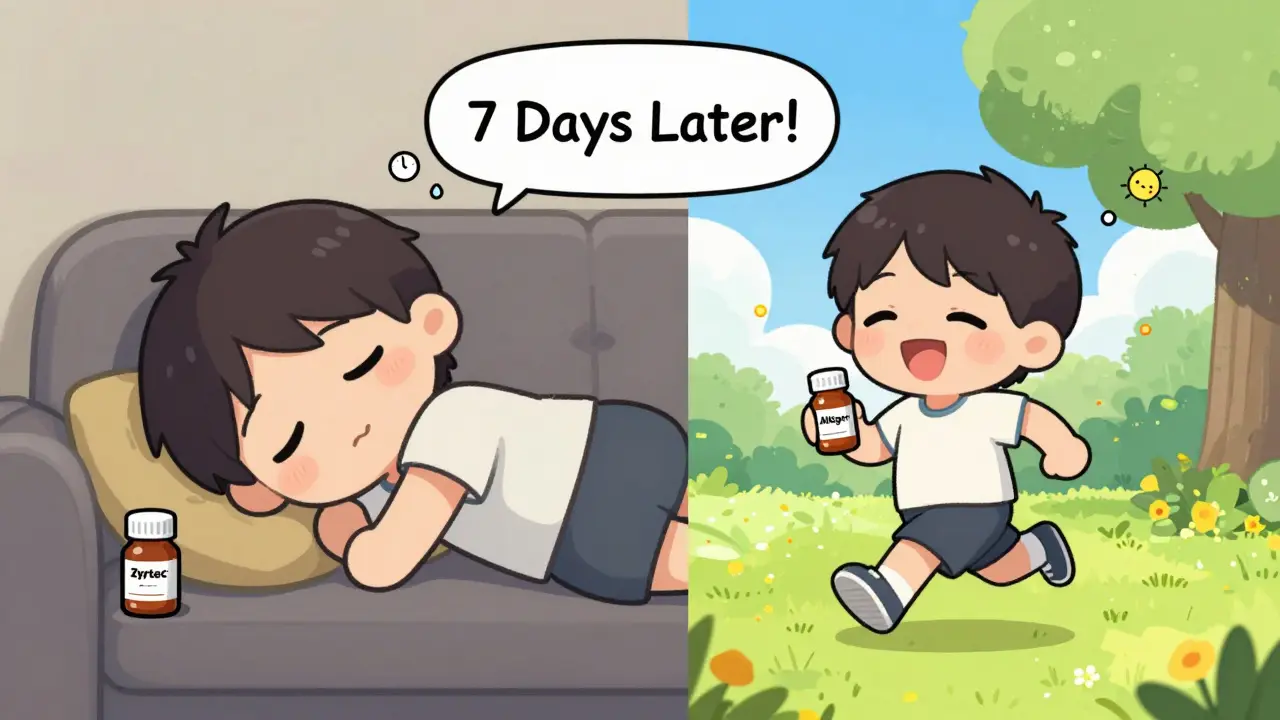
Pharmacists at CVS and Walgreens say 60% of allergy consultations are about choosing between these three. The answer isn’t in the packaging - it’s in your body. Try one for 7-10 days. If it doesn’t help, switch. The American College of Allergy, Asthma, and Immunology now recommends trying two different second-generation antihistamines before turning to prescriptions.
Dosing: More Isn’t Better
It’s tempting to take two pills if one doesn’t seem to work. Don’t. The FDA has clear guidelines for a reason. The standard adult dose for cetirizine is 10mg once daily. Go higher - say, 20mg - and you don’t get better relief. You just increase your chance of drowsiness by 40%, with no added benefit. Same with loratadine: stick to 10mg. Fexofenadine is either 180mg once a day or 60mg twice a day. Never mix doses unless your doctor says so.
Also, timing matters. These meds take 1-3 hours to kick in. If you’re stuck in a room full of cat hair and need relief now, Zyrtec is your best bet - it works fastest. Benadryl can help in 15-30 minutes, but again, you’ll pay for it with drowsiness. For chronic allergies, take your antihistamine at the same time every day. Don’t wait until symptoms hit. Prevention beats reaction.

Decongestant Combos: Fast Relief, But Risky
If your nose is completely stuffed, you might be tempted by Zyrtec-D, Claritin-D, or Allegra-D. These combine an antihistamine with pseudoephedrine, a decongestant that shrinks swollen nasal passages. They work - studies show they give 35% more relief for congestion than antihistamines alone. But here’s the catch: pseudoephedrine raises your blood pressure. On average, it increases systolic pressure by 3-5 mmHg. If you have high blood pressure, heart problems, or an overactive thyroid, skip these. You’ll need to show ID to buy them because of the Combat Methamphetamine Epidemic Act - they’re kept behind the counter. And they can keep you awake at night. Use them only for short-term relief, not daily.
Real People, Real Results
What do actual users say? On Reddit’s r/Allergies, 68% of over 1,200 respondents picked Zyrtec for severe symptoms, even though they knew it would make them sleepy. Another 22% chose Allegra for daytime use. Amazon reviews back this up: Zyrtec has a 4.4/5 rating, with users praising how fast it works - “30 minutes and my eyes stopped itching.” But 27% of negative reviews say, “I can’t function at work.” Claritin gets 4.2/5, with “non-drowsy” as the top positive, but 38% say, “It doesn’t touch my allergies.” Allegra scores 4.3/5, with “no drowsiness” as the #1 benefit, but 31% complain it doesn’t help their itchy eyes as much.
On Drugs.com, Zyrtec has a 7.3/10 rating, Allegra 6.9/10, and Claritin 6.4/10. The pattern? The most effective is also the most likely to cause drowsiness. The safest is the least powerful. There’s no perfect answer - only the right one for you.
What About Generic Brands?
Generic versions of Zyrtec, Claritin, and Allegra are just as effective as the brand names. They contain the exact same active ingredient at the same dose. The only differences are the filler ingredients, packaging, and price. Generic cetirizine costs about $10 for 30 tablets at Walmart. Brand-name Zyrtec can be $25. Save your money. The FDA requires generics to meet the same standards as brand drugs. If your pharmacist says “it’s the same,” they’re telling the truth.
When to See a Doctor
OTC antihistamines work great for most people. But if you’re still struggling after trying two different second-generation options for 10 days, it’s time to talk to an allergist. You might need a nasal steroid spray like Flonase, or even allergy shots. Also, see a doctor if you have: chest tightness, wheezing, swelling of the face or throat, or if your allergies are interfering with sleep or daily life. These aren’t just “bad hay fever” - they could be signs of asthma or another condition.
What’s New in 2025?
The OTC allergy market is growing fast. Climate change is making pollen seasons longer - 16 extra days since 1990, according to the Proceedings of the National Academy of Sciences. That means more people need relief. New products are popping up, like Flonase Sensimist All-in-One, a nasal spray that combines antihistamine and steroid. Sanofi also launched Allegra Allergy Plus Sinus Pressure Relief with extended-release pseudoephedrine. And while third-generation antihistamines like bilastine are showing up in research with zero drowsiness and 15-minute onset, they’re still prescription-only in the U.S. For now, the old standbys - Zyrtec, Claritin, Allegra - are still your best bets.
Quick Tips for Choosing
- Need fast relief? Go with Zyrtec - but plan for drowsiness.
- Want zero sleepiness? Choose Allegra - take it with water, not juice.
- On other meds? Pick Claritin - fewer interactions.
- Severe congestion? Try a combo product, but only for a few days.
- Don’t double up on doses - it won’t help, and it might hurt.
- Give any antihistamine 7-10 days to prove itself.
- Generic is fine - save your cash.
Allergy season doesn’t care if you’re busy, tired, or stressed. But the right antihistamine can make it bearable. You don’t need to suffer. Just know what you’re taking - and why.
Can I take two different antihistamines at the same time?
No. Taking two antihistamines together - like Zyrtec and Benadryl - doesn’t make them work better. It just increases your risk of side effects like drowsiness, dry mouth, dizziness, or even heart rhythm problems. Stick to one at a time. If one doesn’t work after 7-10 days, switch to another - don’t stack them.
Is Zyrtec stronger than Claritin?
Yes, in terms of effectiveness. Zyrtec (cetirizine) binds more tightly to histamine receptors than Claritin (loratadine). Studies show it provides about 23% more symptom relief for moderate to severe allergies. But that doesn’t mean it’s better for everyone. Zyrtec causes more drowsiness, so if you need to stay alert, Claritin might be the smarter pick - even if it’s a little weaker.
Why does Allegra say not to take it with juice?
Grapefruit juice, orange juice, and apple juice can reduce how much fexofenadine (Allegra) your body absorbs by up to 33%. That means it won’t work as well. The reason? These juices block a transporter in your gut that helps the drug enter your bloodstream. Take Allegra with water only. If you’re used to drinking juice with your meds, switch to water for this one.
Can I use Benadryl every day for allergies?
Not recommended. Benadryl (diphenhydramine) is a first-generation antihistamine designed for short-term use. Taking it daily can lead to tolerance - meaning it stops working as well over time. It also increases your risk of cognitive decline in older adults and can cause dry mouth, constipation, and urinary retention. Use it only for acute flare-ups or at night. For daily allergy control, switch to a second-generation option like Zyrtec or Allegra.
Are OTC allergy meds safe during pregnancy?
Loratadine (Claritin) and cetirizine (Zyrtec) are considered low-risk during pregnancy and are often recommended by OB-GYNs. Fexofenadine (Allegra) has less data, so it’s usually a second choice. Avoid decongestants like pseudoephedrine in the first trimester. Always talk to your doctor before taking any medication while pregnant - even if it’s over the counter.
If you’re still unsure which antihistamine to pick, ask your pharmacist. They see hundreds of people every week choosing between these options. They’ll ask you about your symptoms, your schedule, and whether you’re on other meds - then point you to the right bottle. No judgment. No pressure. Just help.



Zyrtec wrecked my focus at work but cleared my sinuses in 20 mins. I switched to Allegra and now I can actually type without feeling like I’m underwater. No juice, just water. Simple.
Some people think ‘non-drowsy’ means ‘magic pill.’ It doesn’t. If you’re still sneezing after Zyrtec, maybe your problem isn’t allergies-it’s denial. Or maybe you just need to stop hugging your cat at 3 a.m. 🤦♀️
OMG I tried Claritin for 2 weeks and it did NOTHING. Then I switched to generic Zyrtec and boom-no more itchy eyes. Also, I take it at night now so I’m just a sleepy zombie, not a zombie at work. Win-win. 😴
Allegra + water = life saver 🌊 I used to drink OJ with everything… until my allergies got worse. Now I’m that person who brings a water bottle to breakfast. No regrets. 🙌
Why do Americans pay $25 for Zyrtec when generics cost $10? This is capitalism at its finest. In India we just take one tablet and get on with life. No drama. No reviews. Just relief.
I used to take Benadryl every night like it was candy. Then I turned 40 and realized I couldn’t remember where I put my keys. Now I take Allegra. My brain still works. My allergies? Barely there. Life’s a trade-off, folks.
so i tried zyrtec and it made me super sleepy so i switched to claritin and now my nose is still running like a faucet?? idk what to do anymore
Let me tell you something about antihistamines. They’re not medicine. They’re a societal placebo. We’re told to pop a pill instead of cleaning our homes, getting rid of pets, or moving to a desert. But nooo, let’s just numb the symptoms while the planet burns. That’s the American way. 🌍🔥
Thank you for this comprehensive and evidence-based overview. The distinction between first- and second-generation antihistamines is critically undercommunicated in public health messaging. I appreciate the emphasis on individualized treatment and the caution against dose escalation. This is precisely the kind of clarity patients need.
Of course you’re all debating Zyrtec vs. Claritin. But have you considered the structural implications? The FDA’s approval of these drugs is shaped by pharmaceutical lobbying. Allegra’s ‘non-drowsy’ label? A marketing triumph, not a scientific miracle. The real question isn’t which pill works-it’s who profits when you’re too tired to ask.
you know what really causes allergies? the deep state putting chemicals in the air to make people docile. i took zyrtec once and my mind felt fuzzy. coincidence? i think not. also why is allegra so expensive? someone is hiding the truth
Hey everyone, I know choosing the right antihistamine feels overwhelming-but you’re not alone. Try one for a full week. Track your symptoms. Talk to your pharmacist. You don’t have to suffer. Small steps lead to big relief. You’ve got this 💪🌸
Claritin? Pfft. I took 20mg of Zyrtec because ‘non-drowsy’ is a LIE. I crashed harder than my ex’s car. Now I just take Allegra, drink water, and pretend I’m a 1990s superhero. Also, why is everyone obsessed with juice? It’s not a smoothie, it’s a drug blocker. JFC.
Just wanted to say thank you to the person who mentioned pregnancy-safe options. I’m 6 months in and was terrified to take anything. Claritin saved me. My nose stopped running and I didn’t feel like a zombie. You’re all amazing for sharing this 💕
Let’s be real: OTC antihistamines are a Band-Aid on a bullet wound. The real issue is climate change, urban sprawl, and the decline of immune system training due to over-sanitization. We’ve turned allergies into a consumer problem instead of a planetary one. And now we’re selling pills like candy. Pathetic.