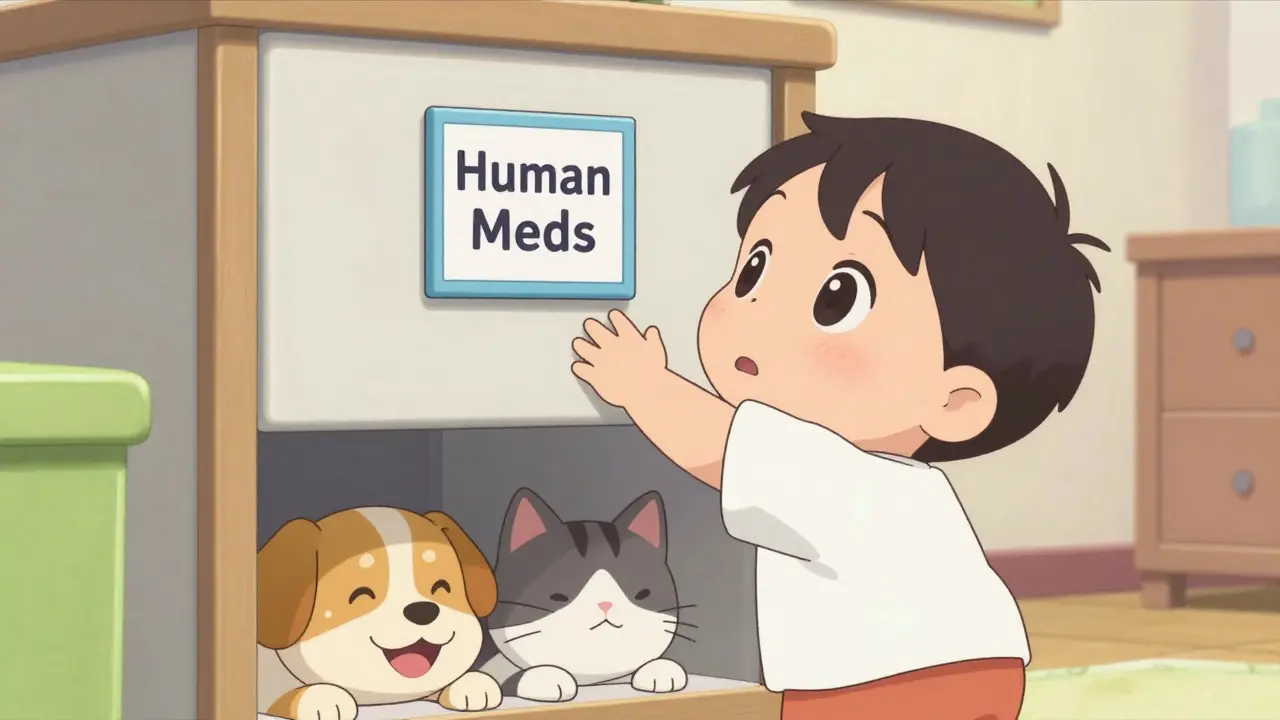
Every year, 60,000 children under five end up in emergency rooms because they swallowed medicine they shouldn’t have. Pets? Around 12% of all pet emergency visits are due to accidental drug ingestion. And most of these cases? They happen right in your home-because someone left a pill bottle on the counter, tucked it in a purse, or thought, "It’s childproof, so it’s fine." The truth? Child-resistant caps aren’t childproof. They’re just a delay. And dogs? They don’t care about labels. A gummy vitamin looks like candy. A dog’s arthritis pill smells like chicken. A cat might lick residue off your hand after you take your blood pressure med. This isn’t rare. It’s predictable. And it’s preventable.
Where You’re Probably Storing Medicine (And Why It’s Dangerous)
Most people store meds in the bathroom. It’s convenient. You take your pills after brushing your teeth. You refill prescriptions near the sink. But here’s what you’re ignoring: bathroom humidity is 60-80%. That moisture ruins pills. They crumble. They lose potency. And worse-kids love bathrooms. They climb on the counter. They open cabinets. They find that bottle behind the towels. Kitchens are next on the list. People leave meds on the counter while cooking. They stash them in a drawer near the coffee maker. But pets are drawn to kitchens. Dogs jump on counters. Cats leap onto the fridge. And if you’re taking your meds while making breakfast? That’s a 30-second window for disaster. Even bedrooms aren’t safe if you leave pills on the nightstand. Kids sneak in. Pets jump up. One study found that 78% of pediatric medication poisonings happen because meds were left out during use-even for just a few minutes.The Two Rules That Save Lives
There are only two rules you need to follow. Everything else is just details. Rule 1: Lock it up. Not just a cabinet. Not just a drawer. A locked container. A medicine lock box. A biometric safe. Even a simple combination lock bag like the VADIC Safe Storage Bag (11" x 6") works. The goal isn’t to make it impossible-just hard enough that a 3-year-old can’t do it in under 10 seconds. One parent on Reddit said their kid opened a "childproof" cabinet in 12 seconds. Then they got a fingerprint lock safe. Now? Zero incidents. Ten extra seconds in the morning? Worth it. Rule 2: Keep it high and out of sight. Kids can reach up to 4 feet. So store meds above 5 feet. But don’t just put them on a top shelf. If the container is clear, they’ll see it. If it’s on a shelf with toys or books, they’ll think it’s part of the game. Put it in a closed cabinet. In a closet. In a bedroom that’s rarely accessed. And if you have pets? Don’t store pet meds anywhere near human meds. A heart pill for a person can kill a dog. A dog’s pain med can poison a cat. They’re not interchangeable. They’re not "close enough." Separate them. Label them. Keep them in different locked boxes.Why Gummy Vitamins Are a Silent Threat
You think gummies are harmless? Think again. They’re candy-shaped. They taste sweet. They come in bright colors. And they’re everywhere-on counters, in purses, in kids’ backpacks. The CDC says 30% of all childhood supplement ingestions are from gummy vitamins-even though they make up only 15% of the market. That’s double the risk. And pets? They love them. A dog that’s never touched a pill will eat a gummy vitamin like it’s a treat. And if it’s a gummy with iron? That’s a medical emergency. One gummy can cause vomiting, diarrhea, even liver failure. Store gummies the same way you store prescription pills. Locked. High. Out of reach. And never leave them out during a visit from a grandkid or a dog that’s been watching you take your vitamins.Separate Human and Pet Medications-No Exceptions
This isn’t a suggestion. It’s a rule backed by the FDA and the American Veterinary Medical Association. Dogs and cats metabolize drugs differently than humans. A single ibuprofen tablet meant for you can cause kidney failure in a cat. A dog’s joint supplement might contain xylitol-a sugar substitute that’s deadly to dogs. And here’s the scary part: 25% of pet medication incidents happen because a person accidentally takes their pet’s pill. So here’s what to do:- Keep human meds in one locked container.
- Keep pet meds in another-preferably in a different room.
- Never store pet meds in the kitchen. Many are flavored to attract animals. That’s the last place you want them.
- If you give your dog a pill, do it on the floor. Not the counter. Not the couch. The floor. That way, if it drops, it’s not hidden under a cushion.
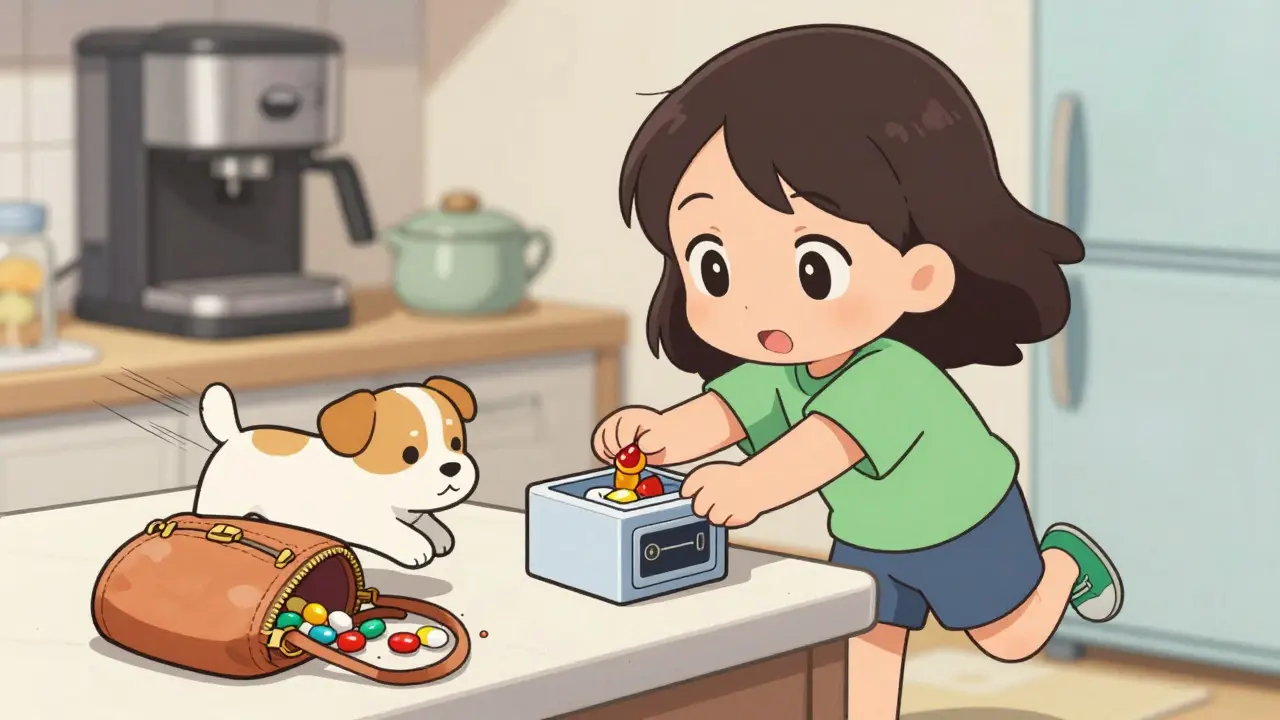
The Three-Zone System for Homes with Kids and Pets
If you have both children and pets, use this simple system: Zone 1: Immediate Use - Only the pill you’re giving right now. Place it on a flat, clean surface-like a kitchen table. Never on the counter, never near the sink. Stay with the child or pet while they take it. Then, immediately wipe the surface clean. Zone 2: Short-Term Storage - All other daily meds. Locked container. At least 5 feet high. Out of sight. No exceptions. This is where you keep your morning pills, your child’s ADHD meds, your dog’s heartworm pill. Zone 3: Long-Term Storage - Extra bottles, seasonal meds, old prescriptions. Store these separately. Label them clearly. Keep them in a different cabinet than Zone 2. This is your backup. Your archive. Your safety net. This system takes 15-30 minutes to set up once. After that? It takes two seconds to grab your pill. And it could save a life.How to Dispose of Old or Expired Medicine
Don’t flush it. Don’t toss it in the trash. Don’t dump it in the compost. The safest way? Mix it with something unappetizing. Coffee grounds. Cat litter. Used paper towels. Use a 1:1 ratio. Seal it in a plastic bag. Put it in the trash. The EPA tested this method. It’s 92% effective at preventing reuse. If you want to go further, check if your city has a drug take-back program. Many pharmacies and police stations accept old meds. Seattle has drop boxes at several locations. You can find them through the city’s health department website. And if you’re unsure? Call your pharmacist. They’ll tell you what to do. No judgment. No hassle. Just help.What to Do If Someone Swallows Medicine
If a child or pet ingests medication, don’t wait. Don’t call a friend. Don’t Google it. Call Poison Control immediately: 1-800-222-1222. It’s free. It’s 24/7. They’ll ask you what was taken, how much, and when. Then they’ll tell you exactly what to do-whether it’s watch, wait, or rush to the ER. For pets, call the ASPCA Animal Poison Control Center: 888-426-4435. There’s a fee, but it’s worth it. They have vets on standby who know exactly how each drug affects animals. Time matters. Every minute counts.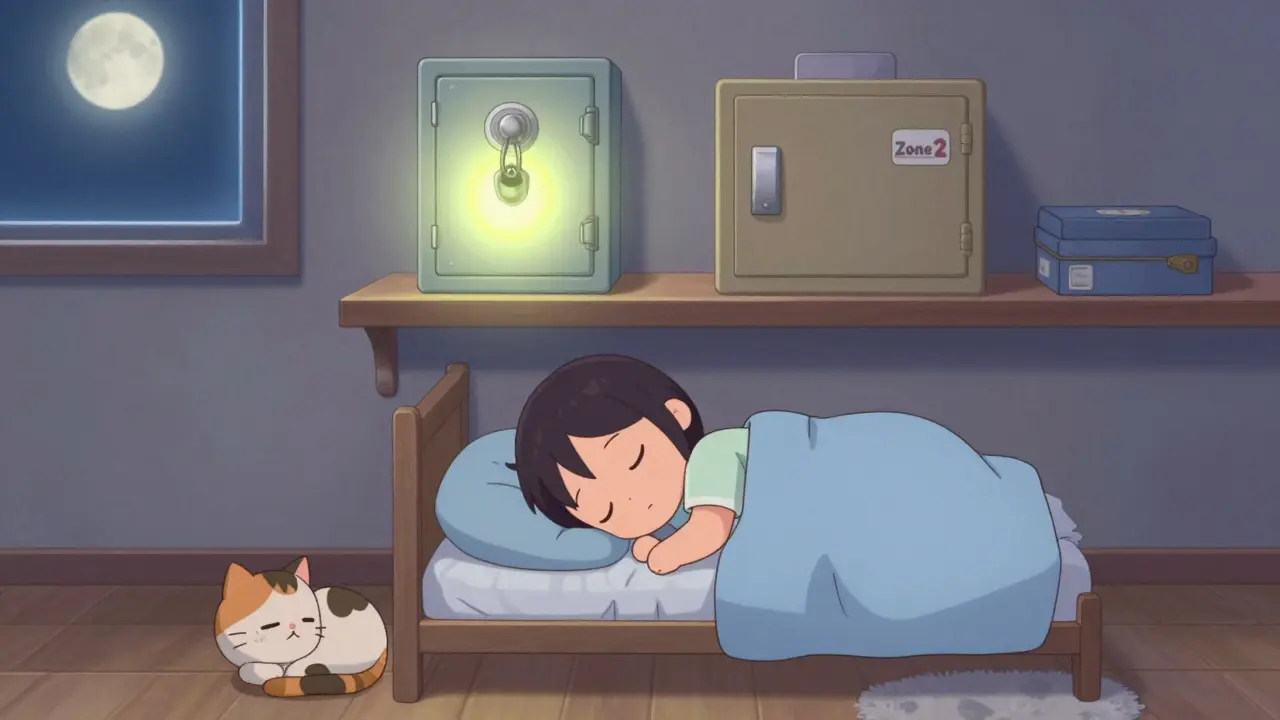
Why Most Parents Still Get It Wrong
A CDC study found that 40% of parents still store meds in the bathroom. Why? Because it’s convenient. Because they’ve always done it. Because they think, "It’s never happened to me." But safety isn’t about luck. It’s about systems. Another study showed that 65% of childhood poisonings come from over-the-counter meds left in purses or backpacks. One mom kept her son’s asthma inhaler in her tote bag. He found it during a trip to the zoo. He shook it like a rattle. He inhaled it. He ended up in the hospital. The fix? Make a habit. After every use-whether it’s a pill, a patch, or a spray-put it back in the lock box. Right away. Even if you’re just going to take another one in an hour.What’s Changing in 2026
New rules are coming. By the end of 2024, all pet medication labels must include clear warnings: "Store separately from human medications." The FDA is enforcing it. New products are too. Bluetooth-enabled safes now send alerts to your phone if someone opens them. Adoption is still low-only 18% of high-risk households use them-but the trend is growing. And more pediatricians are starting to ask about medicine storage during well-child visits. In pilot programs, communities that made it part of routine checkups saw 35% fewer poisonings. This isn’t just about being careful. It’s about being consistent. It’s about treating medicine like a loaded gun-because in many ways, it is.Final Checklist: Your Daily Medicine Safety Routine
- ✅ All meds stored in locked containers
- ✅ Human and pet meds kept in separate locations
- ✅ No meds on counters, nightstands, or in bathrooms
- ✅ Gummy vitamins treated like prescription drugs
- ✅ All unused meds mixed with coffee grounds or cat litter before trash
- ✅ Poison Control number saved in your phone
- ✅ Every dose secured within two minutes of use

lol childproof caps? more like childproof for people who think their kid is a genius. my 2yo opened my pill bottle in 8 seconds. now i use a lockbox. and no, i dont care if you think it's overkill.
Honestly, if you're still storing meds in the bathroom, you're just one step away from feeding your cat your blood pressure pills and calling it 'natural medicine'. The humidity ruins everything. And yes, your dog absolutely knows the difference between a gummy vitamin and a real treat. He just doesn't care.
I used to leave my vitamins on the nightstand... until my cat knocked them over and ate three. Now I have a tiny safe under my bed. It's ugly. It's inconvenient. But my cat is alive. And so am I. 😅
This is one of those posts that should be mandatory reading for every new parent and pet owner. The stats are terrifying, but the solutions are simple. Lock it up. Keep it high. Separate human and pet meds. That's it. No magic. No expensive gadgets. Just discipline. And consistency. And honestly? It's not that hard.
I JUST FOUND OUT MY DOG ATE A GUMMY VITAMIN WITH IRON??!!?? I THOUGHT THEY WERE HARMLESS!! 😱 I’M RUNNING TO THE VET RIGHT NOW!! THANK YOU FOR THIS POST!!! I’M GETTING A LOCKBOX TODAY!!
Why are we even talking about this? It's so obvious. People are just lazy. They don't want to be responsible. They want their meds to be "convenient." But convenience kills. And then they cry when their kid ends up in the ER. Sad. So sad.
You missed one thing. Don't store meds in your purse. I saw a mom pull out her asthma inhaler at the park. Kid grabbed it. Shook it. Inhaled. Hospital. 3 hours later. Don't be that person. Lock it. Every. Single. Time.
I think the real problem is the government forcing us to lock up our meds. What's next? Locking up our coffee? They want us to live in a prison. And these "safety rules"? Just a way to control us. My dog knows not to touch my pills. He's a good dog.
I just got a Bluetooth safe for my meds and it sent me a notification when my toddler opened it. I cried. Not because I was mad-because I realized how close we came to disaster. 🥹 Thank you for this. I’m telling everyone.
It is truly remarkable how modern society has forgotten the basic tenets of responsibility. One must not merely store medication; one must cultivate a culture of vigilance. The child, the pet-they are not adversaries. They are innocent. And we, the adults, are the guardians. 🙏
In my culture, we used to keep medicine in a wooden box tied with string and hung from the ceiling. No one ever touched it. Kids respected it. Pets didn’t care. Maybe we lost something when we got cabinets. 🌏✨
The notion that child-resistant caps are sufficient is a dangerous illusion. The real issue lies in behavioral patterns, not mechanical design. The human tendency to prioritize convenience over safety is the root cause of this epidemic. A system must be internalized, not merely implemented.
I used to be the guy who left his pills on the counter. Then my dog ate one of my wife’s blood thinners. She spent three days in the hospital. I now have a safe that costs more than my coffee maker. Worth every damn penny. Don’t be the guy who waits for the tragedy to happen.
You know what this is really about? The collapse of trust. We don’t trust our children to be careful. We don’t trust our pets to respect boundaries. We don’t even trust ourselves to remember. So we build locks. We buy safes. We install cameras. We turn our homes into fortresses. But the real question is… why did we ever think we didn’t need to?
I don't lock my meds. I just don't keep them around. If I need it, I get it. If my kid wants it, they can't have it. Simple. No overcomplicating. No expensive gadgets. Just common sense.