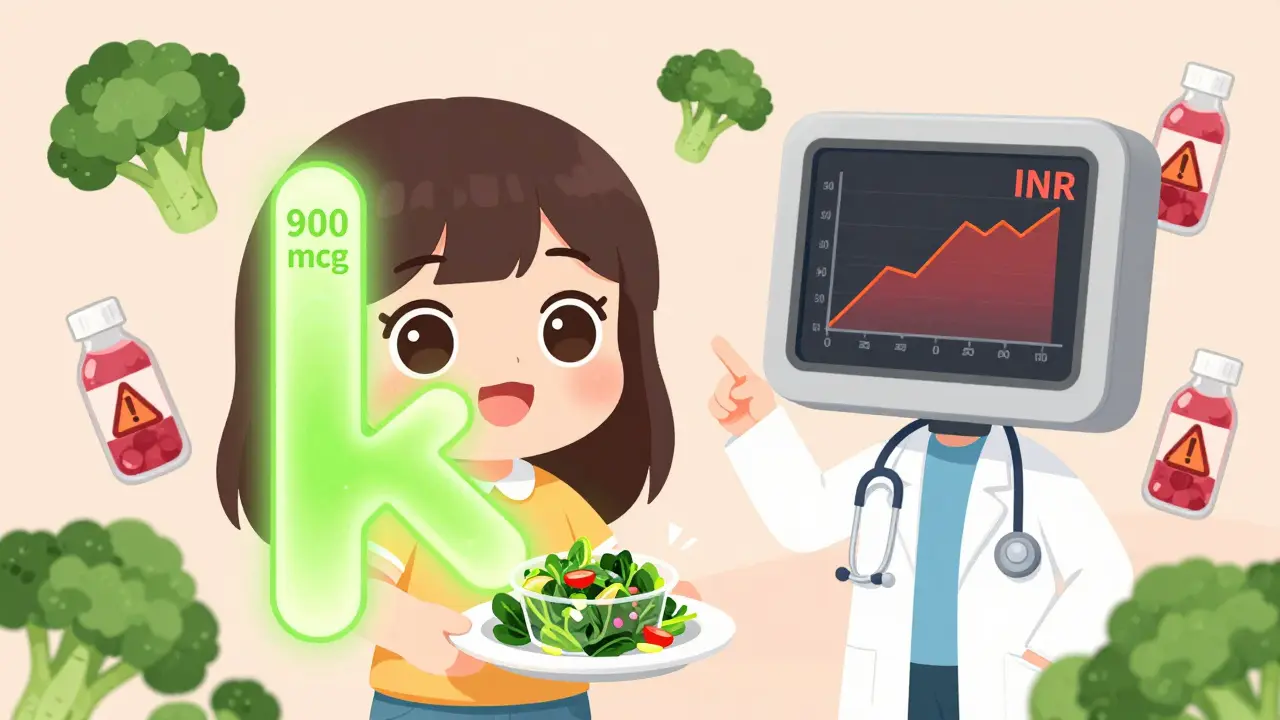
Warfarin Vitamin K Intake Calculator
How to Use This Tool
This calculator helps you track your vitamin K intake to maintain stable INR levels while on warfarin. Consistency is key. Select the foods you eat and their portions to see your daily vitamin K total.
Important: Your target vitamin K intake should be consistent day-to-day. Do not make sudden changes to your diet.
Select Your Foods
Your Daily Vitamin K Intake
Recommended Daily Vitamin K: Consistent intake of 100-200 mcg
Why this matters: Vitamin K affects warfarin's blood-thinning effects. Consistency is crucial to avoid INR fluctuations that could lead to bleeding or clots.
When you're on warfarin, what you eat isn't just about nutrition-it can mean the difference between staying safe and ending up in the hospital. Warfarin is a blood thinner that keeps dangerous clots from forming, but it's not forgiving. One day you eat a big bowl of spinach, the next you skip greens entirely, and suddenly your INR spikes or crashes. That’s not a minor tweak-it’s a medical emergency waiting to happen.
How Warfarin Actually Works
Warfarin doesn’t thin your blood like water. It works by blocking vitamin K, which your body needs to make clotting factors. Without enough vitamin K, your blood takes longer to clot. That’s good when you have atrial fibrillation or a mechanical heart valve. But if you suddenly eat a lot of vitamin K-like a huge serving of kale-your body gets enough to override the drug. Your INR drops. Clots can form. If you cut out vitamin K completely, your INR goes too high. You could bleed internally without warning.
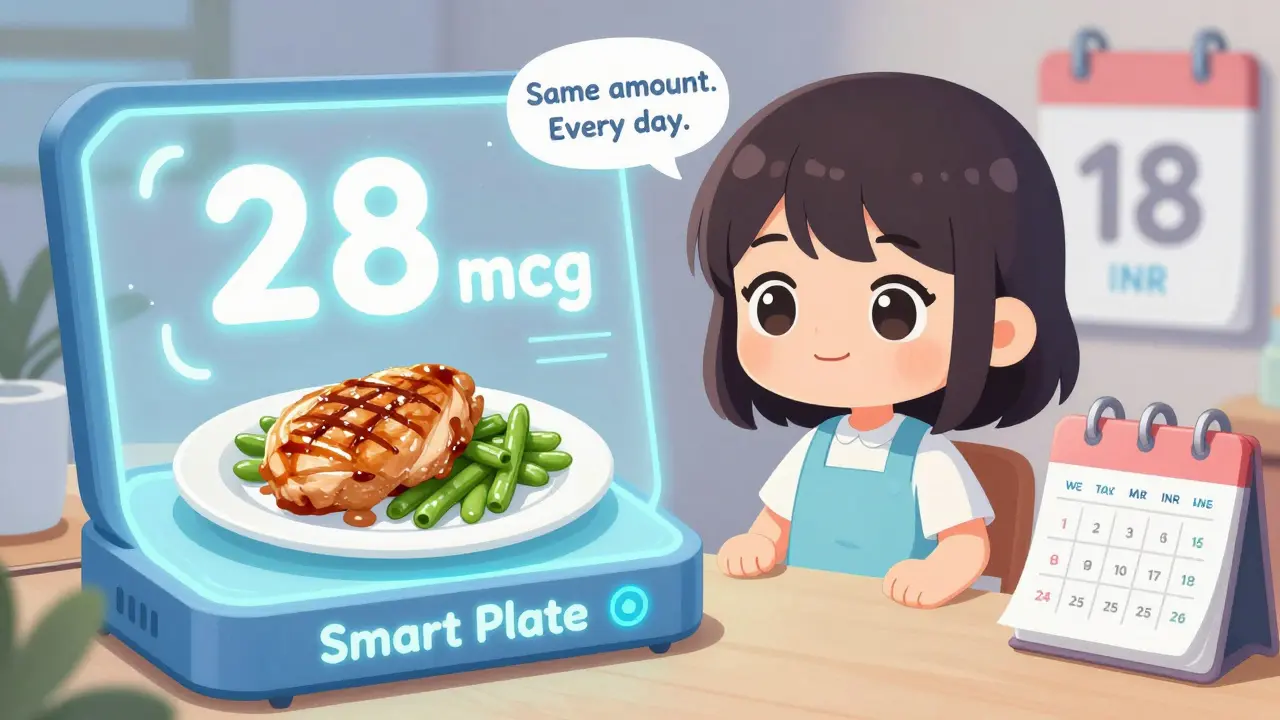
The goal isn’t to avoid vitamin K. It’s to keep it steady. Every day. Same amount. That’s the only way to keep your INR stable between 2.0 and 3.0 (or 2.5-3.5 if you have a mechanical mitral valve). A single cup of cooked spinach has nearly 900 micrograms of vitamin K. That’s more than 10 times the daily recommended amount for women. One meal like that can shift your INR by 0.5 to 1.0 in just a few days.
The Vitamin K Food List: What to Watch
Not all foods affect warfarin the same way. Some are high-risk. Others are fine if you eat them regularly. Here’s the breakdown based on vitamin K content per 100 grams:
- Very High (over 500 mcg): Kale (817 mcg), collard greens (623 mcg), parsley (616 mcg), seaweed (599 mcg), spinach (483 mcg), Swiss chard (450 mcg), turnip greens (421 mcg)
- High (100-500 mcg): Broccoli (raw, 102 mcg), Brussels sprouts (177 mcg), cabbage (cooked, 60 mcg), lettuce (raw, 30 mcg), green tea (106 mcg)
- Medium (25-100 mcg): Asparagus (cooked, 70 mcg), green beans, soybeans, avocado, kiwi, prunes
You don’t have to stop eating these. But if you normally eat spinach salad twice a week, don’t suddenly switch to kale smoothies every morning. If you rarely eat greens, don’t start eating three cups of broccoli a day. Consistency matters more than restriction.
Foods and Drinks That Can Be Dangerous
Vitamin K isn’t the only problem. Some common foods and drinks interact with warfarin in ways you might not expect.
- Cranberry juice: Even one 8-ounce glass a day can raise your INR by 1 to 2 points. That’s enough to put you at risk for bleeding. One user on Reddit saw their INR jump from 2.4 to 4.1 after drinking cranberry juice daily for a week.
- Grapefruit juice: It blocks the enzyme that breaks down warfarin. That means more drug stays in your system. Studies show it can increase bleeding risk by 30%. One sip won’t hurt-but daily use? Dangerous.
- Alcohol: More than two drinks a day lowers warfarin’s effectiveness. Heavy drinking can make your INR drop. But binge drinking? That can spike your INR because your liver can’t process the drug properly. Stick to no more than two drinks on days you drink, and skip at least two days a week.
- Green tea: It’s not just caffeine. Green tea has vitamin K and may interfere with how warfarin works. If you drink it daily, keep the amount the same. Don’t switch from one cup to five.

Supplements That Can Kill You
People think supplements are safe because they’re “natural.” That’s not true with warfarin.
- Fish oil (omega-3): Increases bleeding risk by 25%. Even if your INR is stable, adding fish oil can push you over the edge.
- Garlic supplements: Can raise your INR by 0.8 to 1.2 units. Fresh garlic in cooking? Fine. Pills? Don’t touch them.
- Ginkgo biloba: Linked to multiple cases of brain bleeds in warfarin users. The Journal of Medical Toxicology documented several cases where people ended up in the ER after taking ginkgo.
- Vitamin E: High doses (over 400 IU) can increase bleeding risk. Stick to what’s in your multivitamin.
- St. John’s Wort: Speeds up how fast your body breaks down warfarin. Your INR plummets. Clots form.
Always tell your doctor or anticoagulation clinic before starting any supplement-even if it’s labeled “all-natural” or sold at the health food store.
What You Can Eat Without Worry
There are plenty of foods that won’t interfere. You don’t have to live on plain chicken and rice.
- Meat, poultry, fish
- Eggs
- Dairy products (milk, cheese, yogurt)
- Fruits like apples, bananas, oranges, berries
- Grains like rice, pasta, bread, oats
- Most oils (olive, canola, sunflower)
- Water, coffee, herbal teas (except green tea)
These are safe to eat in normal amounts. The key is not to suddenly change your habits. If you’ve been eating oatmeal with blueberries every morning for six months, keep doing it. Don’t switch to a spinach smoothie just because you heard it’s “healthy.”
Real People, Real Results
On PatientsLikeMe, 68% of warfarin users struggled with diet in their first six months. But the ones who succeeded had one thing in common: consistency.
One user, u/StableINR, posted: “I eat exactly one cup of raw spinach salad every day. That’s it. No more, no less. My INR has been perfect for 18 months.” Another user tracked every bite in MyFitnessPal and saw their time-in-therapeutic-range jump from 45% to 72% in three months.
The American Thrombosis Association found that people who kept food journals had a 76% success rate in staying in range. Those who didn’t? Only 48%. Tracking isn’t optional. It’s your safety net.
How to Get It Right
Here’s how to make this work in real life:
- Get a baseline: Before starting warfarin, talk to your doctor about your current diet. What do you normally eat? How much spinach, broccoli, or green tea?
- Stick to it: Don’t change your intake. If you eat one cup of cooked broccoli on Monday, eat one cup on Tuesday, Wednesday, and Thursday.
- Track it: Use MyFitnessPal or another app that tracks vitamin K. Log every meal. Even if it’s tedious. You’ll thank yourself when your INR doesn’t spike.
- Avoid cranberry and grapefruit juice: No exceptions. Not even a splash in a smoothie.
- Limit alcohol: Two drinks max on days you drink. Skip two days a week.
- Never start a supplement without asking: Your pharmacist or anticoagulation clinic can tell you if it’s safe.
- Know the warning signs: Bleeding that won’t stop after 5 minutes, black or bloody stools, severe headaches, dizziness, or unexplained bruising? Call your doctor or go to the ER. These are not normal.
What’s New in 2025
Things are getting easier. In March 2024, the FDA approved the first dosing algorithm that factors in your daily vitamin K intake. It’s called WarfarinDoseIQ. It’s being rolled out in hospitals and clinics now.
There’s also Nutrisystem’s new line of vitamin K-controlled meal kits. Each meal has 25-30 mcg of vitamin K-perfect for keeping intake steady. And research is underway on “smart plates” that scan your food and tell you the vitamin K content in real time.
But technology won’t fix poor habits. The biggest predictor of success? Consistency. Not the latest app. Not the newest diet plan. Just eating the same amount of vitamin K every single day.
Why This Still Matters
Even though newer blood thinners like Eliquis and Xarelto are popular, warfarin is still the go-to for people with mechanical heart valves. About 250,000 Americans rely on it for that reason alone.
And it’s cheaper. Much cheaper. A month of warfarin costs about $10. The newer drugs? $400-$600. For many people, warfarin isn’t a choice-it’s the only option.
But here’s the problem: Only 58% of patients in safety-net hospitals get proper dietary counseling. In academic centers? 89%. That gap means people in low-income areas are at higher risk of bleeding or clots-not because of the drug, but because they weren’t taught how to eat with it.
If you’re on warfarin, you’re not alone. But you’re responsible for your own safety. No one else can track your food for you. No app can replace your own awareness. You have to be the one who notices when you eat more greens than usual. You have to be the one who says no to cranberry juice at the holiday party.
It’s not about perfection. It’s about predictability. Your body needs to know what to expect. And that’s the only way to stay out of the hospital.
Can I eat spinach if I’m on warfarin?
Yes-but only if you eat the same amount every day. If you normally have a small spinach salad twice a week, keep doing that. Don’t suddenly eat a whole bag of spinach. A single cup of cooked spinach has nearly 900 mcg of vitamin K. That’s enough to drop your INR by 1 point in a few days. Consistency is the only safe way.
Is cranberry juice really that dangerous?
Yes. Cranberry juice blocks the enzyme that breaks down warfarin, causing it to build up in your blood. This can raise your INR by 1 to 2 points, which puts you at high risk for bleeding. Even one 8-ounce glass a day has been linked to dangerous INR spikes. Avoid it completely.
Can I drink alcohol while taking warfarin?
Moderate alcohol is okay, but not daily. No more than two standard drinks on days you drink, and skip at least two days a week. Heavy drinking can lower warfarin’s effect and increase clot risk. Binge drinking can spike your INR and cause bleeding. It’s not worth the risk.
What should I do if I accidentally eat a lot of vitamin K?
Don’t panic. Don’t skip your next dose. Call your anticoagulation clinic or doctor right away. They may want to check your INR sooner than scheduled. Don’t try to fix it yourself by eating less the next day-that can cause another swing. Just report it and follow their advice.
Do I need to take vitamin K supplements?
No. If you’re eating a normal diet, you’re getting enough. Taking extra vitamin K can interfere with warfarin and make your INR drop dangerously low. Only take it if your doctor prescribes it for a specific reason.
How often should I get my INR checked?
When you first start warfarin, you may need checks every few days. Once you’re stable, most people get tested every 2 to 4 weeks. But if you change your diet, start a new medication, or feel unwell, get tested sooner. Never skip a test just because you feel fine.
Can I use a smart scale or app to track vitamin K?
Yes. Apps like MyFitnessPal now track vitamin K content in foods. Some newer ones are even linked to FDA-approved dosing tools. But the best tool is still writing it down or logging it daily. Technology helps, but your awareness matters most.
What are the signs of warfarin bleeding?
Watch for: bleeding that won’t stop after 5 minutes, black or tarry stools, bright red blood in stool, vomiting blood, severe headaches, dizziness, confusion, unexplained bruising, or swelling in joints. These are medical emergencies. Call 911 or go to the ER immediately.
Consistency is everything with warfarin. I’ve been on it for 7 years and my INR has never budged because I eat the same spinach salad every Tuesday and Friday-no more, no less. No fancy apps needed, just a routine and a little discipline. Your body likes predictability, not surprises.
Let’s be real-this post is just a rehash of every damn anticoagulation clinic handout from 2018. You didn’t even mention CYP2C9 polymorphisms affecting warfarin metabolism. And you glossed over the fact that vitamin K2 (MK-7) doesn’t interfere the same way as K1. If you’re gonna write a ‘complete’ guide, at least cite the actual pharmacokinetic literature. Otherwise, it’s just noise.
I want to hug whoever wrote this. I spent 6 months terrified of every green thing I ate, thinking I’d bleed out if I so much as looked at broccoli. Then I found a dietitian who told me: ‘It’s not about fear, it’s about rhythm.’ I eat one cup of kale every Sunday morning. That’s it. My INR is perfect. You’re not broken. You’re just learning a new language-and your body is patient with you.
bro just log your food and stop overthinking it. i eat rice, eggs, chicken, and one banana a day. my inr stable for 2 years. no apps no stress. if you change your diet then get checked. thats it
I used to skip my INR checks because I felt fine. Then I had a nosebleed that lasted 47 minutes. Turns out, I’d been eating more avocado and drinking green tea on weekends. My doctor said my INR had dropped to 1.1. I started logging everything. Now I don’t even think about it-it’s just habit. Don’t wait for a scare to start caring.
Wow. Another ‘eat the same spinach every day’ post. You people really think this is rocket science? You’re on a drug that’s been around since WWII. If you can’t handle a little dietary discipline, maybe you shouldn’t be on anticoagulants at all. Just say no to cranberry juice. Done. Move on.
yo i just got on warfarin last month and i was freakin out until i found out that turmeric is fine as long as its in food not pills. same with ginger tea. i eat curry like 3x a week and my doc said its cool. also i drink coffee like 4 cups a day and no issues. just avoid the juice crap and youll be fine. also dont trust your cousin who says ‘her friend took garlic and was fine’
This is the most helpful thing I’ve read in years. I’m not a food nerd, but I started tracking my vitamin K with MyFitnessPal after reading this. My TTR went from 42% to 78% in 8 weeks. I still eat pizza and ice cream. I just don’t eat kale on Monday and spinach on Wednesday. Same amount, same days. Simple. Life-changing.