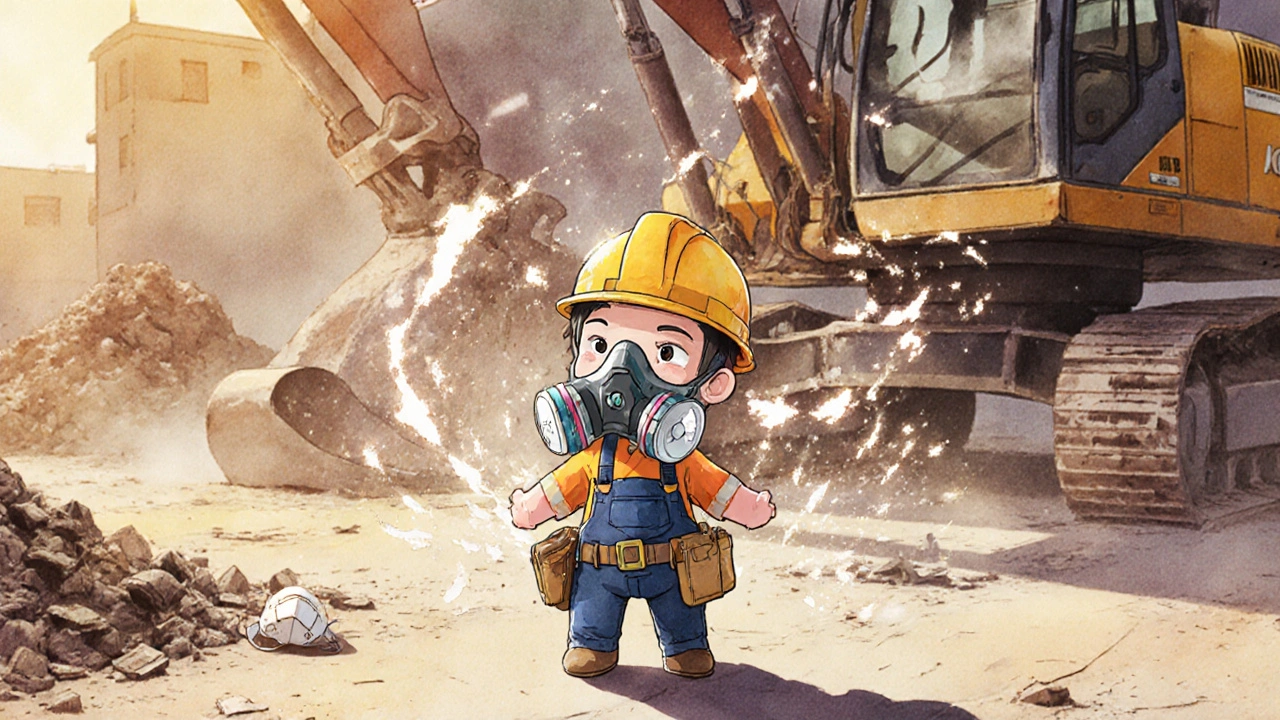
Silicosis: Causes, Risks, and What You Need to Know About This Lung Disease
When you breathe in silica dust, a fine, crystalline particle found in sand, rock, and concrete. Also known as silicon dioxide, it’s harmless in nature—but when crushed and inhaled over time, it triggers irreversible damage in the lungs. This damage leads to silicosis, a progressive and incurable lung disease caused by long-term exposure to respirable crystalline silica. Unlike a cold or flu, silicosis doesn’t go away. Once the scarring starts, it keeps getting worse, even after exposure stops. It’s not rare—it’s one of the most common occupational lung diseases worldwide, especially among construction workers, miners, sandblasters, and stone countertop installers.
People often confuse silicosis with other lung conditions like COPD or asthma, but the cause is different. Silicosis isn’t triggered by smoking or allergies—it’s purely from silica. And it doesn’t show up overnight. It can take 10 to 30 years to develop, which is why many don’t connect their breathing problems to a job they had decades ago. There’s also an aggressive form called acute silicosis, which can hit within weeks or months of heavy exposure. That’s rare, but deadly. The real danger? You can’t see or smell silica dust. Workers might think they’re fine because there’s no cough or choking—until they start gasping for air during a simple walk.
What makes silicosis even harder to fight is that it increases your risk for other serious illnesses. People with silicosis are far more likely to develop tuberculosis, lung cancer, and chronic kidney disease. It doesn’t just attack the lungs—it weakens the whole body. There’s no cure, but catching it early can slow the damage. That’s why regular lung scans and breathing tests matter, especially if you’ve worked with concrete, granite, or sand. And while treatments like oxygen therapy or pulmonary rehab don’t fix the scarring, they can help you breathe better and stay active longer.
Some of the posts below dive into how corticosteroids are used in lung conditions, why certain medications affect respiratory health, and how to spot early signs of lung damage before it’s too late. Others look at drug safety, occupational risks, and how to protect yourself when your job puts you in contact with dangerous dust. This isn’t just about one disease—it’s about understanding how everyday work environments can quietly harm your lungs, and what you can actually do about it.