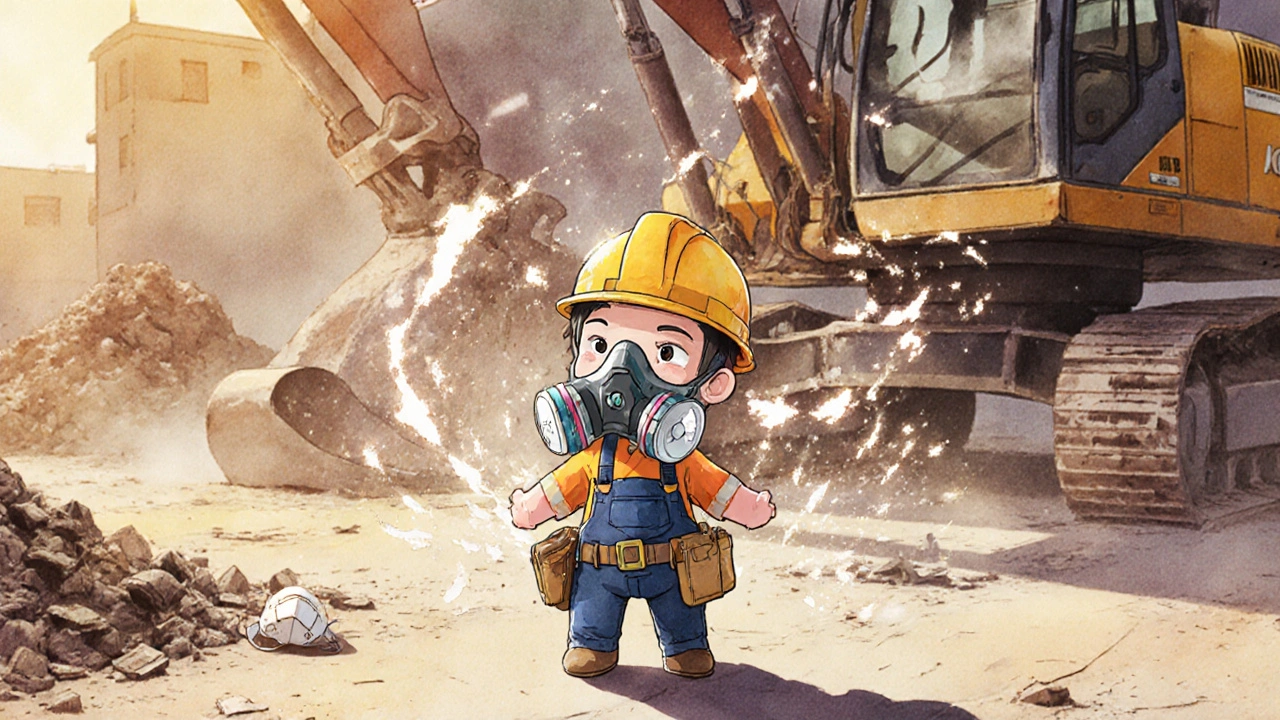
Asbestosis: Causes, Risks, and What You Need to Know
When you breathe in asbestos, a group of naturally occurring mineral fibers once widely used in construction and insulation. Also known as amiantus, it doesn’t dissolve in the lungs—instead, it stays there for decades, slowly scarring tissue and making it harder to breathe. This scarring is called asbestosis, a chronic, progressive lung disease caused by long-term exposure to asbestos fibers. Unlike infections or allergies, asbestosis doesn’t go away once you stop breathing in the dust. It gets worse over time, and there’s no cure.
People who worked in shipyards, construction, insulation installation, or mining before the 1980s are most at risk. But even family members of workers could develop it—fibers clung to clothes, hair, and skin, and got carried home. The disease usually shows up 20 to 40 years after first exposure, which is why many cases are diagnosed in retirees. Symptoms include shortness of breath during light activity, a dry cough, chest tightness, and clubbed fingers. It’s often mistaken for asthma or COPD, but it’s not caused by smoking or pollution—it’s caused by one thing: asbestos.
Pulmonary fibrosis, the thickening and scarring of lung tissue is the core problem in asbestosis. It’s not the only type of fibrosis, but it’s one of the most preventable. If you’ve worked with asbestos, your doctor should check your lungs with a high-resolution CT scan—not just a regular X-ray. Early detection won’t reverse the damage, but it can help you avoid complications like lung cancer or mesothelioma, both of which are strongly linked to asbestos exposure.
There’s no magic pill for asbestosis. Treatment focuses on slowing decline and managing symptoms. Oxygen therapy helps when breathing gets hard. Pulmonary rehab teaches you how to use less energy to move around. Quitting smoking is critical—smokers with asbestosis decline twice as fast. Vaccines for flu and pneumonia are non-negotiable. Some patients get prescribed steroids or antifibrotic drugs, but results are mixed. The real win? Avoiding further exposure.
You won’t find asbestosis in the same posts as plantar fasciitis or intermittent fasting. But you will find real, actionable info here—on how asbestos affects the lungs, how to spot early signs, what tests matter, and how to protect yourself or a loved one. We’ve pulled together the most practical, evidence-based articles on lung health, medication safety, and occupational risks so you don’t have to guess what’s true or what’s just noise. What you’ll see below isn’t theory. It’s what works for people living with this condition—and what their doctors actually recommend.