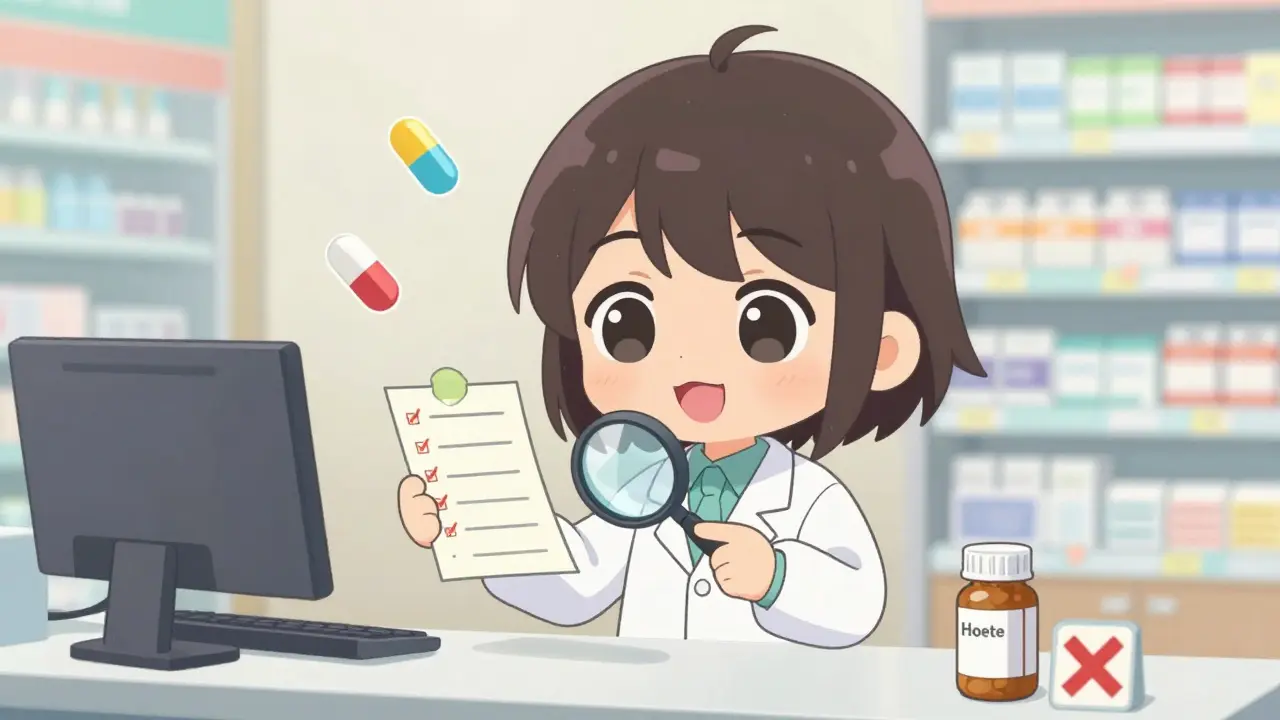
Every year, tens of thousands of people in the U.S. get the wrong medication-or the right medicine in the wrong dose-because of a simple mistake at the pharmacy. These aren’t rare accidents. They happen because the system assumes you’ll just trust what’s handed to you. But you don’t have to. You can protect yourself with a simple, personal checklist you use every time you pick up a prescription.
Why You Need a Personal Safety Checklist
Pharmacists are trained professionals, and most do their jobs well. But they’re human. They’re busy. They’re juggling multiple prescriptions, insurance issues, and phone calls. A single misread script, a mix-up in similar-looking bottles, or a software glitch can lead to a dangerous error. You might not even notice until it’s too late.Studies show that up to 25% of medication errors happen at the pharmacy level. Many of these could be caught-if you ask the right questions and check the basics before you walk out the door. You’re not being suspicious. You’re being smart.
Step 1: Know Your Medication Before You Go
Before you even leave the house, write down the name of each medicine your doctor prescribed. Don’t rely on memory. Don’t assume the pharmacist knows your full history. Write:- The exact name of the drug (brand or generic)
- The dose (e.g., 10 mg, 500 mg)
- How often to take it (e.g., once daily, twice a day)
- The reason you’re taking it (e.g., “for high blood pressure,” “for infection”)
Keep this list in your wallet or phone notes. When you get to the pharmacy, hand it to the pharmacist before they pull your prescription. This gives them a chance to double-check their system against your own record. It’s not unusual for pharmacies to fill a script for “Lisinopril 10 mg” when your doctor meant “Lisinopril 20 mg.” You catching that difference could prevent a hospital visit.
Step 2: Verify the Label When You Get It
When the pharmacist hands you your medicine, don’t just take it and leave. Stop. Look. Compare.Check the label against your written list. Ask aloud:
- “Is this the medicine my doctor prescribed?”
- “Does the dose match what I was told?”
- “Is the number of pills correct?”
- “What is this for? Can you say it out loud?”
Pharmacists are trained to explain medications. If they hesitate, give a vague answer, or say, “It’s just for your blood pressure,” push a little. Say, “My doctor said it’s for my kidney condition. Is that right?” That small pause forces them to re-verify. Most errors are caught right there.
Step 3: Check the Physical Medicine
Look at the pills or liquid inside the bottle. Does it match what you’ve taken before?Medications can change appearance between refills. A blue pill one month might be white the next. That’s normal if the generic brand switched. But if you’ve never seen this shape, color, or marking before, ask:
- “Is this the same medicine I got last time?”
- “Can you show me the bottle from last month?”
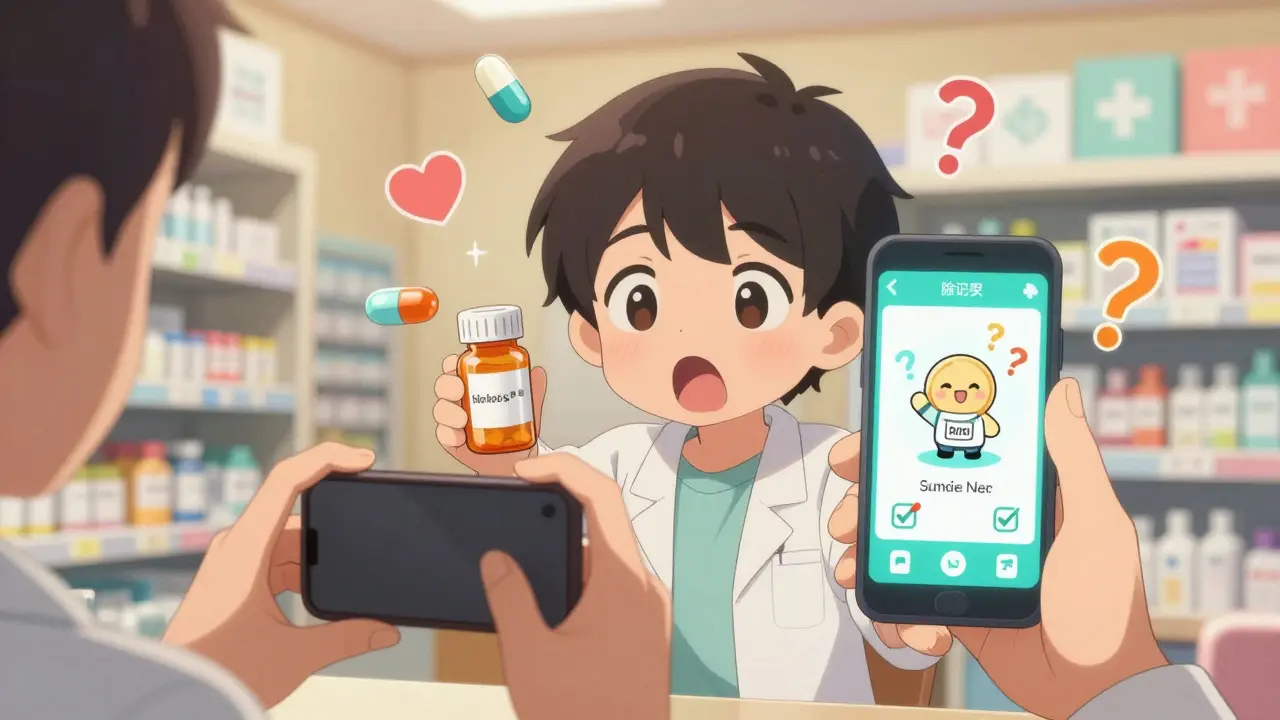
Use the Drugs.com Pill Identifier or WebMD’s pill finder on your phone. Snap a photo of the pill and search it. If the description doesn’t match-like a pill labeled “Metformin 500 mg” but shows up as “Glipizide”-don’t take it. Go back to the counter.
Step 4: Ask About Interactions and Side Effects
Don’t assume your pharmacist knows all your other meds. Even if you’ve been going to the same pharmacy for years, they might not have your full list. Tell them:- All prescription drugs you’re taking
- All supplements, vitamins, or herbs
- Any over-the-counter medicines (like ibuprofen or sleep aids)
Then ask: “Could this new medicine interact with anything else I’m taking?”
Some interactions are deadly. Mixing blood thinners with certain painkillers. Taking antidepressants with migraine meds. Even grapefruit juice can interfere with statins. Pharmacists are legally required to warn you about major interactions. If they don’t bring it up, ask.
Step 5: Get Clear Instructions
“Take as directed” is not enough. You need specifics:- Should I take this with food or on an empty stomach?
- What time of day is best?
- What should I do if I miss a dose?
- What side effects are normal-and which ones mean I should call a doctor?
Write these down on your checklist. If they’re unclear, say: “Can you repeat that? I want to make sure I get it right.”
Step 6: Take a Photo Before You Leave
This is the most underused trick-and it’s powerful.Before you walk out, take a clear photo of:
- The prescription label
- The pill or liquid inside the bottle
- The dosage instructions
Store it in a folder labeled “Medications.” If something goes wrong later-like a bad reaction or a refill error-you have proof of what you were given. It also helps when you see a new doctor or pharmacist. You’re not guessing. You’re showing them exactly what you were dispensed.
What to Do If Something Feels Off
If the medicine looks wrong, the label doesn’t match, or the pharmacist seems rushed or defensive:- Don’t take it home.
- Ask to speak to the pharmacist-in-charge.
- Call your doctor’s office to confirm the prescription.
- If needed, go to another pharmacy. You have the right to get your prescription filled elsewhere.
Never feel guilty for asking. A good pharmacist will appreciate your vigilance. A bad one? They’ll be glad you didn’t take the wrong pill.
Common Mistakes People Make
Here’s what most people skip-and why it’s dangerous:- Not checking the name. “I thought it was for my heart,” but it was for diabetes. That’s how people end up in the ER.
- Not comparing to past refills. A different-looking pill is often normal-but not always.
- Not asking about interactions. People assume their doctor already checked. They didn’t.
- Not documenting. Memory fails. Photos don’t.
Why This Works
You’re not trying to replace the pharmacist. You’re adding a second layer of safety. Think of it like checking your seatbelt before driving. You don’t do it because you think the car’s broken. You do it because you know things can go wrong-and you want to be ready.Pharmacies are under pressure. Staff are stretched thin. Technology helps-but it’s not perfect. Your eyes, your questions, your checklist are the final safety net.
Final Tip: Make It a Habit
Don’t wait until you’ve had a bad experience. Start using this checklist now-even if you’ve never had a problem. Make it part of your routine, like checking your wallet before you leave the house.Keep your checklist printed or saved on your phone. Update it every time your doctor changes a prescription. Share it with a family member if you live alone. The more people who know what you’re supposed to be taking, the safer you are.
Medication safety isn’t just the pharmacy’s job. It’s yours too. And you’re the only one who can catch the mistake right before you swallow it.
Can I really trust my pharmacist to catch all errors?
Pharmacists are trained to catch errors, but they’re not infallible. They handle dozens of prescriptions a day. A misread handwriting, a software glitch, or a rushed refill can slip through. Your checklist adds a critical second layer of protection. You’re not questioning their skill-you’re helping them do their job better.
What if the pharmacy refuses to recheck my prescription?
If a pharmacist dismisses your concerns, ask to speak to the pharmacist-in-charge or the store manager. If they still refuse, take your prescription to another pharmacy. You have the legal right to have your prescription filled anywhere. No pharmacy can pressure you into accepting a medication you don’t trust.
Do I need to do this for every refill?
Yes. Even if you’ve taken the same medicine for years, the manufacturer, dose, or formulation can change. Generic brands switch. Pill colors shift. Dosage instructions get updated. Never assume it’s the same just because it’s familiar.
Can I use a mobile app instead of a checklist?
Apps like MyTherapy or Medisafe can help track your meds, but they don’t replace the physical verification step. You still need to look at the label, compare the pills, and ask questions in person. Use apps as a backup-not a replacement-for your personal checklist.
What if I’m elderly or have trouble reading?
Ask a family member, caregiver, or friend to come with you. Many pharmacies offer free medication reviews for seniors. Call ahead and ask if they have a “medication reconciliation” service. You can also request large-print labels or audio instructions. Your safety matters more than convenience.

Oh wow, another ‘you’re not being suspicious, you’re being smart’ lecture. Because clearly, the problem isn’t that pharmacies are understaffed and overworked-it’s that patients are too lazy to memorize every drug they’ve ever taken. 🙄 I’ve been to 12 different pharmacies in 5 years and only once did someone even look up from their screen. But sure, let’s blame the patient for the system collapsing.
There’s a quiet philosophy here: trust is not blind, it’s negotiated. We live in a world where institutions are designed to move fast, not to be safe. The checklist isn’t about distrust-it’s about creating a dialogue where accountability isn’t assumed, but co-created. You’re not just protecting yourself-you’re reminding the system that people matter more than throughput.
This is so needed 💛 I had a friend who took the wrong blood pressure med for 3 weeks because the label said ‘Lisinopril 10’ but it was actually 20. She ended up in the ER. Now she takes a pic of every pill, writes it down, and asks the pharmacist to say the reason out loud. I do it too. It feels weird at first… but then it feels like self-respect. 🙌
Look, I get it. But let’s be real-this is just a Band-Aid on a hemorrhage. You think the average person has the time, energy, or cognitive bandwidth to cross-reference every script like a forensic pharmacist? Most people are working two jobs, caring for kids, and still trying to remember to take their own meds. This checklist is a luxury for the privileged. The real solution? Understaffed pharmacies need more funding, not more emotional labor from patients.
Let’s not mince words: this is non-compliance culture in a safety suit. Pharmacists are licensed professionals with decades of training. The fact that you feel the need to validate every single script suggests a pathological lack of trust in the medical-industrial complex. And yes, I’m aware that the system is flawed-but your checklist is just a performative ritual that absolves you of the responsibility to advocate for structural reform. You’re not being smart. You’re being performative.
Love this. It’s like a hacker’s checksum for your body. You’re not just verifying pills-you’re running a integrity audit on the entire supply chain. I do the photo thing too. Last month, I caught a bottle labeled ‘Metformin’ that had ‘Glimepiride’ written on the insert. The pharmacist looked at me like I’d just pulled a gun. Then he checked the system… and apologized. Turns out, the barcode got mixed up. I’m not paranoid. I’m just… system-aware. 🔍
Per FDA guidelines, pharmacists are required to perform a ‘medication use review’ before dispensing. If they’re not doing it, that’s a violation. You don’t need a checklist-you need to file a complaint with the state board. I’ve done it twice. Got a letter from the pharmacy’s compliance officer. They changed their process. Your checklist is cute. The real power? Paperwork.
Wow. This is so true. In my country, we don’t have this kind of access. Sometimes, you just get the bottle and go. But I think this idea can work anywhere. Even if you just write the name on your hand with a pen, it helps. I will try this. Thank you for sharing. 🙏
Brilliant. I’ve been doing this for years-especially the photo. I store them in a Google Folder labeled “Medications (DO NOT DELETE).” Also, I always ask, “Can you read the label back to me?” It’s shocking how often they misread “500 mg” as “50 mg.” And yes-I’ve been kicked out of a CVS for being “too demanding.” Worth it. 🤝
Why not just use an app? This is overkill. Also, I don’t have time to write stuff down. My phone’s got reminders. Done. 🤷♀️
THEY’RE DOING THIS ON PURPOSE. You think it’s a mistake? Nah. Big Pharma wants you to mess up your meds so you need MORE pills. The pill colors change so you get confused. The labels are wrong so you go back. Then they upsell you on ‘side effect meds.’ I’ve seen the documents. They track your errors. They profit from your confusion. 🚨💊 #PharmacyConspiracy
Man, I used to roll my eyes at this stuff. Then my grandma almost died because they gave her the wrong anticoagulant. Now I walk in with a printed checklist, a pen, and a calm voice. I say, ‘I’m not here to argue. I’m here to make sure we both get this right.’ And you know what? Most pharmacists appreciate it. It’s not confrontation. It’s collaboration.
This is the kind of stuff that saves lives-and it’s not complicated. Do it once, and it becomes automatic. Like buckling your seatbelt. You don’t think about it. You just do it. And when you do, you feel powerful. Not because you’re suspicious. Because you’re awake. Keep going. You’re doing the right thing.
Excellent. I’ve trained my teenage daughter to use this checklist. She now reminds me when I’m rushing. We even have a family Google Doc with all our meds. It’s saved us twice. This isn’t paranoia. It’s responsibility. And it’s contagious.