Every year, thousands of generic medications are pulled from store shelves-not because they’re dangerous by design, but because something went wrong in the process of making them. In 2024 alone, the FDA recorded 323 drug recalls, and nearly half of those involved generic drugs. These aren’t rare glitches. They’re systemic issues tied to how these affordable medicines are made, shipped, and monitored. If you take generic pills for blood pressure, cholesterol, ADHD, or pain, you need to know why recalls happen and what to do if your medication is on the list.
Why Generic Drugs Get Recalled
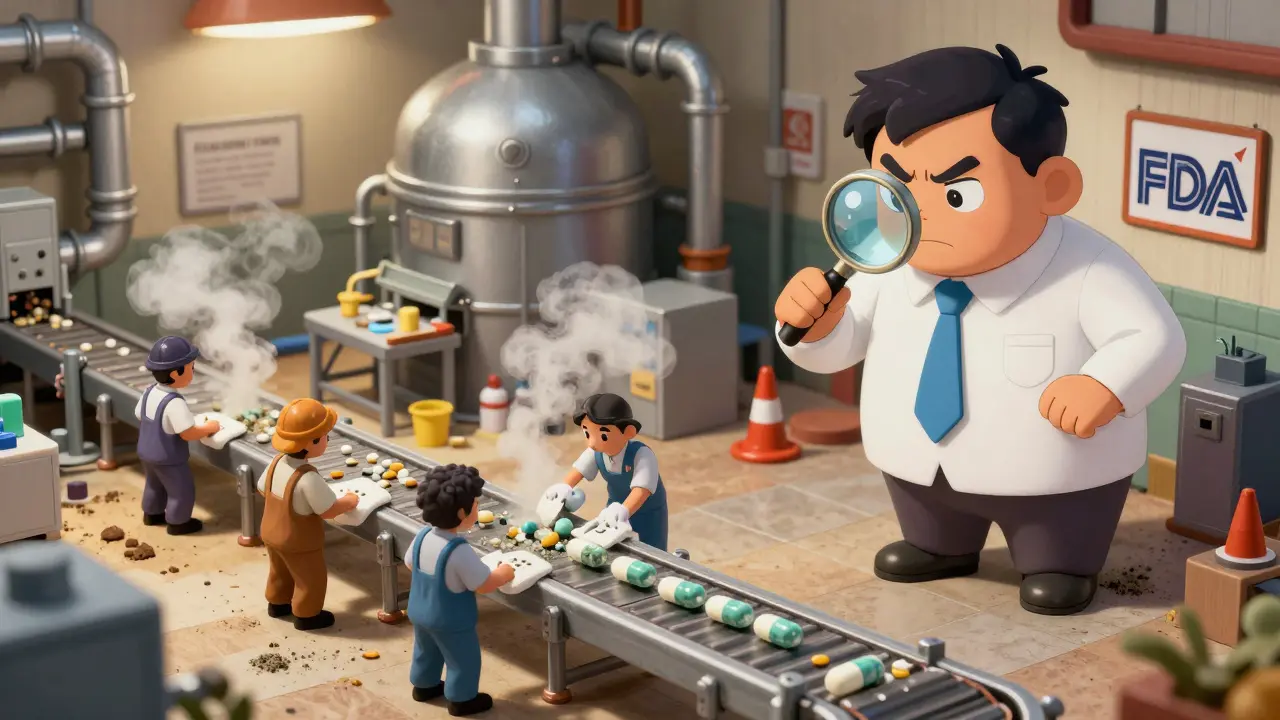
The most common reason generic drugs get recalled? Violations of Current Good Manufacturing Practices, or CGMP. These are the rules that ensure every pill is made the same way, every time. When a factory skips a step-like not cleaning equipment properly, not testing batches for strength, or letting dust and mold get into the production line-the result can be pills that don’t work, or worse, harm you.
In April 2025, Glenmark Pharmaceuticals recalled nearly 40 types of generic meds made in India because of CGMP failures. The list included common drugs like acetaminophen and ibuprofen sold at Walmart and Amazon. The FDA classified it as a Class II recall, meaning the risk was low but real: you might not get the full dose, or the pill might contain a tiny bit of something it shouldn’t. That’s not just a paperwork issue-it’s a health issue.
Another big culprit is failed dissolution. That’s a fancy way of saying the pill doesn’t break down in your body like it’s supposed to. Take Atorvastatin, the generic version of Lipitor. Around 47 million Americans take it to lower cholesterol. If the tablet doesn’t dissolve properly, your cholesterol stays high. In September 2025, over 140,000 bottles of generic Atorvastatin were recalled because lab tests showed the pills weren’t breaking down at the right rate. The same thing happened with generic Vyvanse for ADHD. If the capsule doesn’t release the medicine in your gut, your symptoms come back-hard.
Contamination is the scariest reason. In October 2025, a batch of hydrocodone oral solution was pulled after particles were found inside. But the most alarming case? Over 50 million fentanyl patches were returned because the seals were leaking. Fentanyl is 50 to 100 times stronger than morphine. A leaking patch can deliver too much, causing an overdose-or too little, leaving someone in pain. Neither outcome is acceptable.
Where the Problems Come From
Most generic drugs aren’t made in the U.S. About 68% of all drug recalls since 2015 came from facilities in India and China. Indian factories alone account for over 42% of those recalls. The FDA inspects foreign plants less often than U.S. ones. Before 2023, a factory in India might go nearly five years without an inspection. Now, thanks to new rules, it’s every 2.3 years-but that’s still not enough for the volume of drugs coming in.
There’s also pressure to cut costs. Generic drug makers compete on price. The lowest bidder wins contracts with big pharmacies and government programs. That means some companies cut corners on quality control to keep prices low. One factory might skip a filtration step. Another might use cheaper ingredients that don’t dissolve as well. It’s not fraud-it’s a broken system where profit beats safety.
What to Do If Your Drug Is Recalled
If you get a letter, an email, or a call from your pharmacy saying your medication is recalled, don’t panic. But don’t ignore it either.
First, check the lot number. It’s on the bottle or box. Compare it to the list on the FDA’s website or your pharmacy’s recall page. If it matches, don’t throw it away. Don’t stop taking it unless your doctor tells you to.
For drugs like Atorvastatin or Vyvanse, stopping suddenly can be dangerous. Statins can cause your cholesterol to spike. Stimulants like Vyvanse can trigger depression, fatigue, or a rebound in ADHD symptoms. Your doctor may tell you to keep taking the pills until they can give you a safe replacement. That’s not ideal-but it’s safer than quitting cold turkey.
Second, return the pills to your pharmacy. Most will give you a refund or swap them for a new batch. CVS and Walmart now have automated systems that flag your lot number when you refill. In 2024, CVS reached 92% of patients affected by Class II recalls. That’s good-but not perfect. About 19% of people never get notified.
Third, report any side effects. If you feel dizzy, nauseous, or your condition suddenly gets worse after starting a new batch of pills, report it to the FDA’s MedWatch program. These reports help the agency spot patterns before more people are affected.
How the System Is Trying to Fix Itself
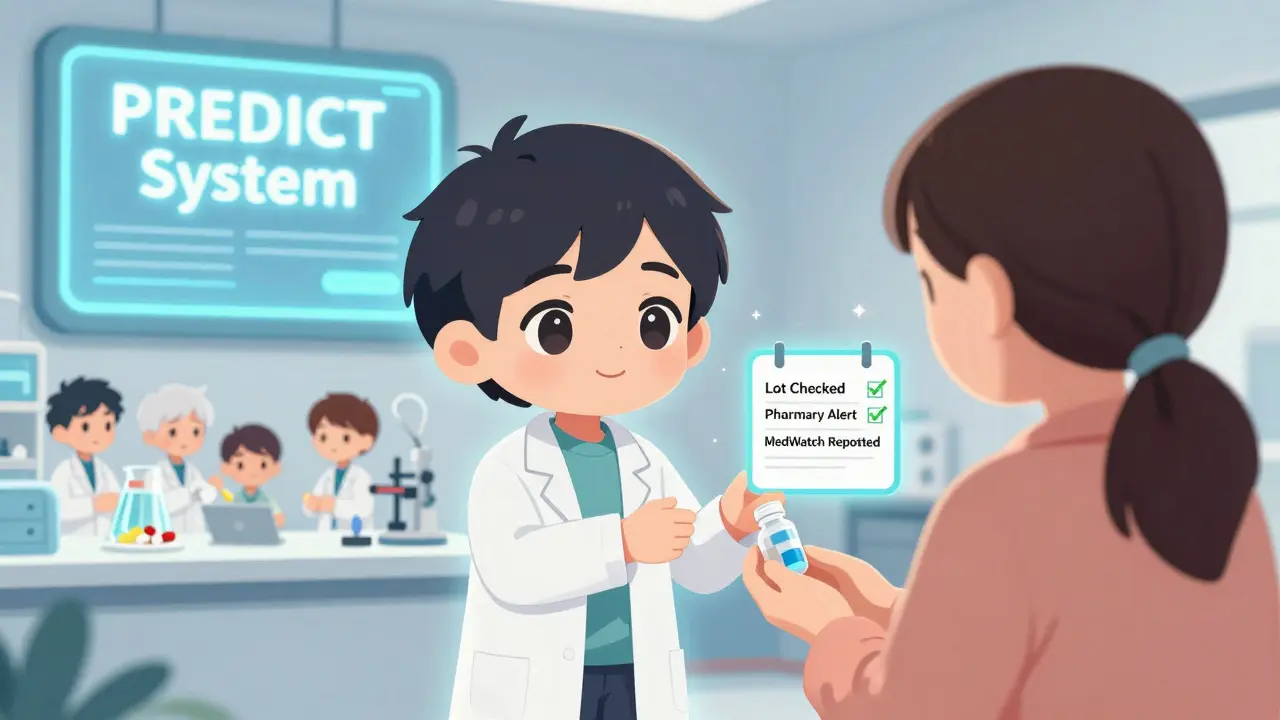
The FDA isn’t sitting still. In 2023, they increased inspection frequency for high-risk foreign plants. By 2026, their new PREDICT system will screen every imported generic drug before it enters the U.S. That’s a big jump from just 64% coverage today.
Manufacturers are stepping up too. In January 2025, Teva, Viatris, and Apotex launched the Generic Pharmaceutical Quality Consortium. They’re spending $285 million to set up independent labs in India and China to test batches before they leave the factory. It’s a start.
Still, the numbers tell a sobering story. Generic drug recalls rose 22.6% from 2023 to 2024. And when a major recall happens, it doesn’t just cost a company millions-it can cause shortages. About 37% of recalls lead to medication gaps that last over eight weeks. For someone who needs a daily pill to stay alive, that’s life or death.
What You Can Do Now
Stay informed. Sign up for recall alerts from your pharmacy. Check the FDA’s website monthly for new recalls. Keep your pill bottles until you’ve finished them-don’t toss them right away. That way, you can check the lot number if something comes up.
Ask your pharmacist: “Has this batch been recalled?” They have access to real-time databases. Don’t assume they’ll call you. They’re busy. Be proactive.
If you’re on a long-term medication-especially for heart disease, mental health, or chronic pain-talk to your doctor about having a backup prescription on hand. It’s not paranoia. It’s preparedness.
Generic drugs saved the U.S. healthcare system over $300 billion in the last decade. They’re essential. But they’re only as safe as the factories that make them. Until those factories are held to the same standards as U.S. plants, you have to be your own watchdog.
What Happens If You Don’t Act
Ignoring a recall doesn’t mean nothing happens. It means you’re rolling the dice. A failed dissolution means your blood pressure stays high, your cholesterol climbs, your ADHD flares. Contamination could mean infection, allergic reaction, or overdose. A leaking fentanyl patch could kill you.
The FDA doesn’t recall drugs because they’re evil. They recall them because someone made a mistake. And that mistake might be sitting in your medicine cabinet right now.
I took my generic blood pressure med last week and felt like a zombie for two days. Didn't think much of it until I saw this post. Now I'm checking the lot number. Scary how little we know about what's in those little pills.
So let me get this straight. We're saving billions by outsourcing drug manufacturing to countries with half the inspection rate... and then acting shocked when people start dropping like flies? The FDA's 'PREDICT system' sounds like a PowerPoint slide from a corporate retreat. Meanwhile, my grandma's statin came from a factory that hasn't seen a regulator since 2019. We're not fixing the system. We're just adding more acronyms.
Funny how everyone panics about fentanyl patches but won't blink at a $4 bottle of generic metformin that might as well be sugar pills. The real scandal isn't the recalls-it's that we've normalized this. You'd never buy a $5 phone charger that could electrocute you. Why do we accept this with our medicine?
The structural flaw lies in the economic architecture of pharmaceutical distribution. When profit margins are compressed to the point of existential fragility, quality control becomes a discretionary expenditure rather than a non-negotiable imperative. The Indian and Chinese manufacturing ecosystems operate under a paradigm of volume over validation, incentivized by global procurement contracts that prioritize unit cost over therapeutic integrity. Until regulatory oversight aligns with economic reality, recalls will remain symptoms-not failures of execution, but inevitabilities of design.
I work in a pharmacy in Chicago. We get maybe 2-3 recall notices a week. Most patients don't even know what a lot number is. I spend half my day explaining why they can't just keep taking the pills because 'it's the same thing.' The system is broken. We're the last line of defense-and we're understaffed, underpaid, and drowning in paperwork.
This is all a psyop. The FDA and Big Pharma are in cahoots. Why? Because they want you dependent on meds so they can sell you more. The recalls? Just a distraction. They don't care if you die. They just want you to keep buying. And don't tell me about 'quality control'-they're putting fluoride in the water too. Check the lot number? Nah. Check the Illuminati logo on the bottle. That's the real red flag.
In Nigeria, we don't even have this luxury. Most generics here come from unregulated suppliers. If your blood pressure pill doesn't work, you don't get a recall notice-you get a funeral notice. I'm grateful for the FDA's efforts, even if they're slow. At least here, there's a system to complain about. In many places, there's no system at all.
I just threw out my entire medicine cabinet because I read this. Now I'm sitting here in my bathrobe with a box of gummy vitamins and a single bottle of expired aspirin from 2018. I feel like a survivalist. My cat is judging me. My landlord thinks I'm hoarding. But hey-at least I won't accidentally overdose on a leaking fentanyl patch while binge-watching Netflix. #MedicineCabinetCrisis