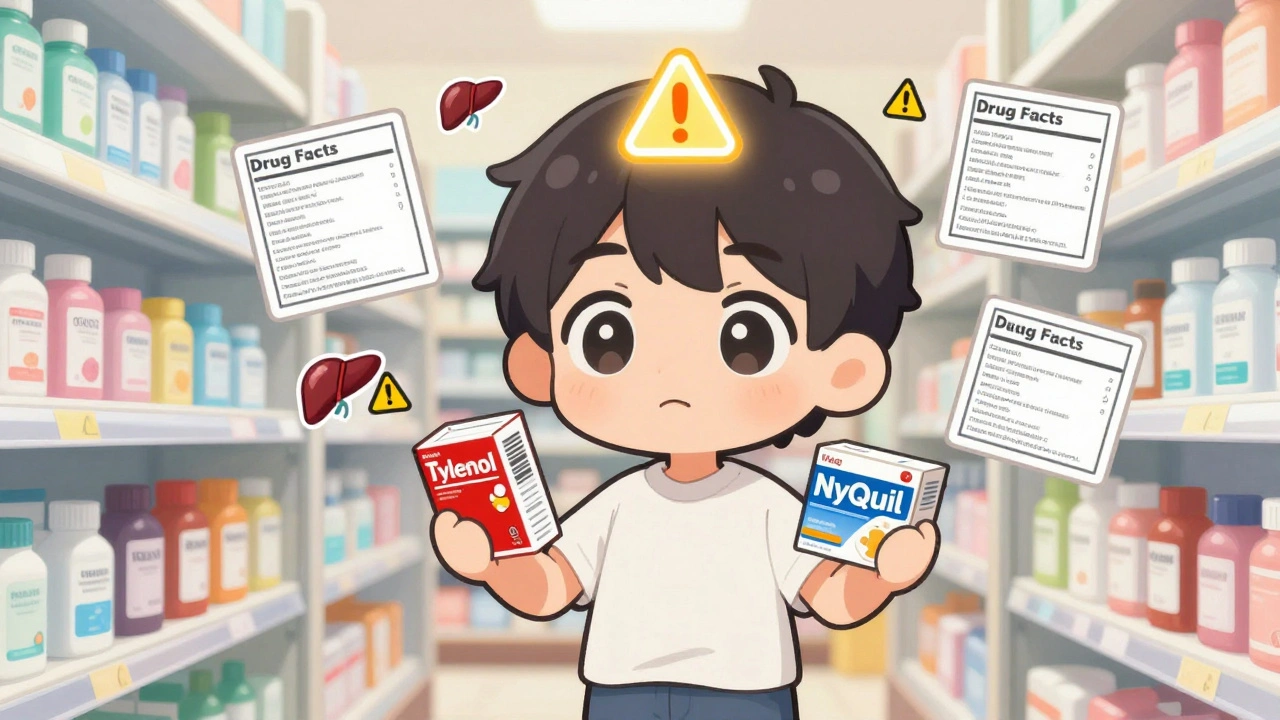
Every year, millions of Americans reach for an OTC medication without thinking twice. A headache? Grab a pill. Stuffy nose? Pick up a box. Heartburn? There’s a liquid for that. But here’s the truth: just because you don’t need a prescription doesn’t mean these medicines are harmless. In fact, OTC medications cause nearly 68,000 emergency room visits every year in the U.S. - not from rare side effects, but from simple mistakes like taking too much, mixing drugs, or ignoring warnings.
What Exactly Counts as an OTC Medication?
OTC medications aren’t just painkillers and cold remedies. They include toothpaste with fluoride, dandruff shampoos with zinc pyrithione, antibiotic ointments like Neosporin, and even eye drops for redness. The FDA classifies any product that’s safe and effective for self-use without a doctor’s supervision as OTC. There are over 300,000 OTC products on U.S. shelves, covering more than 80 health conditions - from acne to allergies to acid reflux.These aren’t random products. Every single one has been reviewed by the FDA. Since 1972, the agency has run the OTC Drug Review to make sure what’s on the shelf actually works and won’t hurt you. In 2020, the CARES Act gave the FDA new power to update safety rules faster. That means some older OTC products may disappear if they can’t prove they’re safe. By 2026, the FDA plans to review over 250 pending ingredients - and remove those that don’t meet modern standards.
The Big Four: Pain Relief Medications
When it comes to pain, two names dominate: acetaminophen and NSAIDs like ibuprofen and naproxen.Acetaminophen (Tylenol, generics) is the go-to for most people. It’s gentle on the stomach and works well for headaches, fevers, and mild aches. But here’s the catch: your liver can’t handle more than 3,000 mg in 24 hours. That’s just six extra-strength pills. Many people don’t realize acetaminophen is in dozens of cold and flu medicines - like NyQuil or Excedrin. Taking Tylenol plus a nighttime cold remedy? You could be hitting 4,000 mg without meaning to. That’s enough to cause serious liver damage. In the U.S., acetaminophen overdose leads to 56,000 ER visits and 458 deaths every year.
Ibuprofen (Advil, Motrin) and naproxen (Aleve) are NSAIDs. They reduce inflammation, so they’re better for sore muscles, sprains, or arthritis pain. But they’re not safer just because they’re natural-feeling. NSAIDs can cause stomach bleeding, raise blood pressure, and increase your risk of heart attack or stroke - especially if you take them long-term or have existing heart or kidney issues. The FDA now requires all NSAID labels to warn about these risks. If you have high blood pressure (nearly half of U.S. adults do), asthma, or a history of ulcers, talk to a pharmacist before using these.
Here’s the simple rule: use acetaminophen for general pain or fever. Use ibuprofen or naproxen only if you have swelling or inflammation. Never take both together - it doesn’t make the pain go away faster. It just increases your risk.
Understanding the Drug Facts Label
The key to safe OTC use isn’t brand loyalty. It’s reading the label. Since 1999, the FDA has required every OTC product to use a standardized Drug Facts label. It’s not marketing fluff - it’s your safety manual.Here’s what to look for:
- Active ingredients: This tells you what’s actually working. Look for the chemical name - not just the brand. If two products list the same active ingredient, you’re doubling up.
- Purpose: What’s it supposed to do? For example, “pain reliever/fever reducer” or “antihistamine.”
- Uses: What symptoms does it treat? If your symptom isn’t listed, don’t use it.
- Warnings: This is where the real danger lives. Look for allergies, interactions with other drugs, and conditions that make the medicine unsafe.
- Directions: How much? How often? Never exceed the maximum daily dose.
- Inactive ingredients: These don’t treat symptoms, but they can cause reactions. If you’re allergic to dyes, gluten, or soy, check this section.
Only 22% of people read the whole label. That’s why so many end up taking two cold medicines at once - both with acetaminophen. Or why older adults accidentally take a sleep aid that makes them dizzy. The label isn’t optional. It’s your only defense.

What You Should Never Do
Here are the top mistakes people make - and why they’re dangerous:- Mixing OTCs with prescriptions: If you’re on blood thinners, antidepressants, or high blood pressure meds, OTC painkillers can interact badly. Ibuprofen can make your blood pressure meds useless. Acetaminophen can overwork your liver if you’re on statins. Always check with a pharmacist.
- Using expired medicine: Most OTC drugs last 2-3 years. After that, they lose potency. Some, like liquid antibiotics or eye drops, can grow bacteria. Never use anything past its expiration date.
- Assuming ‘natural’ means safe: Products labeled ‘natural’ or ‘herbal’ aren’t regulated like OTC drugs. Some contain hidden active ingredients - like stimulants or steroids - that aren’t listed. A 2022 survey found 41% of consumers prefer these, but they’re riskier because you don’t know what’s inside.
- Ignoring age and weight: Kids’ liquid acetaminophen is more concentrated than adult versions. Giving a child adult dosage? That’s a hospital trip. Adults over 65 often need lower doses because their bodies process drugs slower.
- Using OTCs for more than 7-10 days: If your headache, cough, or heartburn lasts longer than a week, it’s not a simple problem. It’s a sign you need a doctor.
When to Call a Pharmacist - Not Just a Doctor
Most people think pharmacists just hand out pills. That’s outdated. Today, 89% of chain pharmacies offer free medication reviews. Pharmacists are trained to spot dangerous combinations, check for overdoses, and explain confusing labels.Here’s when to ask for help:
- You take five or more prescription drugs (polypharmacy)
- You’re unsure if your OTC choice conflicts with your current meds
- You’re over 65 or have kidney, liver, or heart disease
- You’re pregnant or breastfeeding
- You’re buying OTC meds for a child under 6
Pharmacists answer 78% of OTC questions each year. They check for drug interactions 92% of the time, confirm dosing 89% of the time, and spot contraindications 85% of the time. And it works: pharmacies that offer these reviews cut inappropriate OTC use by 42%.
Storage, Expiration, and Waste
OTC meds shouldn’t sit in your bathroom. Heat and moisture destroy them. The FDA says store them below 77°F (25°C). A cool, dry drawer is better than a steamy cabinet.Most have a 2-3 year shelf life. But here’s the kicker: Americans throw away $3.1 billion worth of unused OTC meds every year. Why? Because they bought them for a cold that never came, or they didn’t finish a bottle, or they forgot what it was for.
Don’t hoard. Don’t keep old meds. If you’re unsure if something’s still good, ask your pharmacist. Many stores offer free disposal bins for expired or unwanted medicines.

The Bigger Picture: Why This Matters
The OTC market is huge - $114 billion in 2022, and growing. But it’s not just about convenience. It’s about control. People want to manage their own health. That’s good. But when you don’t know what you’re taking, you’re trading control for risk.The real problem isn’t the drugs. It’s the assumption that OTC means risk-free. The FDA has issued 12 safety alerts on OTC products since 2020. One was about NSAIDs causing rare but deadly skin reactions. Another warned about pseudoephedrine (in Sudafed) being used to make illegal meth - which is why 37 states now require ID to buy it.
And here’s the quiet crisis: only 12% of U.S. adults have proficient health literacy. That means most people can’t read a label clearly. They don’t understand “maximum daily dose” or “do not exceed.” That’s not their fault. It’s a system failure.
But you can fix it for yourself. Learn to read the Drug Facts label. Know your active ingredients. Don’t guess. Don’t assume. Ask a pharmacist. It’s free, it’s fast, and it could save your life.
Final Checklist for Safe OTC Use
Before you buy or take any OTC medicine, ask yourself:- Do I know the active ingredient? (Not just the brand name)
- Am I already taking another medicine with the same ingredient?
- Does my condition match what the label says it treats?
- Do I have any health conditions (liver, kidney, heart, asthma, ulcers) that could make this dangerous?
- Am I taking the right dose for my age and weight?
- Is this medicine expired?
- Have I used it for more than 7-10 days?
- Have I checked with a pharmacist if I’m on other prescriptions?
If you answered ‘no’ to any of these, stop. Don’t take it. Talk to someone who can help.
Can I take two different OTC pain relievers at the same time?
No. Taking acetaminophen and ibuprofen together doesn’t give you better pain relief - it just doubles your risk of side effects. Acetaminophen harms your liver; ibuprofen harms your stomach and kidneys. If one isn’t working, wait at least 4-6 hours before switching to the other. Never combine them unless a doctor or pharmacist specifically tells you to.
Are store-brand OTC medications just as good as name brands?
Yes. Store brands (like CVS Health, Walgreens Balance, or Up & Up) contain the same active ingredients, doses, and strengths as name brands. The only differences are the inactive ingredients (like dyes or fillers) and the price - often 30-50% cheaper. If you’re looking to save money, choose store brands. Just make sure the active ingredient matches what you need.
Why do some OTC cold medicines make me sleepy?
Many multi-symptom cold medicines include an antihistamine like diphenhydramine or doxylamine to help with runny nose and sneezing. These cause drowsiness as a side effect. That’s why they’re labeled as “nighttime” formulas. If you’re taking one during the day, you might feel foggy or sluggish. Always check the label for “may cause drowsiness” and avoid driving or operating machinery. If you need daytime relief, look for products labeled “non-drowsy” - they usually contain pseudoephedrine or phenylephrine instead.
Is it safe to give OTC medicine to children?
Only if you use the right product and dose. Never give adult OTC medicine to a child. Always use a pediatric version labeled for their age and weight. Liquid forms come with special dosing tools - never use a kitchen spoon. Many parents accidentally overdose kids by using the wrong measuring device. The American Association of Poison Control Centers reports a 7.1% increase in children’s acetaminophen overdoses in 2022. When in doubt, call your pediatrician or pharmacist.
What should I do if I think I took too much OTC medicine?
Call Poison Control immediately at 1-800-222-1222. Don’t wait for symptoms. Acetaminophen overdose can damage your liver without you feeling sick for 24-48 hours. For NSAIDs, symptoms like vomiting, dizziness, or ringing in the ears can signal toxicity. Keep the medicine bottle handy when you call - they’ll need the active ingredient and amount taken. Emergency treatment is most effective if started early.
Can OTC medications interact with supplements or herbal remedies?
Absolutely. St. John’s Wort can reduce the effect of antidepressants and birth control pills. Garlic and ginkgo can thin your blood and increase bleeding risk if you’re taking aspirin or ibuprofen. Even vitamin E in high doses can interfere with blood clotting. Many people assume supplements are harmless, but they’re not regulated like drugs. Always tell your pharmacist what vitamins, herbs, or supplements you take - even if you think they’re “just natural.”
Next Steps for Safer Self-Care
Start today. Go to your medicine cabinet. Pull out your most-used OTC products. Read the Drug Facts label. Write down the active ingredient. Check if you’ve taken any other medicine with the same ingredient in the last 24 hours. If you’re unsure, take a photo of the label and ask your pharmacist. You don’t need to be a doctor to use OTC meds safely - you just need to be careful.OTC medications are powerful tools. Used right, they keep you out of the ER. Used wrong, they put you in one. Knowledge isn’t just helpful - it’s the only thing standing between you and a preventable medical crisis.

OMG I just read this and my whole life flashed before my eyes. I’ve been taking two cold meds at once because ‘one wasn’t doing it’-turns out I was basically doing a liver slam dance. Time to clean out my cabinet and actually read labels. Thanks for the wake-up call 🙏
So let me get this straight-your government lets you buy painkillers like candy but won’t fix your healthcare system? Classic. Meanwhile, I’m in India watching my neighbor take 12 paracetamol for a headache because ‘it’s just medicine.’ We’re all just guessing in the dark.
Y’all. I used to hoard OTC meds like they were gold bars. Leftover cough syrup from 2019? Check. Random ibuprofen from a flight in 2021? Check. But after reading this-I literally threw out 17 bottles. My bathroom drawer looks like a minimalist art installation now. And I feel FREE. Also, I asked my pharmacist about my supplements and she laughed. Then she gave me a sticker. Best interaction ever.
As a clinical pharmacist, I see this every day. The Drug Facts label isn’t optional-it’s your legal and medical lifeline. Most patients skim it like a Yelp review. But when you’re on beta-blockers and toss in a decongestant? That’s not a ‘mistake,’ that’s a pharmacokinetic grenade. Always ask. Always check. Your liver will thank you.
Acetaminophen = hepatic suicide pact. NSAIDs = GI bleed lottery. And don’t even get me started on ‘natural’ supplements-half of ‘em are just FDA-unapproved pharma with a yoga pose on the label. The real issue? Pharma companies market OTCs like they’re candy, and the FDA’s playing catch-up with a slingshot. We need a full regulatory overhaul, not just ‘read the label’ platitudes.
It is truly fascinating how modern society has normalized the ingestion of potent biochemical agents with the same casualness as selecting a flavor of yogurt. The pharmacological literacy of the general populace remains abysmal, and the commodification of health has reduced complex physiological interventions to impulse purchases at the checkout aisle. One must ask: is this autonomy, or is it the quiet erosion of medical agency under the guise of convenience? The FDA’s oversight, while commendable, is reactive rather than prophylactic. We are not merely consumers of medicine-we are participants in a fragile biological ecosystem that demands reverence, not recklessness.
USA is the only country where you can buy a drug that can kill you… but can’t buy a decent burger without a 12-page waiver. 😒
Did you know the FDA is controlled by Big Pharma lobbyists? They let dangerous stuff stay on shelves until enough people die… then they ‘update’ the label. I’ve seen it. The real reason they make you show ID for pseudoephedrine? So they can track who’s buying it… for the meth labs. Or for YOU. They’re building a database. And that’s just the tip of the iceberg. Your ‘OTC meds’? They’re part of the surveillance state now. 🕵️♂️
Ugh. Another ‘educational’ post from someone who clearly doesn’t live in the real world. I’ve been taking Tylenol and Advil together since 2015. I’m 42. Still standing. My kidneys? Fine. My liver? Probably better than yours. Stop scaring people with stats. People need relief, not a lecture.
My grandma used to say, ‘If it’s on the shelf, it’s safe.’ She died at 89. I now read every label. I keep a little notebook. I ask pharmacists. I don’t take anything past its date. And I just saved my mom from a potential overdose last week-she was mixing her blood pressure med with a sleep aid. We cried. Then we hugged. And then we went to the pharmacy together. This isn’t just advice. It’s love in action.