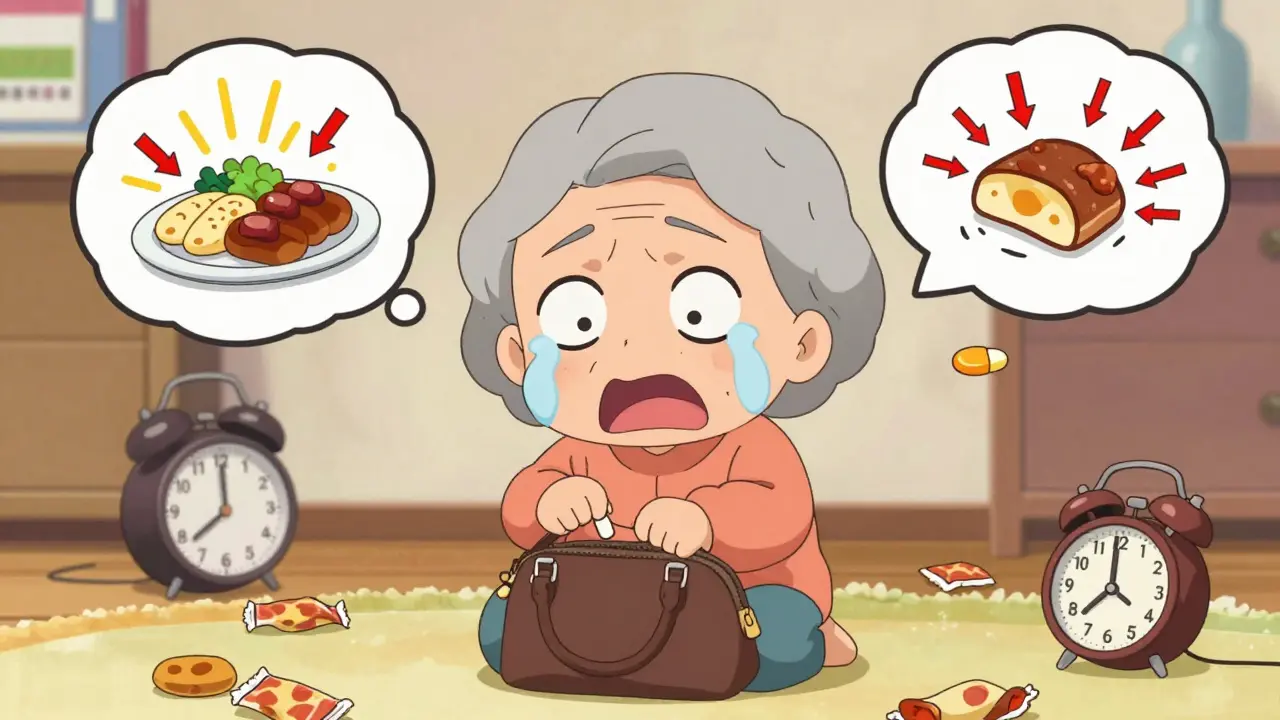
Take a diabetes pill, then don’t eat. Sounds simple. But for people using meglitinides like repaglinide or nateglinide, this one mistake can send blood sugar crashing - fast. These drugs are designed to help people with type 2 diabetes who eat at odd hours, skip breakfast, or grab snacks unpredictably. But here’s the catch: the very feature that makes them convenient also makes them dangerous if meals aren’t timed right.
How Meglitinides Work - and Why Timing Matters
Meglitinides are short-acting drugs that tell your pancreas to release insulin right when you eat. Unlike older diabetes pills like sulfonylureas that keep working for hours or even a full day, meglitinides act fast and fade fast. Repaglinide starts working in 15 to 30 minutes. Nateglinide kicks in even faster - sometimes within a minute. Peak insulin levels hit within an hour. Then, by two to four hours later, the drug is mostly gone.
This design is perfect for people who don’t eat at the same time every day. Need to skip lunch because of a meeting? Fine. Take the pill only when you sit down to eat. But if you take the pill and then get delayed - traffic, a phone call, a sudden headache - your body gets insulin with no food to use it. That’s when blood sugar drops below 70 mg/dL. That’s hypoglycemia.
Studies show skipping just one meal after taking a meglitinide increases your risk of low blood sugar by 3.7 times. For some, symptoms hit within 90 minutes: sweating, shaking, confusion, dizziness. In older adults or those with kidney problems, the risk is even higher.
The Real Danger: Irregular Meals
It’s not about being late to dinner. It’s about inconsistency. A 2017 study found that 41% of all hypoglycemia events in meglitinide users happened between two and four hours after dosing - exactly when the drug is strongest and meals are often delayed or skipped. This isn’t rare. In real-world use, people with busy schedules, dementia, depression, or simply unpredictable routines are the ones most likely to miss meals after taking their pill.
Doctors prescribe meglitinides because they want flexibility. But flexibility without structure is a trap. The American Diabetes Association’s 2025 guidelines warn that older adults are especially vulnerable. Why? Because they’re more likely to forget meals, have less insulin reserve, or be on other medications that add to the risk. One patient I spoke with - a 72-year-old retired teacher - took repaglinide because she liked that she didn’t have to plan meals around pills. But she’d often forget to eat after taking it. She ended up in the ER twice in six months with low blood sugar.
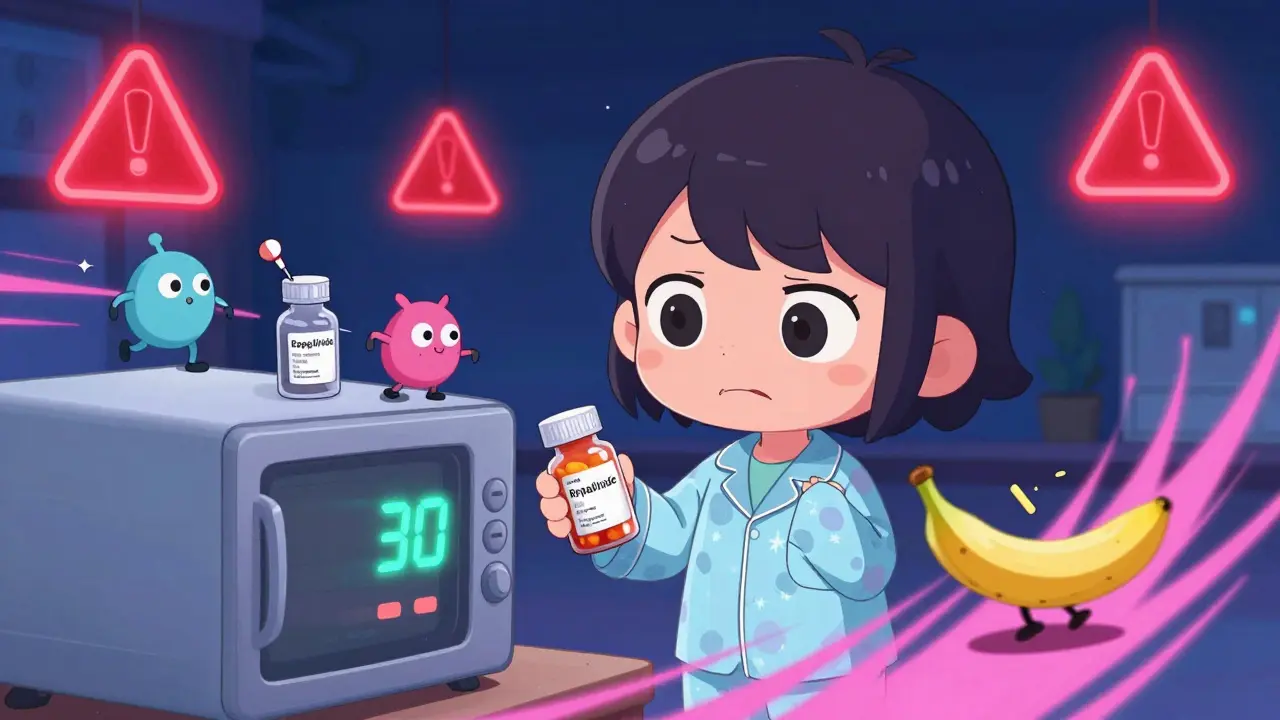
Who’s Most at Risk?
Not everyone on meglitinides is equally likely to have a problem. Certain groups face much higher danger:
- Older adults (65+): Slower metabolism, memory lapses, and reduced appetite make meal timing harder.
- People with chronic kidney disease (CKD): Even though repaglinide is cleared by the liver (making it safer than sulfonylureas in kidney patients), those with advanced CKD still face a 2.4-fold higher risk of hypoglycemia.
- Those on multiple diabetes drugs: Combining meglitinides with insulin or sulfonylureas multiplies insulin levels - and hypoglycemia risk. One study found a 1.8-fold increase when meglitinides were paired with insulin (p=0.018).
- People with irregular schedules: Shift workers, caregivers, people with mental health conditions, or those living alone are more likely to miss meals.
The National Kidney Foundation says repaglinide is still the preferred meglitinide for people with low kidney function - but only if doses are cut in half. Standard dose? 120 mg before meals. For eGFR under 30? Drop to 60 mg. Many doctors still miss this detail.
Meglitinides vs. Other Diabetes Pills
How do meglitinides stack up against other options?
| Drug Class | Examples | Duration of Action | Hypoglycemia Risk with Missed Meals | Best For |
|---|---|---|---|---|
| Meglitinides | Repaglinide, Nateglinide | 2-4 hours | Very High - risk spikes if meal skipped within 1 hour of dose | Unpredictable eaters, post-meal glucose spikes |
| Sulfonylureas | Glipizide, Glyburide | 12-24 hours | High - risk exists even without meals | Consistent eaters, lower cost |
| Metformin | Metformin | 6-8 hours | Very Low - rarely causes low blood sugar | First-line for most type 2 diabetes |
| GLP-1 Agonists | Metformin, Semaglutide | Hours to days | Low - unless combined with insulin or sulfonylureas | Weight loss, heart protection, lower hypoglycemia risk |
Repaglinide lowers HbA1c better than nateglinide - about 7.3% vs. 7.9% in one trial - but it also causes 28% more low blood sugar episodes. Nateglinide is gentler but less effective. The trade-off is real.
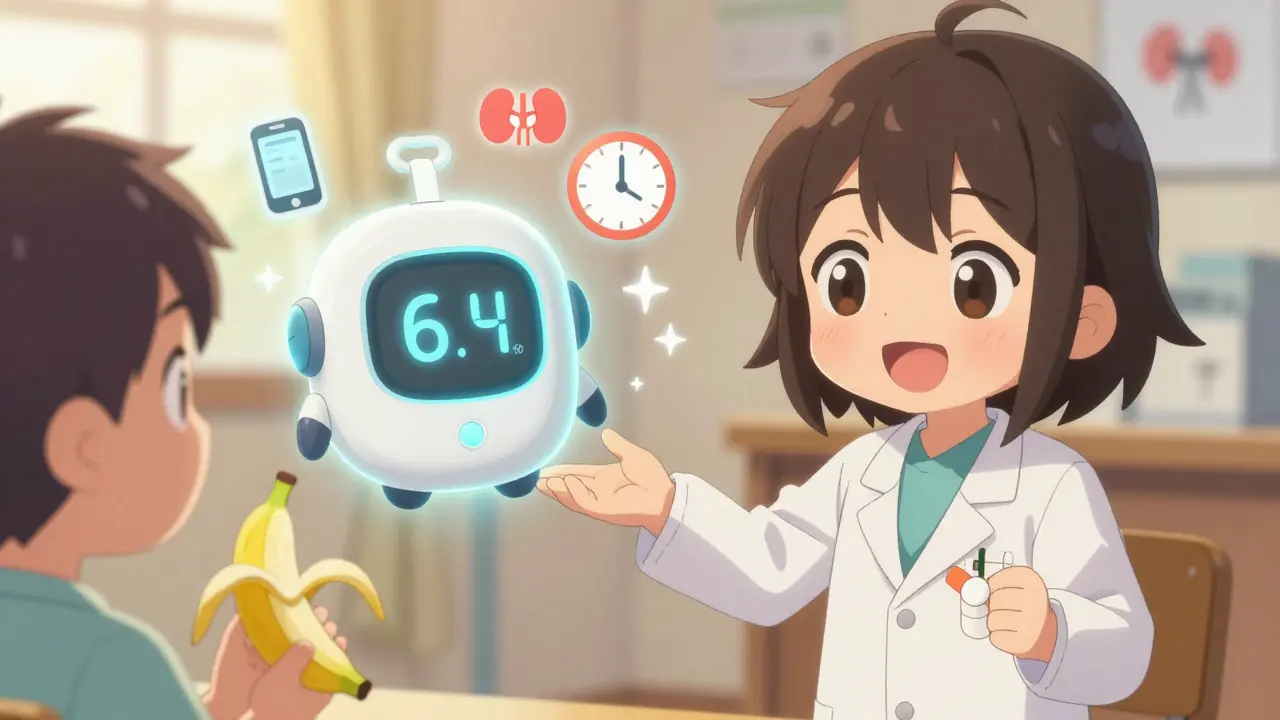
How to Use Meglitinides Safely
If you’re on one of these drugs, here’s what actually works:
- Dose only when you eat. Never take it “just in case.” Wait until you’re sitting down with food. Take it 15 minutes before your first bite.
- Never skip meals after dosing. Even a small snack - a banana, a handful of nuts, a few crackers - is better than nothing.
- Carry fast-acting sugar. Glucose tablets, juice boxes, or candy. Keep them in your bag, car, and by your bed.
- Use a phone reminder. A 2023 study showed that patients who got daily text reminders to eat after taking their pill cut hypoglycemia events by 39%.
- Consider a CGM. Continuous glucose monitors show real-time trends. If your sugar drops fast, you’ll know before you feel shaky. Studies show CGMs reduce hypoglycemia by 57% in meglitinide users with irregular schedules.
- Talk to your doctor. If you’re missing meals often, ask if another drug - like metformin or a GLP-1 agonist - might be safer. Newer drugs don’t cause low blood sugar unless mixed with insulin.
The FDA added strong warnings to all meglitinide labels in 2021. The message is clear: Don’t take this if you can’t eat. It’s not a suggestion. It’s a safety rule.
The Future: Can We Fix This?
Researchers are trying. A new extended-release version of repaglinide - called repaglinide XR - is in Phase II trials. Early results show it reduces hypoglycemia by 28% compared to the standard form, while still working with irregular meals. That could be a game-changer.
But until then, the answer isn’t a new pill. It’s better habits. Better reminders. Better education. For many, meglitinides are the only option that fits their life. But that life has to include food - on time, every time.
If you’re taking one of these drugs and your meals are unpredictable, talk to your doctor. There are safer alternatives. And if you’re not sure whether you’re at risk - ask. A single low blood sugar episode can be life-changing. It doesn’t have to be.
Can I take meglitinides if I skip meals often?
No - not safely. Meglitinides are designed for people who eat at irregular times, but only if they eat something every time they take the pill. Skipping meals after dosing increases hypoglycemia risk by over 3 times. If you regularly skip meals, ask your doctor about alternatives like metformin or GLP-1 agonists, which don’t cause low blood sugar on their own.
Is repaglinide safer than nateglinide for kidney patients?
Yes. Repaglinide is mostly cleared by the liver, not the kidneys, making it the preferred meglitinide for people with chronic kidney disease. However, the dose must be reduced to 60 mg (instead of 120 mg) if your kidney function (eGFR) is below 30 mL/min/1.73m². Nateglinide is cleared by the kidneys and may build up in advanced kidney disease, increasing hypoglycemia risk.
How soon after taking meglitinides should I eat?
Take meglitinides 15 minutes before you start eating. If you wait longer than 30 minutes, your insulin levels will peak without food, causing your blood sugar to drop. Waiting too long is one of the most common reasons for hypoglycemia with these drugs.
Can I combine meglitinides with insulin?
Yes, but with caution. Combining meglitinides with insulin significantly increases hypoglycemia risk - studies show a statistically significant rise (p=0.018). This combination should only be used under close medical supervision, with frequent blood sugar checks and a clear plan for treating low blood sugar.
Do I need a continuous glucose monitor (CGM) if I take meglitinides?
If you have an irregular schedule, are over 65, or have had low blood sugar before, yes - a CGM is strongly recommended. Studies show CGMs reduce hypoglycemia episodes by 57% in meglitinide users by alerting you to drops before symptoms appear. It’s not required, but it’s one of the safest ways to manage the risk.


this drug sounds like a trap for old people who forget to eat 😭 i had my grandma take this and she passed out at the grocery store. they didn't even tell her to eat right after. no warning. just a pill and a shrug.
In India, many elderly take these pills without understanding timing. Family often forgets to remind them. We need community health workers to check in - not just prescriptions. Safety isn't just about the drug - it's about the system.
Look, if you're taking meglitinides and you're not eating, you're basically playing Russian roulette with your brain. I've seen this too many times - people think 'oh it's just a little low sugar' and then they pass out behind the wheel. The FDA warning isn't a suggestion, it's a life raft. Stop being lazy with your meds.
i had no idea this was such a big deal 😳 i thought all diabetes meds were kinda safe unless you overdose. my uncle takes repaglinide and he skips breakfast all the time… i’m gonna send him this right now. also cgms sound like a game changer 💡
bro i took repaglinide once just to see what it did. took it at 10am, got stuck in traffic, didn't eat till 1pm. felt like my body was shutting down. hands shaking, vision blurry, heart pounding like a drum. i sat in my car and cried. never again. this stuff is not a snack pill. it's a bomb.
Let’s be real - prescribing meglitinides to anyone over 65 without a CGM is malpractice. The data is clear: 41% of hypoglycemic events happen 2–4 hours post-dose. That’s not luck, that’s predictable failure. Doctors are still treating this like a one-size-fits-all script. It’s not. It’s a precision tool. Use it like one.
my aunt uses this and she always eats a banana right after the pill 🍌 it’s her ritual now. she says it saved her life. also she sets 3 alarms - one for pill, one for food, one for check. simple stuff works. no fancy tech needed 😊
Just got my CGM last month and wow… seeing my sugar drop at 3am after a missed lunch? Chilling. 😰 I used to think I was 'fine' until my glucose crashed without warning. This post? Lifesaver. Thank you. 🙏
Why are we even giving these drugs to people who can’t manage their own meals? In America, we hand out pills like candy and then act surprised when people get hurt. Take responsibility. If you can’t eat on time, don’t take the pill. Simple. No excuses.
These drugs are a disgrace disguised as convenience. Lazy medicine for lazy people. We don’t need fancy pills - we need discipline. If you’re skipping meals, you’re not sick, you’re careless. My grandmother took insulin at 7am and 7pm - no exceptions. She lived to 94. Why? Because she respected her body. Not because of some magical new drug.