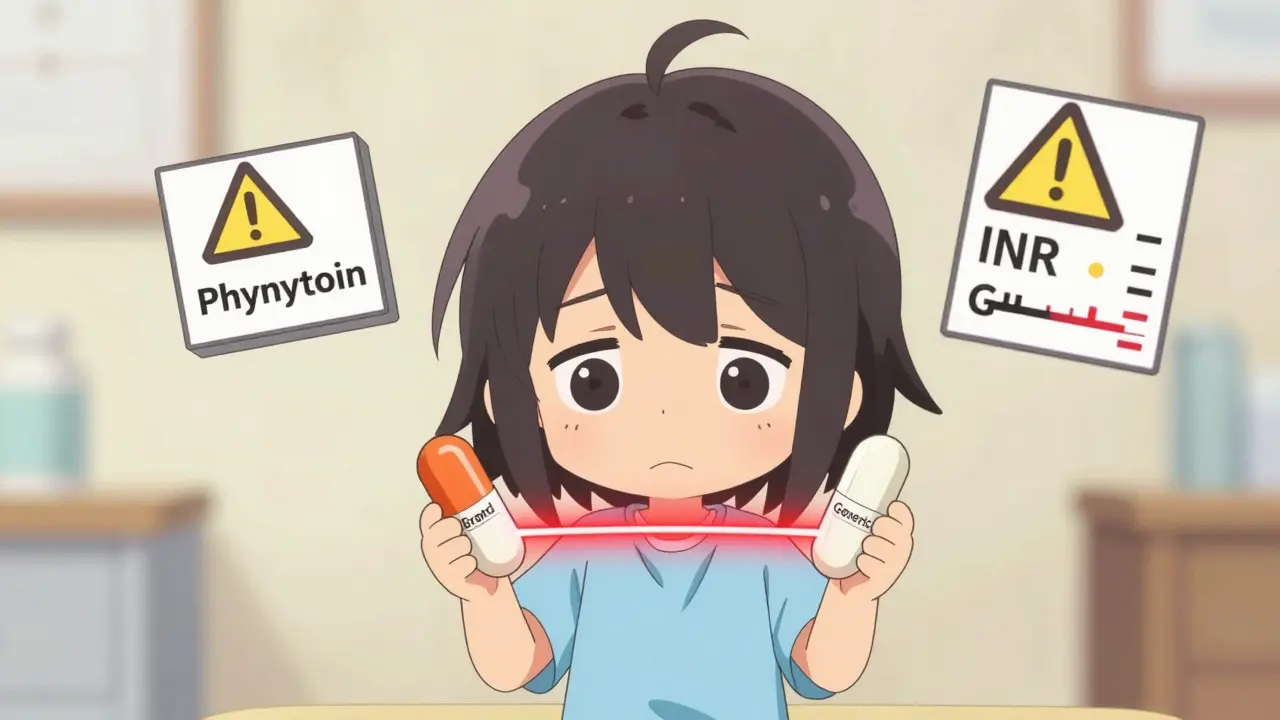
When a doctor prescribes a medication, they expect it to work the same way every time. But for some drugs, switching from brand name to generic can be risky - even dangerous. This is especially true for NTI drugs, or Narrow Therapeutic Index drugs. These aren’t your typical pills. They’re the kind where a tiny change in dose - as little as 10% - can mean the difference between healing and harm. And that’s why generic switching raises serious concerns.
What Makes a Drug an NTI Drug?
An NTI drug has a razor-thin line between being effective and being toxic. The therapeutic index is a ratio that compares the dose that causes harm to the dose that helps. For most drugs, this gap is wide. For NTI drugs, it’s less than 2:1. That means the amount of drug that works is almost the same as the amount that poisons you.
Take warfarin is an anticoagulant used to prevent blood clots. The target range for its effect is measured by the INR (International Normalized Ratio), which should stay between 2.0 and 3.0. If it drops below 2.0, you risk a clot. If it climbs above 3.0, you risk bleeding. A small shift in how your body absorbs the drug - even from a different generic version - can push you out of that range.
Other examples include phenytoin is an anticonvulsant used to control seizures. Its effective range is 10 to 20 mcg/mL. Above 20, you get dizziness, slurred speech, and uncontrolled movements. Below 10, seizures return. Carbamazepine, another seizure drug, has similar risks. digoxin is used for heart failure and arrhythmias. Too little and your heart keeps struggling. Too much and you get nausea, vision changes, and dangerous heart rhythms.
Even lithium is a mood stabilizer for bipolar disorder. Its safe range is 0.6 to 1.2 mEq/L. A small increase can cause tremors, confusion, and kidney damage. A drop can make depression or mania flare up again.
How Generic Drugs Are Approved - and Why It’s a Problem
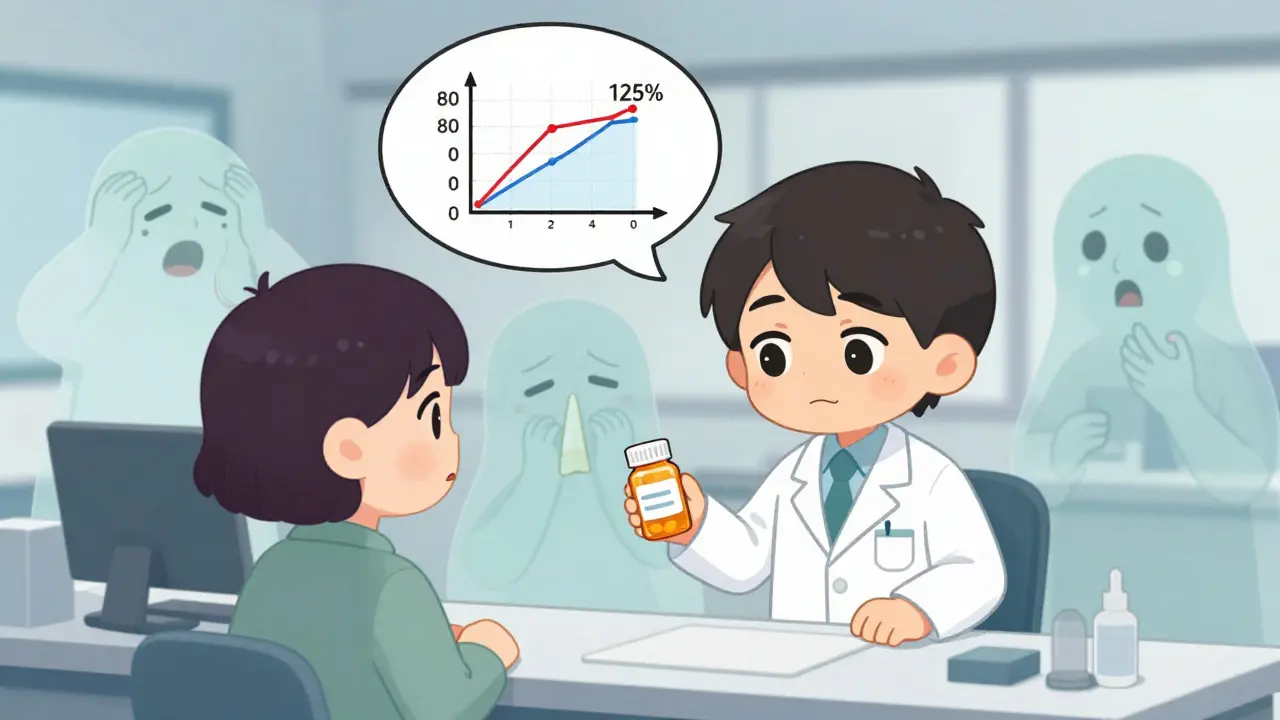
The FDA requires generic drugs to prove they’re bioequivalent to the brand-name version. That means they must deliver 80% to 125% of the active ingredient into the bloodstream compared to the original. On paper, that sounds fine. But for NTI drugs, that 45% range is huge.
Let’s say your brand-name warfarin gives you exactly 5 mg of active drug. A generic version could deliver as little as 4 mg or as much as 6.25 mg. That’s a 25% difference. For most drugs, that’s negligible. For warfarin? That’s the difference between a safe dose and a bleeding risk.
The FDA itself admits this gap is problematic. In 2010, its advisory committee said the current standards were acceptable - but many experts disagree. Some researchers argue that for NTI drugs, the acceptable range should be tighter: 90% to 110%. But no such rule exists yet.
And here’s the kicker: bioequivalence studies are done on healthy volunteers. Not patients with liver disease, kidney problems, or multiple medications. Real people absorb drugs differently. A generic that works fine in a 25-year-old volunteer might cause toxicity in a 72-year-old on five other drugs.
Real Cases - When Switching Went Wrong
This isn’t theoretical. There are documented cases where patients suffered after switching generics.
- A patient on brand-name Coumadin was switched to a generic warfarin. Their INR dropped from 2.8 to 1.5. Two weeks later, they had a stroke.
- A woman taking phenytoin for epilepsy switched generics. Her blood levels fell below 10 mcg/mL. Within days, she had a grand mal seizure.
- A man on methadone for chronic pain and opioid addiction was switched to a generic. The new version had higher bioavailability. He developed respiratory depression and nearly died.
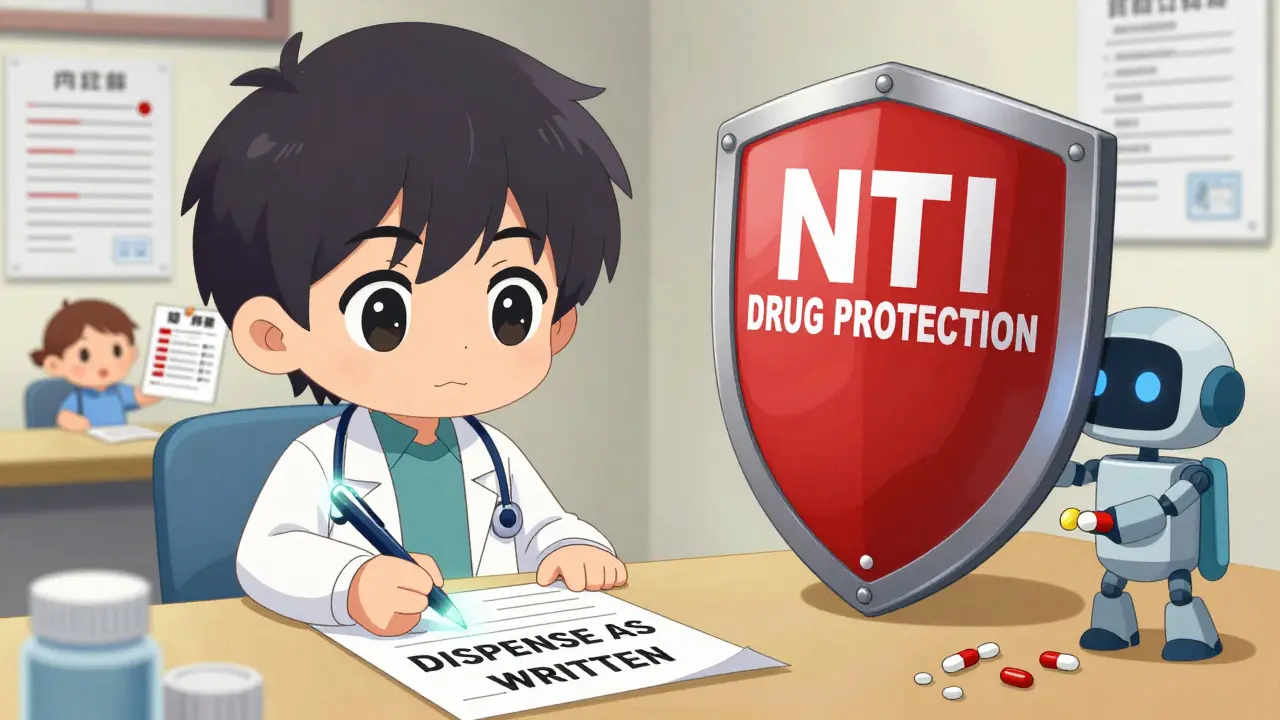
These aren’t rare outliers. They’re preventable tragedies. And they happen because pharmacists are allowed to substitute generics unless the doctor writes "dispense as written" - which many don’t know to do.
Conflicting Evidence - Why Some Say It’s Fine
Not everyone agrees. Some studies claim switching is safe. A 2007 study in a health maintenance organization found no increase in INR problems after switching warfarin generics. Another study showed similar results for phenytoin.
But here’s what those studies often miss: they looked at large populations. They didn’t track individual patients. They didn’t check for subtle shifts in drug levels. And they didn’t account for patients who were already on the edge of their therapeutic window.
When you average out 10,000 patients, one person’s near-fatal bleed gets lost in the noise. But for that one person, it’s everything.
Pharmacists, too, are divided. A 2019 survey found most pharmacists feel confident in generic NTI drugs - but those working outside big chain pharmacies were more skeptical. Female pharmacists were more likely to question substitutions. Why? Because they saw more of the fallout.
Who Gets to Decide?
The American Medical Association (AMA) says the prescribing physician should decide. Not the pharmacist. Not the insurance company. Not the cost-saving algorithm.
Some states have laws that restrict automatic substitution for NTI drugs. North Carolina, for example, has a list of drugs where substitution requires explicit permission from the prescriber. But most states don’t. That means in many places, your pharmacist can swap your warfarin without telling you - or your doctor.
Patients rarely know they’ve been switched. The pill looks different? They assume it’s just a new batch. The label says "generic"? They don’t realize it’s a different formulation with different absorption.
What Patients and Providers Can Do
If you’re on an NTI drug, here’s what you need to know:
- Ask your doctor if your medication is an NTI drug. If it is, ask them to write "dispense as written" or "no substitution" on the prescription.
- Check your pill. If it looks different, or the name on the bottle changed, ask the pharmacist if it’s a new generic.
- Get your levels checked. If you’re on warfarin, phenytoin, or lithium, regular blood tests aren’t optional - they’re lifesaving. Don’t skip them.
- Keep a list. Write down every medication you take - including doses and when you started. Bring it to every appointment.
- Don’t switch without approval. Even if your insurance pushes for a cheaper generic, don’t agree unless your doctor says it’s safe.
For doctors and pharmacists: Know your NTI drugs. Know the risks. Know your state’s laws. And never assume bioequivalence equals therapeutic equivalence.
The Bigger Picture
The push for generics is about saving money. And it works - for most drugs. But NTI drugs aren’t most drugs. They’re high-stakes medications. A 20% cost saving isn’t worth risking a stroke, a seizure, or death.
Regulators are aware. The FDA continues to study tighter bioequivalence standards. Some experts are calling for mandatory therapeutic drug monitoring for all NTI drug users. Others want a national list of NTI drugs, with automatic substitution blocked unless explicitly approved.
Until then, the burden falls on patients and providers. You can’t rely on the system to protect you. You have to speak up. Ask questions. Demand clarity. And never let cost override safety.
Are all generic drugs unsafe for NTI drugs?
Not all generics are unsafe, but the risk is higher. The issue isn’t that generics are bad - it’s that the current approval standards allow too much variation for drugs with narrow therapeutic windows. Some generic versions may be perfectly safe for certain patients, but without individualized monitoring, there’s no way to know for sure. That’s why caution is advised.
Which drugs are considered NTI drugs?
Common NTI drugs include warfarin, phenytoin, carbamazepine, lithium, digoxin, theophylline, and methadone. Some sources list around 15-20 commonly prescribed medications in this category. The exact list varies by country and regulatory body, but these are the most frequently cited in U.S. medical literature.
Can a pharmacist refuse to substitute an NTI drug?
Yes - if the prescriber writes "dispense as written" or "no substitution" on the prescription. In some states, pharmacists are legally required to honor that. Even in states without such laws, pharmacists can refuse substitution if they believe it’s unsafe. Patients should always ask if substitution is being made - and insist on knowing if it’s an NTI drug.
Why doesn’t the FDA require stricter standards for NTI drugs?
The FDA currently uses the same 80-125% bioequivalence standard for all drugs, including NTI drugs, because it’s based on statistical norms from large populations. Changing this would require new scientific data, regulatory changes, and industry agreement. While the FDA recommends tighter limits for NTI drugs, it hasn’t enforced them due to lack of consensus and the complexity of testing. Critics argue this puts profit and convenience ahead of safety.
What should I do if I’ve been switched to a generic NTI drug?
Contact your prescriber immediately. Ask whether the switch was intentional and whether your current generic is approved for your condition. Request a blood test to check your drug levels - especially if you’re on warfarin, phenytoin, or lithium. If you feel different - even slightly - don’t ignore it. Small changes in NTI drugs can have big consequences.
For NTI drugs, safety isn’t about averages. It’s about precision. And when it comes to your health, precision matters more than savings.


I’ve been on warfarin for years, and I never realized how thin that line is. My INR’s been stable at 2.3 for ages, but last year my pharmacy switched me to a different generic without telling me. I felt off for a week-dizzy, tired-but didn’t connect it until my next blood test. My INR dropped to 1.8. Scary stuff. I now always check the label and ask. Small things matter.
Thanks for laying this out so clearly.
so like… i got phynytion for seizures right? and they switched me to some generic and i had a full on seizure like 3 days later… like… wtf? my doc didnt even know they swapped it. i had to go to er. now i make em write no substition. its not that hard. also why do they even let this happen??
Thank you for this meticulously researched and profoundly important piece. The clinical implications of bioequivalence thresholds for NTI drugs are not merely pharmacological-they are ethical. To permit substitution without explicit consent, particularly when patient-specific factors such as polypharmacy and metabolic variance are unaccounted for, constitutes a systemic failure in patient-centered care. I urge all regulatory bodies to prioritize individual safety over cost-efficiency metrics.
OMG YES THIS! I’m on lithium and my pharmacy swapped it once and I felt like my brain was melting 😵💫 I called my doc immediately and they had to write NO SUBSTITUTION on the script. Now I check every bottle like a hawk. Don’t let them play Russian roulette with your mental health!
NTI drugs are the silent killers in our healthcare system. The FDA’s 80–125% bioequivalence standard is a statistical mirage. Real patients aren’t healthy 25-year-olds in a lab. We’re 68-year-olds on six meds, with fatty livers and slow kidneys. That 25% variance? It’s a death sentence for someone on the edge. We need mandatory TDM for all NTI prescriptions. Period.
i mean… i get it. generics save money. but like… if your kid is on phenytoin and you swap it out for a cheaper one and they have a seizure? no amount of savings makes up for that. my cousin’s daughter had a grand mal after a switch. she’s fine now but… man. i’ve been telling everyone i know to check their meds. even if it looks the same. sometimes the shape changes. sometimes the color. sometimes the name. and if you don’t ask? you don’t know.
People who don’t understand this are either ignorant or selfish. You think saving $5 on a pill is worth risking a stroke? Your life isn’t a spreadsheet. If you’re too lazy to read the label or ask your pharmacist, then maybe you deserve what you get. This isn’t about big pharma-it’s about personal responsibility. And if you’re the type to let a pharmacist swap your life-saving drug? You’re part of the problem.
Oh please. The FDA’s ‘80–125%’ rule is a joke. It’s not ‘science’-it’s corporate lobbying dressed in lab coats. And let’s be real: if this were insulin or epinephrine, they’d have a 95–105% standard overnight. But because it’s just ‘old people on warfarin’? Meh. Let’s cut costs. Classic. I’m not mad. I’m just… disappointed.
Consider the ontological paradox of pharmaceutical equivalence: if a generic drug delivers 115% of the active ingredient, is it still the same drug? Or has it become a new entity-albeit chemically identical-whose pharmacokinetic behavior diverges from its branded counterpart due to excipient variance, dissolution rates, and gastrointestinal absorption dynamics? The FDA’s regulatory framework assumes homogeneity where none exists. We are not treating molecules-we are treating complex biological systems with nonlinear responses. The system doesn’t fail because of negligence-it fails because it was built on a flawed premise: that biology can be standardized like a widget.
Lithium levels are everything. I’m a psych NP and I see this weekly. Patients get switched, don’t get tested, and come in with tremors or confusion. We have to run levels every 3–6 months-no exceptions. And honestly? If a patient’s on an NTI drug and their PCP doesn’t know the risks? That’s malpractice waiting to happen. We need mandatory NTI education for all prescribers. Not optional.
Man, I’ve been on digoxin for AFib since 2018. My doc always wrote ‘dispense as written’-and I always checked the bottle. Last year, my pharmacist tried to switch me. I said no. He said, ‘It’s FDA-approved.’ I said, ‘So is a paperclip. Does that mean I can use it as a stent?’ He shut up. Bottom line: if your pharmacist can’t explain why 80–125% is safe for your condition, walk out. Your life isn’t a cost-benefit analysis.
Y’know what’s wild? In the UK, we have a ‘Narrow Therapeutic Index’ list. Pharmacists literally can’t swap those drugs without a manual override from the prescriber. No automatic substitution. It’s not hard. It’s not expensive. It’s just… common sense. Meanwhile here? We’re playing dice with people’s lives. I’m British. I’ve seen both systems. The American one is a dumpster fire. 🔥