Every year, Americans fill over 4 billion prescriptions. Roughly 90% of them are for generic drugs. Yet, many patients still look at that little white pill with suspicion. "Is this really the same?" they ask. And sometimes, their doctors don’t push back hard enough.
Generics Aren’t Cheap Copies - They’re Identical Medicines
The FDA doesn’t approve generics because they’re cheaper. They approve them because they’re the same. Every generic drug must contain the exact same active ingredient, in the same strength, and delivered the same way as the brand-name version. That’s not a marketing claim - it’s a legal requirement backed by strict testing.
To get approved, a generic must prove it delivers the same amount of medicine into the bloodstream at the same rate as the brand. This is called bioequivalence. The FDA requires the generic’s absorption to fall within 80% to 125% of the brand’s - a tight range that ensures clinical outcomes are virtually identical. If a generic fails this test, it doesn’t hit the market.
Manufacturing facilities for generics face the same inspections as brand-name makers. The FDA checks about 1,000 domestic and 500 foreign generic plants every year. The same quality controls, same cleanliness standards, same documentation. There’s no secret factory where generics are made with lower-grade materials. The only real difference? The price.
Doctors Know Generics Work - So Why Don’t They Always Prescribe Them?
Major medical groups have been clear for years. The American College of Physicians told doctors in 2016: "Prescribe generics when possible." Their reasoning? Patients are 6% more likely to stick with their meds when they’re cheaper. That’s not a small boost - it means fewer hospital visits, fewer complications, and lower overall costs.
Studies show that switching from brand-name lisinopril to the generic version - which costs $4 at Walmart instead of $350 - doesn’t change blood pressure control. One internist in Seattle told a patient, "Your blood pressure was 138/88 on the brand. Now it’s 136/87 on the generic. You’re doing fine." The patient still refused. "I just don’t trust it," she said.
So why do some doctors still reach for the brand? It’s not about ignorance. A 2016 study of 151 physicians found no link between a doctor’s belief in generic cost savings and their prescribing habits. Instead, it’s about habits, assumptions, and patient pressure.
Some doctors prescribe brand names because they’ve always done it. Others fear complaints. Forty-one percent of physicians say patients sometimes demand the brand. Forty percent say patients push for generics. Neither group is wrong - but the silence in between is costly.
Patient Fears Are Real - Even When They’re Not Based on Science
People aren’t irrational for doubting generics. They’ve been conditioned to think expensive = better. A blue pill from a big-name company feels more legitimate than a white oval from an unknown label. Even when the pill inside is identical.
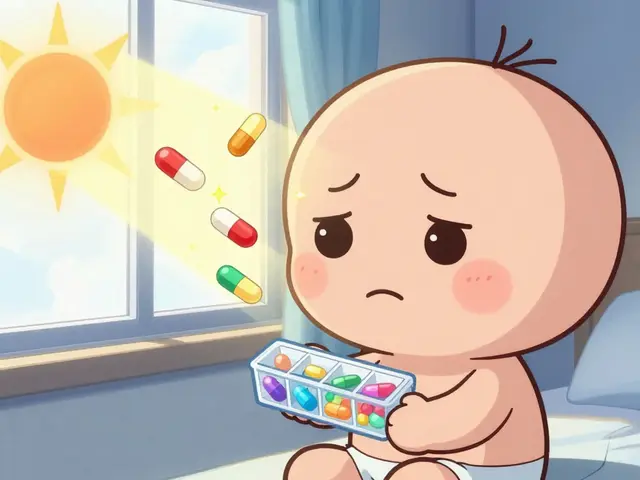
Patients notice differences. The shape changes. The color changes. The imprint changes. That’s because generics use different inactive ingredients - fillers, dyes, coatings. These don’t affect how the drug works, but they can trigger anxiety. One patient stopped taking her generic thyroid med because it was round instead of oval. She swore it made her feel "off." Her lab results? Perfect.
The FDA calls this the "look-alike, sound-alike" problem. They’ve reduced confusion by 37% since 2018 by working with manufacturers to avoid similar packaging and names. But it’s not enough. Patients still worry about side effects, efficacy, and whether the generic was "made in China." (Spoiler: 80% of generic pills sold in the U.S. are made overseas - the same as 80% of brand-name pills.)
And then there’s the myth of "narrow therapeutic index" drugs. These are medications where tiny changes in blood levels can cause big problems - like warfarin, lithium, or certain seizure drugs. The FDA keeps a list of 15 such drugs where extra caution is advised. But even here, most generics are safe. The issue isn’t the drug itself - it’s inconsistent switching. If you’re stable on a brand, don’t switch. If you’re stable on a generic, don’t switch back. Consistency matters more than the label.
The Real Cost of Not Using Generics
Brand-name drugs cost 80-85% more than generics. That’s not a guess - it’s the Congressional Budget Office’s number. For a patient on a $300-a-month brand-name statin, the generic is $12. That’s $3,456 saved per year.
But the bigger cost isn’t what you pay at the pharmacy. It’s what you pay later. Patients who can’t afford their meds skip doses. They delay refills. They stop taking them altogether. A 2017 study in the American Journal of Managed Care found that higher adherence to generics led to a 2.2% drop in hospitalizations for chronic conditions like diabetes and high blood pressure. That’s thousands of avoidable ER visits.
Medicare beneficiaries who took generics had 12.7% higher adherence than those on brand names. That’s not a fluke. It’s money. It’s dignity. It’s being able to eat, pay rent, and take your medicine without choosing between them.
And yet - only 72% of new prescriptions are written as generics. Why? Because doctors still default to the brand. And patients don’t ask.
What Doctors Should Say - And What Patients Should Ask
Doctors need to stop assuming patients understand. Saying "This generic is fine" isn’t enough. They need to say: "This is the exact same medicine as the brand. The FDA requires it to work the same way. The only difference is the price. You’ll get the same results, and you’ll save hundreds a year."
Patients should ask: "Is there a generic?" and "Why are you prescribing this one?" If the answer is "Because it’s what I always use," that’s not good enough. If the doctor says, "We’re using the brand because your insurance won’t cover the generic," ask if they can check again. Insurance plans often change.
Pharmacists are your allies too. They’re trained to explain substitutions. If your pharmacist switches your med without telling you, ask why. You have the right to know.
The Future Is Generic - But It Needs Better Communication
Generic drugs will make up over 85% of all prescriptions by 2030. Biosimilars - the next wave of cheaper biologic drugs - are already growing fast. The FDA expects them to cover 15% of biologic prescriptions by 2027.
But adoption isn’t automatic. Residency programs are finally teaching future doctors about generics. In 2015, only 29% of internal medicine programs covered it. Now, 68% do. That’s progress.
The real barrier isn’t science. It’s perception. We’ve spent decades selling the idea that brand = quality. Now we need to sell the idea that generic = smart.
Doctors, stop assuming patients are okay with the cost. Ask. Explain. Don’t just prescribe - educate.
Patients, don’t assume the brand is better. Ask for the generic. Check the price. Compare. Your body won’t know the difference. Your wallet will.
Are generic drugs really as effective as brand-name drugs?
Yes. The FDA requires generic drugs to have the same active ingredient, strength, dosage form, and bioequivalence as the brand-name version. That means they work the same way in your body. Studies show no difference in clinical outcomes for the vast majority of medications. The only difference is the price - generics cost 80-85% less.
Why do some doctors still prescribe brand-name drugs?
Some doctors prescribe brand-name drugs out of habit, because they’ve always done it. Others respond to patient pressure - 41% of physicians say patients sometimes demand the brand. A small number still believe brand = better, even though evidence says otherwise. It’s not about knowledge - most doctors know generics are safe. It’s about communication and tradition.
Can generic drugs have different side effects?
The active ingredient - the part that treats your condition - is identical. But generics can use different inactive ingredients like fillers, dyes, or coatings. In rare cases, these can cause reactions in sensitive patients (like an allergy to a dye). But this isn’t about effectiveness - it’s about individual tolerance. If you notice a change after switching, talk to your doctor or pharmacist. It’s not common, but it can happen.
Are there any drugs where generics aren’t recommended?
Yes - but very few. The FDA maintains a list of 15 drugs with a narrow therapeutic index, like warfarin, levothyroxine, and certain seizure medications. For these, small changes in blood levels can matter. The FDA says generics are still safe, but recommends staying on the same version - brand or generic - once you’re stable. Switching back and forth increases risk, not the generic itself.
Why do generic pills look different from brand-name ones?
By law, generics can’t look exactly like the brand. That’s to prevent confusion and trademark issues. So they change the color, shape, or imprint. These differences are only in the inactive ingredients - the outer shell, not the medicine inside. But patients often mistake appearance for effectiveness. That’s why clear communication from doctors and pharmacists is so important.
Can I ask my pharmacist to switch me to a generic?
Yes, and they’re trained to do it. In 49 states, pharmacists can substitute a generic unless the doctor writes "dispense as written" or "no substitution." Even then, you can ask your doctor to change the prescription. Pharmacists can also tell you the cost difference and help you find the lowest-priced generic option.
Do generics take longer to work?
No. The FDA requires generics to be absorbed into the bloodstream at the same rate and to the same extent as the brand. If a generic were slower to work, it would fail bioequivalence testing and wouldn’t be approved. You’ll feel the effects at the same time - whether it’s the brand or the generic.
Is it true that most generics are made in China?
About 80% of the active ingredients in both brand-name and generic drugs sold in the U.S. come from overseas - mostly China and India. But the final pills are often packaged in the U.S. or another country. The FDA inspects all facilities, foreign and domestic, to ensure they meet U.S. quality standards. Where it’s made doesn’t change its safety or effectiveness.

I swear my generic blood pressure med makes me feel like a zombie. Brand name? I’m alive. 🤷♂️
Generic drugs are a scam. Made in China with dirt and hope. I’ll pay extra to not die. 🇺🇸
I’ve been on the same generic for 5 years. My doctor never explained it. Now I’m scared every time I see a different color pill. 😔
Hey everyone, I get it. Change is scary. But think of it like this: you wouldn’t refuse a perfectly good sandwich just because it came in a plain wrapper instead of a fancy box. The filling’s the same. You’re saving hundreds. That’s not just smart-it’s powerful. 💪
The FDA’s bioequivalence standards are rigorous. A 2018 meta-analysis of 47 studies showed no clinically significant difference in outcomes between generics and brand-name drugs for hypertension, diabetes, and depression. The data is overwhelming. The fear is psychological.
My grandma switched to generic levothyroxine after her insurance dropped the brand. Her TSH stayed at 2.1 for 18 months. She didn’t know the difference. But her bank account did. People need to hear this more.
i had a rash after switching to a generic ibuprofen turns out it was the dye not the med lol but still scary when you dont know why your body is acting up. pharmacists should explain this stuff better
Ah yes, the classic American dilemma: pay $300 for a pill that works, or $12 for the same pill that might make you question your entire existence. The real drug here is brand loyalty.
I’ve worked in rural clinics for 20 years. Patients skip meds because of cost. Generics save lives. Not theory. Real life.
Wait, so you’re telling me the $350 pill and the $4 pill are the same? Then why does the brand name have a logo and the generic has a barcode? Conspiracy.
In India, we’ve been using generics for decades. My uncle took generic warfarin for 12 years. No issues. Doctors here don’t even mention brand names unless asked. Culture matters.
I used to be the guy who refused generics. Then I got laid off. My prescription went from $280 to $14. I cried in the pharmacy. Not from sadness. From relief. I’m alive because of that $14 pill.
I don’t care what the FDA says. I’m not taking a pill made by some foreign factory I’ve never heard of. My health isn’t a bargain bin.
My pharmacist switched me to generic without telling me. I didn’t notice until I saw the receipt. Then I realized I’d been saving $300/month. Duh. Why didn’t anyone tell me this before?
If generics are so good, why don’t doctors take them? Huh? Why do they still take the brand? Hypocrites.