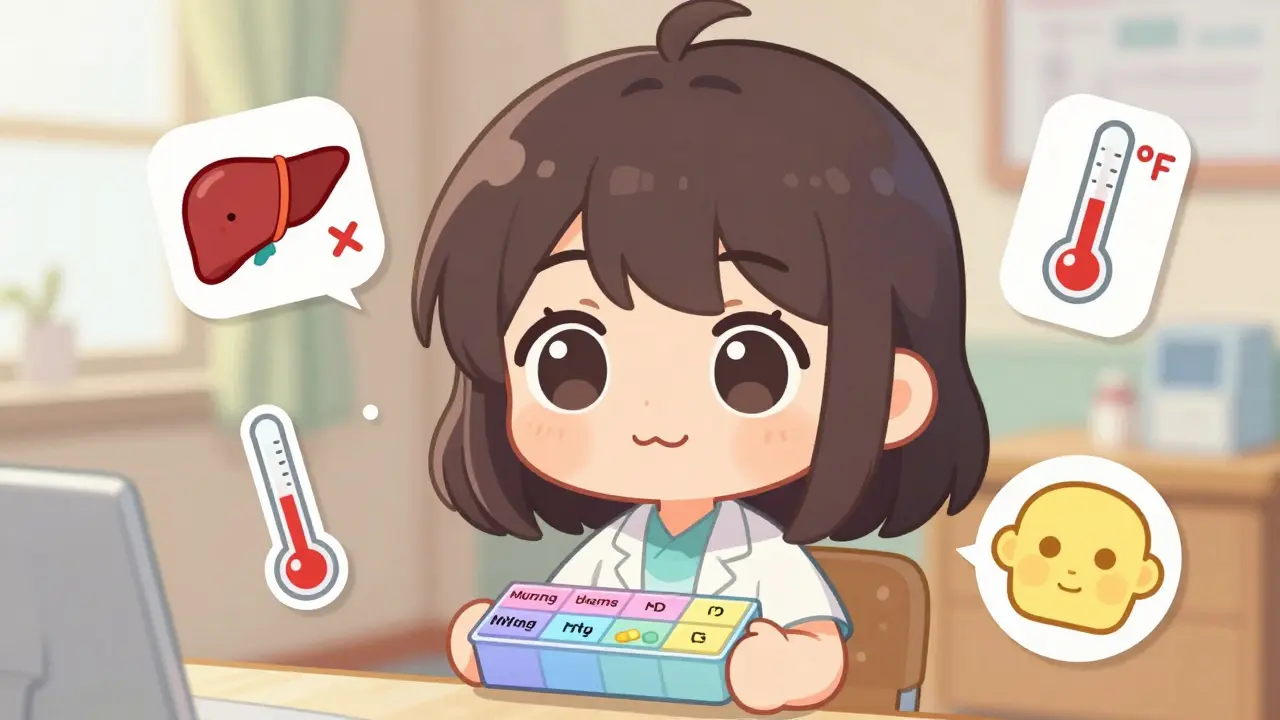
What Happens After Your Liver Transplant?
Getting a new liver is life-changing-but the real work starts after surgery. Your body doesn’t know the new organ belongs to you. To your immune system, it’s an invader. Without the right meds, your body will attack it. That’s rejection. And it doesn’t always come with screaming symptoms. Sometimes, it’s silent. That’s why knowing the warning signs and never skipping a pill isn’t just advice-it’s survival.
The Three Types of Rejection You Need to Watch For
Rejection doesn’t happen the same way for everyone. There are three kinds, each with its own timeline and red flags.
Hyperacute rejection is rare today-less than 1% of cases-thanks to better donor matching. It happens within hours. Your liver turns dark, stops working, and your blood pressure crashes. You’ll know right away. This is why hospitals test your blood for harmful antibodies before surgery.
Acute rejection is the most common. It usually shows up between one week and three months after transplant, but it can happen months or even years later. You might feel like you’ve got the flu: chills, fever over 100°F, headaches, muscle aches. Your liver area might feel tender or swollen. You might notice less urine, sudden weight gain (10 pounds in two days), or yellowing skin. Blood tests will show rising creatinine and bilirubin levels. If caught early, this type can often be reversed with stronger meds.
Chronic rejection creeps in slowly. It’s not a sudden crisis-it’s a slow fade. You’ll feel more tired than usual. Your blood pressure creeps up. Your liver function tests drift higher over months. This is the silent killer. Many patients don’t realize it’s happening until the damage is serious. That’s why monthly blood work isn’t optional-it’s your early warning system.
Why Skipping a Pill Can Cost You Your Liver
Medication adherence isn’t about being perfect. It’s about being consistent. Studies show that if you miss just 20% of your doses, your risk of rejection triples. That’s not a guess. That’s from the American Journal of Transplantation. Every 10% drop in adherence means a 23% higher chance your liver will fail.
Think about it: you’re taking a mix of drugs-tacrolimus or cyclosporine to calm your immune system, mycophenolate to block immune cells, and steroids to reduce inflammation. Each has a narrow window where it works. Too little? Rejection. Too much? Toxicity. Your doctor checks your blood levels every few weeks to make sure you’re in that sweet spot. But if you skip a dose, your levels crash. Your body gets a signal: “Hey, the drugs are gone. Time to attack.”
Dr. Arvind Agrawal from CareDx says it plainly: “Kidney rejection, especially when mild, often has no symptoms.” The same is true for liver transplants. You might feel fine. Your blood tests might look okay. But inside, your immune system is quietly chipping away at your new liver. That’s why sticking to your schedule-even when you feel great-is the most powerful thing you can do.
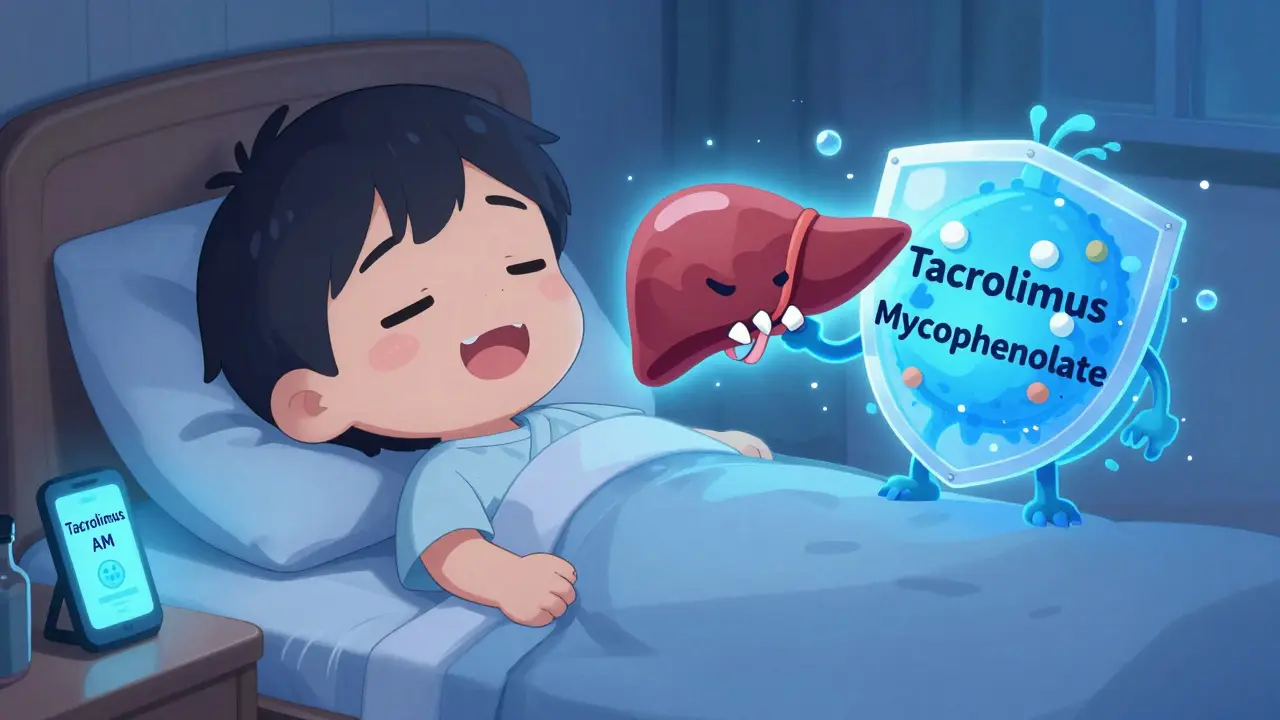
Your Daily Medication Routine: What to Expect
In the first year, you’ll likely take 10 to 15 pills a day. Some need to be taken on an empty stomach. Others with food. Some twice a day. Others three times. It’s messy. It’s overwhelming. But it’s non-negotiable.
Tacrolimus levels must stay between 5 and 10 ng/mL in the first year. Too low, and rejection risks spike. Too high, and you risk kidney damage, tremors, or high blood pressure. That’s why you’ll have frequent blood draws-weekly at first, then monthly. You’ll learn to track your numbers. You’ll start to recognize what’s normal for you.
Side effects are real. Tremors. High blood pressure. Digestive issues. Insomnia. Weight gain. But these are manageable. Talk to your pharmacist. Adjust timing. Change brands. Try different formulations. Don’t stop. There are always solutions.
Tools That Actually Work
You don’t have to rely on memory alone. Here’s what works for people who’ve stayed healthy for years:
- Medication organizers-the kind with compartments for morning, afternoon, evening, and night. 63% of long-term survivors use them daily.
- Smartphone alarms-set multiple reminders. Label them: “Tacrolimus AM,” “Mycophenolate with food.” A 2022 JAMA study showed these improve adherence by 37%.
- Smart pill bottles-they beep if you don’t open them on time and send alerts to your care team. Used by 35% of major transplant centers, they’ve cut rejection rates by 22% in early trials.
- Family support-someone who checks in, reminds you, or even fills your pillbox. Patients with strong support systems have 28% fewer rejection episodes.
Some centers now use the Basel Assessment of Adherence to Immunosuppressive Medications Scale (BAASIS) to measure how well you’re doing-not just by asking, but by tracking real behavior. If your center uses it, take it seriously. It’s not a test. It’s a tool to help you.
The Hidden Costs and How to Handle Them
Annual medication costs without insurance? Around $28,000. That’s not a typo. It’s the National Kidney Foundation’s 2023 data. Even with insurance, co-pays can hit $500 a month.
You’re not alone. Most transplant centers have social workers and financial counselors who can help you apply for patient assistance programs. Drug manufacturers often have aid programs. Nonprofits like the American Transplant Foundation offer grants. Don’t let cost make you skip a dose. Ask for help. It’s part of your care team’s job.
What’s New in Transplant Care?
The field is moving fast. In January 2023, the FDA approved the first genetic test for tacrolimus dosing-called XyGlo. It looks at your DNA to predict how fast your body breaks down the drug. That means your dose can be personalized from day one, not guessed over months of blood tests.
Another breakthrough: belatacept. It’s a newer drug that works differently than calcineurin inhibitors. It’s less toxic to the kidneys and reduces chronic rejection by 18% over five years, according to a 2023 New England Journal of Medicine study. It’s not for everyone-but if you’re a candidate, it could change your long-term outlook.
The most exciting research? Tolerance. The Immune Tolerance Network found that 40% of patients in a special stem cell + liver transplant trial stopped all immunosuppressants after 18 months and kept their new organ healthy. This isn’t science fiction anymore. It’s happening in labs and clinics today.
What Happens If You Do Everything Right?
At the University of Pittsburgh, researchers tracked 15,000 transplant patients for 20 years. Those who took 95% or more of their meds had an 85% chance of still having a working liver 10 years later. Those who missed more than 20% of doses? Only 42% made it that far.
It’s not about being perfect. It’s about being consistent. One missed pill won’t kill your liver. But a pattern of missed pills? That’s how you lose it.
Your transplant isn’t just a surgery. It’s a lifelong promise-to yourself, to your family, to the person who gave you this second chance. Stick to your meds. Know your signs. Show up for your blood work. Your liver isn’t just an organ. It’s your future.
What Should You Do If You Notice Rejection Signs?
If you feel feverish, notice sudden swelling, have dark urine, feel unusually tired, or your skin turns yellow-call your transplant center immediately. Don’t wait. Don’t assume it’s “just a cold.” Early intervention saves livers. Your team has protocols to reverse rejection if caught in time. Delaying could mean another transplant-or worse.

I was told after my transplant that if I felt 'fine,' that was the exact time to double down on my meds. Turns out, feeling good is the body's way of tricking you. I missed a dose once because I was 'too busy'-woke up two days later with a fever and a panic attack. Don't be me.
The part about the smart pill bottles made me laugh-my mom bought me one that beeps like a microwave when I don’t open it. I swear, it’s louder than my alarm. But hey, it works. I’ve been clean for 3 years now. Still hate the taste of tacrolimus though.
America’s healthcare system is a joke. $28k a year for pills? In Canada, I’d be on provincial coverage. You people need universal healthcare. This isn’t a luxury-it’s survival. And yet you still have people skipping doses because they can’t afford the co-pay. Pathetic.
I can’t believe people still don’t get this. You think your liver’s a pet? You feed it, you water it, you don’t let it starve. Miss a pill? You’re basically stabbing your new organ in the back. And don’t even get me started on those ‘I feel fine’ people. You’re not fine. You’re just in denial.
So you’re telling me the solution to biological betrayal is… chemical submission? Fascinating. We evolved to reject foreign tissue. Now we’re just drugging ourselves into compliance. Is this progress? Or just a very expensive form of surrender?
I use the pill organizer and set three alarms. One for the meds, one for the water, and one for the ‘don’t forget you’re alive’ reminder. It sounds silly, but it keeps me grounded. Also, my dog knows when it’s time. She sits by my pillbox like a tiny, furry pharmacist.
I’ve been on this journey for 7 years now. I still take 12 pills a day. I’ve had tremors, insomnia, and a kidney scare. But I’ve also watched my daughter grow up. I’ve seen her first steps, her first day of school. I’ve held her when she cried. That’s why I don’t skip. Not because I’m scared. Because I’m grateful. And if you’re skipping pills? You’re not just risking your liver-you’re risking every moment that comes after.
I love that they mentioned family support. My sister fills my pillbox every Sunday. She doesn’t even ask if I took them-she just shows up with the box and a coffee. No pressure. Just presence. That’s the kind of care that keeps people alive.
The XyGlo genetic test is a game-changer. My doc used it on me last year. My dose went from guessing to precise in one blood draw. No more weeks of tweaking. Just science. If your center doesn’t offer it, ask. It’s worth pushing for.
they say stick to your meds but no one talks about how lonely it is. you take your pills every day like a robot. you dont even feel like you're alive anymore. just a walking pharmacy. and then you feel guilty for feeling this way. so you stay quiet. and the silence kills you slower than rejection.
you think you're saving your liver by taking pills? nah. you're just prolonging the inevitable. everything dies. even organs. even love. even hope. but hey, at least you took your tacrolimus today. good job. you're such a good patient.