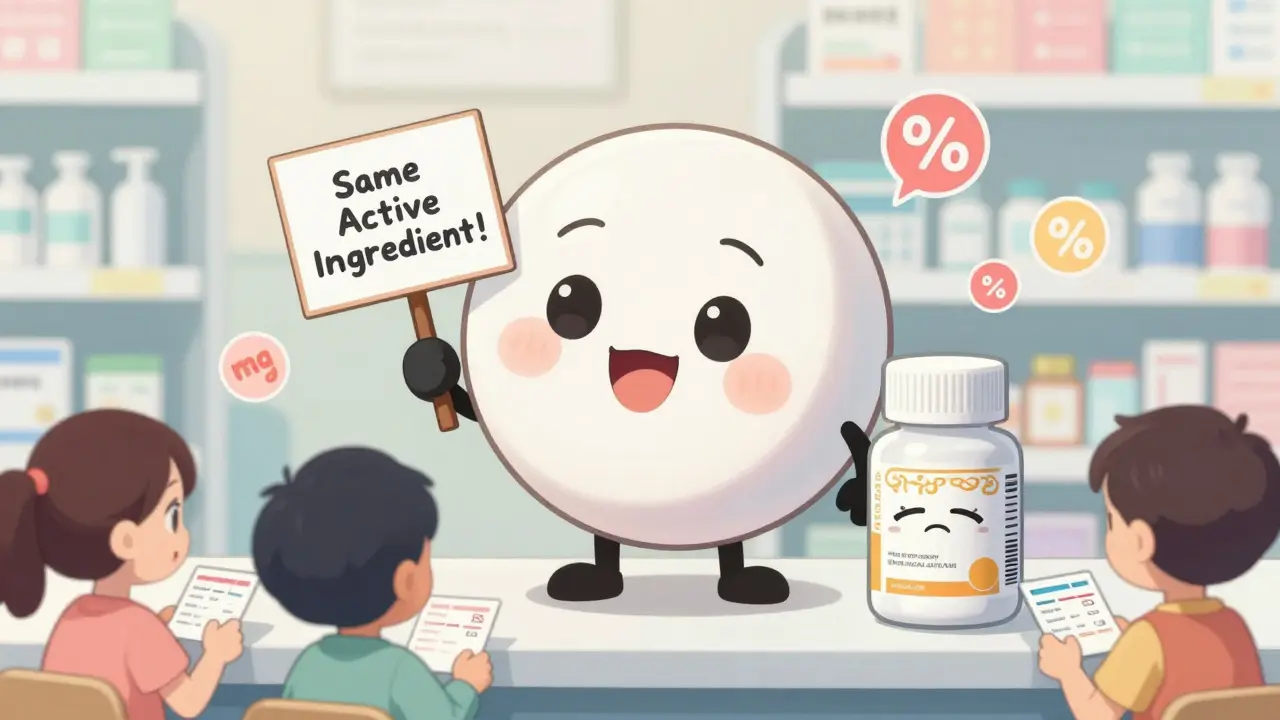
When you pick up a prescription, you might see two options on the label: a brand-name drug like Lipitor or its generic version, atorvastatin. Many people wonder if the cheaper option is really the same. The answer is yes - and here’s why.
What Exactly Is a Generic Drug?
A generic drug is a medicine that contains the exact same active ingredient as a brand-name drug. It works the same way in your body, treats the same condition, and has the same risks and benefits. The only differences are in the name, color, shape, or flavor - and the price. Generic drugs become available after the original patent on the brand-name version expires, which typically happens 20 years after the patent is filed.
The U.S. Food and Drug Administration (FDA) defines a generic drug as one that is identical or bioequivalent to the brand-name drug in dosage form, safety, strength, route of administration, quality, performance characteristics, and intended use. That means if your doctor prescribes 10 mg of atorvastatin, the generic tablet you get must deliver exactly the same amount of the drug into your bloodstream at the same rate as the brand-name version.
How Are Generic Drugs Approved?
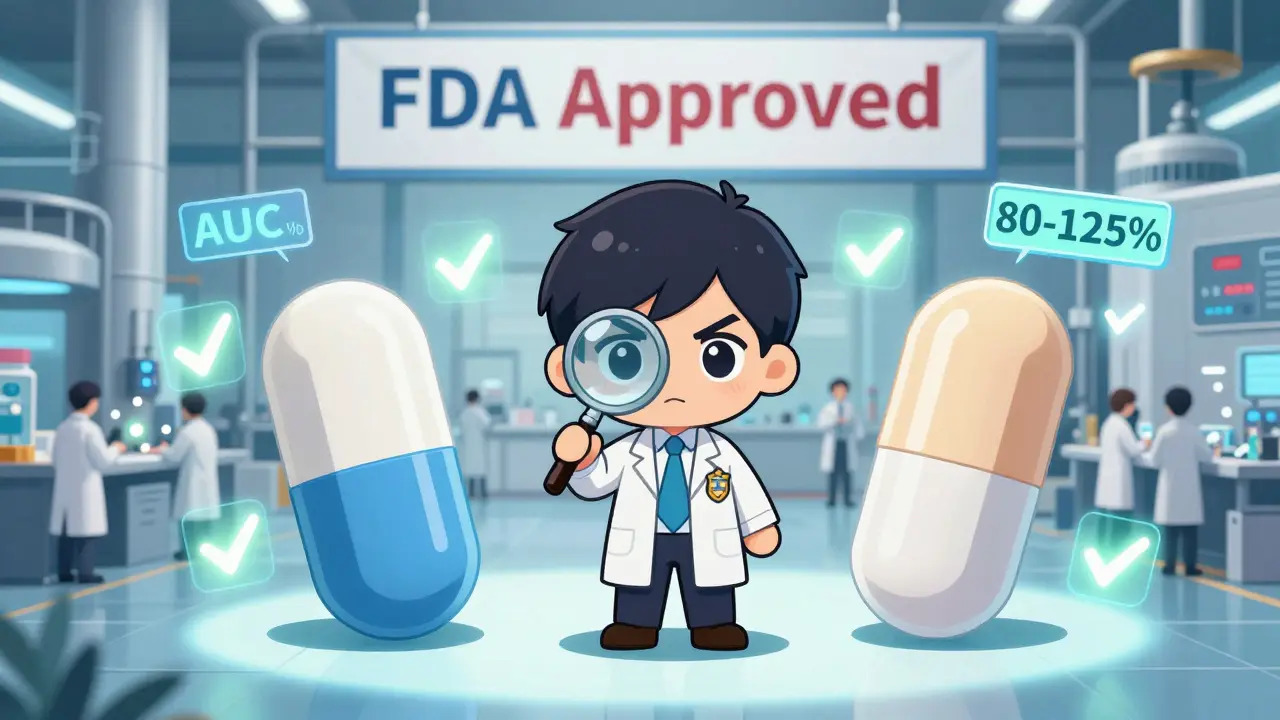
Before a generic drug hits the market, it must go through a strict review process called the Abbreviated New Drug Application (ANDA). Unlike brand-name drugs, which require years of clinical trials to prove safety and effectiveness, generics don’t need to repeat those studies. Instead, manufacturers must prove bioequivalence - that their version behaves the same way in the body as the original.
To do this, they run studies on 24 to 36 healthy volunteers. These studies measure two key things: how much of the drug enters the bloodstream (AUC) and how fast it gets there (Cmax). The FDA requires that these numbers fall within 80% to 125% of the brand-name drug’s values. That’s a tight range - and it’s not just a suggestion. If a generic fails this test, it’s rejected.
The FDA also inspects every manufacturing facility that produces generics. In 2023 alone, they conducted over 3,500 inspections worldwide. These aren’t scheduled visits - they’re unannounced. The goal? To ensure every pill, capsule, or injection meets the same strict standards for purity, potency, and stability as the brand-name product.
Why Are Generic Drugs So Much Cheaper?
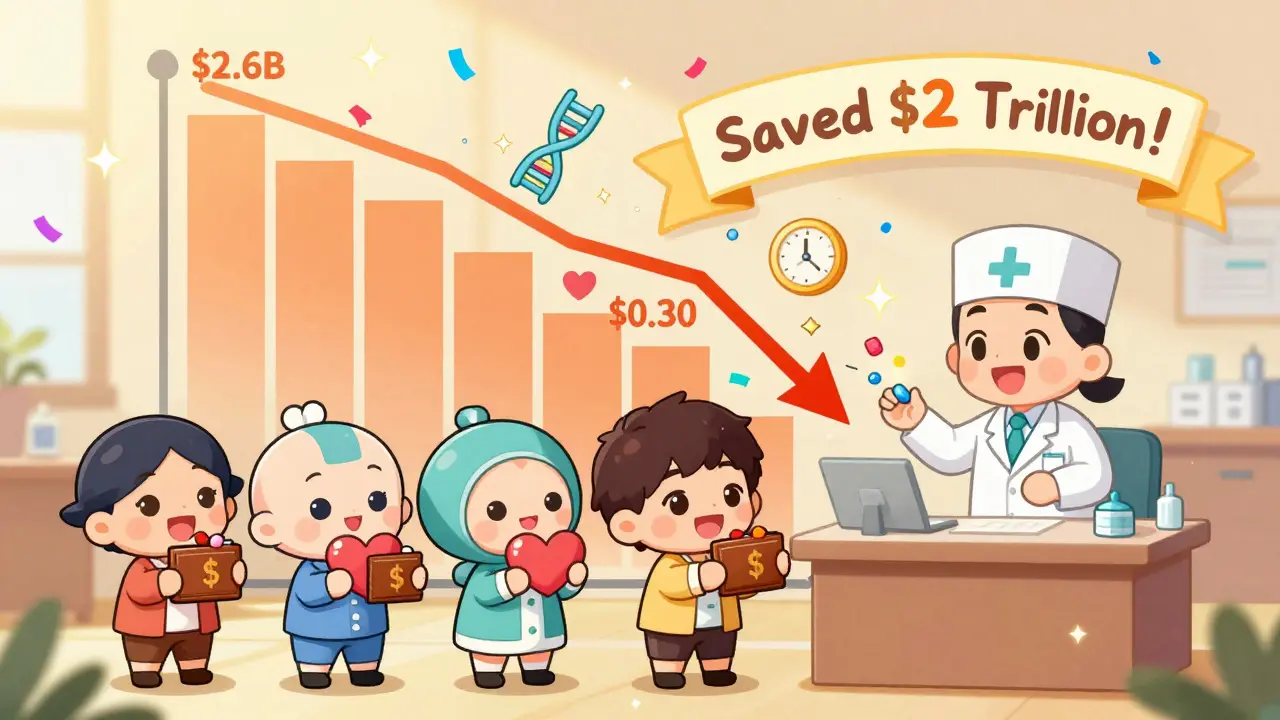
Brand-name drugs cost billions to develop. Companies spend an average of $2.6 billion on research, testing, and marketing before a single pill is sold. Once the patent expires, other companies can make the same drug without those upfront costs. They don’t need to repeat expensive clinical trials. They don’t need to pay for massive advertising campaigns.
The result? Generics typically cost 80% to 85% less than their brand-name counterparts. In some cases, when five or more companies start making the same generic, the price drops to just 9% of the original brand price. According to the Congressional Budget Office, generic competition cuts drug prices to about 15% of the original within a year of entry.
This isn’t just good for patients - it’s essential for the system. In 2022, generic drugs made up 90.5% of all prescriptions filled in the U.S., but accounted for only 13.1% of total drug spending. Over the past decade, they’ve saved the U.S. healthcare system more than $2 trillion.
Are Generics as Safe and Effective?
Yes. And the evidence is overwhelming.
The FDA requires that every generic meet the same high standards as brand-name drugs. Multiple studies confirm this. A major review by the Institute of Medicine in 2010 analyzed 38 clinical studies on cardiovascular drugs and found no meaningful difference in effectiveness between generics and brands.
Major medical organizations agree. The American Medical Association says prescribing generics is one of the most effective ways to lower costs without sacrificing care. The American College of Physicians recommends using generics whenever available. Dr. Janet Woodcock, former director of the FDA’s drug center, put it plainly: “The FDA would not allow generics to be marketed unless they were therapeutically equivalent.”
Even when people worry about switching from a brand to a generic - especially with drugs like warfarin or levothyroxine - the data still supports safety. While these “narrow therapeutic index” drugs require close monitoring, studies show that switching doesn’t increase risk when done under medical supervision. The FDA and pharmacists use strict guidelines to ensure consistency.
What’s Different About Generics?
While the active ingredient is identical, the inactive ingredients - like fillers, dyes, and flavorings - can be different. That’s why a generic version of your pill might look different: maybe it’s white instead of blue, or oval instead of round. These changes are required by law to avoid trademark infringement. But they don’t affect how the drug works.
All generics must pass stability testing to prove they last just as long as the brand-name version. Shelf life is monitored for months under real-world conditions. If a generic pill degrades faster, it won’t get approved.
The FDA allows only a ±5% variation in active ingredient content - the same tolerance as for brand-name drugs. That’s not a loophole. It’s a scientifically accepted margin of error in manufacturing. Both types of drugs are held to identical quality controls.
What About Biosimilars?
Not all generics are created equal - at least not when it comes to biologics. Drugs made from living cells - like insulin, rheumatoid arthritis treatments, or cancer therapies - are too complex to copy exactly. Instead, we have biosimilars.
Biosimilars are “highly similar” to their reference products, but not identical. They require more testing than traditional generics and often cost less, but not as dramatically. While traditional generics save 80-85%, biosimilars typically cut prices by only 20-30%. That’s because manufacturing them is still expensive and technically demanding.
By 2022, biosimilars captured only 31% of their potential market share in the U.S., partly because of confusion among patients and providers. But as more biologics lose patent protection, this area is expected to grow.
How Are Generics Used in Real-World Care?
In 49 states, pharmacists can automatically substitute a generic for a brand-name drug unless the doctor writes “dispense as written” on the prescription. This is called generic substitution, and it’s built into pharmacy practice.
But education matters. Some patients are confused when they get a different-looking pill. Pharmacists are trained to explain the change - and to reassure patients that the medicine inside is the same. The Institute for Safe Medication Practices recommends that pharmacists always talk to patients about visual differences to prevent errors.
And while the system works well, challenges remain. Drug shortages have increased by 22% since 2022, partly due to quality issues at manufacturing plants. About 80% of the active ingredients in U.S. generics come from India and China. Supply chain disruptions - like those seen during the pandemic - can delay access. That’s why regulators are pushing for more inspections and better oversight.
What’s Next for Generic Drugs?
The next few years will bring major changes. Between 2023 and 2027, 350 brand-name drugs with combined annual sales of $138 billion will lose patent protection. That means a wave of new generics will enter the market.
The FDA’s Generic Drug User Fee Amendments (GDUFA) III, launched in 2022, aims to cut approval times to 10 months for 90% of applications. It also increases inspections in emerging markets to ensure quality.
Meanwhile, legislation like the CREATES Act is helping prevent delays caused by brand-name companies blocking access to samples needed for testing. And more companies are creating “authorized generics” - versions made by the original brand manufacturer - to compete in the generic space.
One thing is clear: generics aren’t just a cost-saving trick. They’re a cornerstone of modern healthcare. For millions of people, they’re the only way to afford life-saving medicine. And every time you choose a generic, you’re not just saving money - you’re supporting a system built on science, not marketing.
Are generic drugs as effective as brand-name drugs?
Yes. The FDA requires generic drugs to have the same active ingredient, strength, dosage form, and route of administration as the brand-name version. They must also prove bioequivalence - meaning they deliver the same amount of medicine into the bloodstream at the same rate. Studies and real-world data confirm that generics work just as well.
Why do generic drugs look different from brand-name drugs?
The appearance - color, shape, or flavor - is changed to avoid trademark infringement. The active ingredient and how it works in your body are identical. The differences are only in inactive ingredients like dyes or fillers, which don’t affect the drug’s performance.
Can I switch from a brand-name drug to a generic safely?
For most medications, yes. The FDA and major medical groups support switching. For drugs with a narrow therapeutic index - like warfarin or levothyroxine - your doctor may monitor you more closely at first, but switching is still safe and common. Always talk to your pharmacist or provider before making changes.
Are generic drugs made in the same facilities as brand-name drugs?
Sometimes, yes. Many brand-name companies also produce generic versions of their own drugs. Even when made by different manufacturers, all facilities - whether for brand or generic - must meet the same FDA standards. The FDA inspects all of them using the same protocols.
Do generic drugs have the same side effects as brand-name drugs?
Yes. Since they contain the same active ingredient and work the same way, generic drugs cause the same side effects as their brand-name counterparts. Any differences in side effects are usually due to inactive ingredients, which are rare and typically mild.


It's fascinating how we've come to equate price with quality. I've watched my mother take generics for over a decade-hypertension, diabetes, thyroid-and never once had an issue. The science is clear, but the stigma lingers because marketing is louder than evidence. We don't question the equivalence of two identical bolts from different factories, so why do it with pills?
It's not just about cost-it's about dignity. People shouldn't have to choose between medicine and rent. Generics are the quiet heroes of public health.