
Millions of people wake up every morning with itchy eyes, a runny nose, or that nagging cough - and they don’t realize it’s not a cold. It’s dust mites. These microscopic bugs live in your mattress, pillows, and blankets, feeding on the skin flakes you shed every night. They’re not dangerous by themselves, but their waste triggers allergic reactions in about 20 million Americans, according to the American College of Allergy, Asthma, and Immunology. The good news? You don’t need expensive treatments or medications. Real relief comes from controlling your environment - especially your bedding, humidity, and cleaning habits.
Why Dust Mites Thrive in Your Bed
Dust mites don’t bite. They don’t crawl on your skin. They live in the fabric of your bedding, where they feast on dead skin cells. Each person sheds about 1.5 million skin flakes every day. That’s enough food for billions of dust mites. They thrive in warmth and moisture. When you sleep, your body releases heat and moisture through sweat and breath. Your mattress becomes a perfect incubator - around 75-80% humidity, 70-75°F. That’s the sweet spot for dust mites. The allergens that cause sneezing and wheezing? They’re not the bugs themselves. It’s their poop. One gram of dust can contain over 2,000 dust mite fecal particles. When you toss and turn, those particles become airborne. You breathe them in. And that’s when your immune system goes into overdrive.The One Number That Changes Everything: Humidity
If you remember just one thing from this guide, make it this: keep indoor humidity below 50%. Ideally, aim for 45% or lower. That’s not a suggestion - it’s the single most effective dust mite control strategy, backed by decades of peer-reviewed research. Studies from the National Institute of Allergy and Infectious Diseases and the Journal of Allergy and Clinical Immunology show that when humidity drops below 50%, dust mites start dying off within days. At 45%, 90% of mite populations vanish in just two weeks. No chemicals. No expensive gadgets. Just dry air. Most people don’t realize their home is too humid. A thermometer won’t tell you. You need a digital hygrometer - one that measures relative humidity accurately to ±2%. Place it near your bed, not on the wall. Humidity levels can vary by room. In the bedroom, if you see numbers above 50%, you need to act. A dehumidifier is the most reliable solution. Look for one that automatically shuts off when it hits your target humidity. Portable units work for single rooms. If you live in a humid climate, consider a whole-house system connected to your HVAC. Some users report that after installing a dehumidifier, their allergy symptoms dropped by 80% in under a month.Bedding: The First Line of Defense
Your bedding is ground zero. Wash it weekly - not every other week. Not when you feel like it. Every. Single. Week. And it has to be hot. Cold water? It removes dirt, but not mites or allergens. Washing at 130°F (54.4°C) kills 100% of dust mites. That’s the number the Mayo Clinic confirms. If your machine can’t reach that temperature, use the dryer. Dry on high heat for at least 15 minutes after washing. The heat alone will kill them. Use allergen-proof mattress and pillow encasements. These aren’t regular zippered covers. They’re made with tightly woven fabric with pores smaller than 10 micrometers - small enough to block mites and their waste. Look for products certified to ASTM D7774 or EN 12935 standards. Cheap ones tear after a few months. Invest in quality. Users on Reddit and asthma forums report that once they switched to certified encasements, their nighttime symptoms disappeared. Don’t forget your comforter and pillows. Encase them too. If you can’t encase them, wash them weekly in hot water or freeze them for 24 hours. Freezing doesn’t kill all mites, but it stops them from reproducing.
Cleaning: What Actually Works
Vacuuming sounds simple. But most people vacuum wrong. A regular vacuum just kicks dust back into the air. You need a HEPA-filter vacuum - one that traps particles as small as 0.3 microns. Sweep slowly - one foot per second. Rushing means you miss 70% of the allergens. Focus on the mattress seams, under the bed, and carpets. If you have carpet in the bedroom, consider replacing it with hard flooring. Hardwood, tile, or vinyl cut mite populations by 90%. That’s more effective than any vacuum. Damp-mop hard floors weekly. Dust mites can’t live on smooth surfaces. Use a microfiber cloth - it traps dust instead of spreading it. Avoid feather dusters. They’re useless. Wash curtains and throw blankets in hot water every two weeks. If you have stuffed animals, freeze them for 24 hours monthly. That’s a trick used by pediatric allergists. Don’t forget your upholstered furniture. Vacuum it weekly. If you can’t replace it, cover it with washable slipcovers.What Doesn’t Work (And Why)
There’s a lot of noise out there. Sprays. Powders. Essential oils. Air purifiers. Let’s cut through the hype. Tannic acid sprays and plant-based powders claim to neutralize allergens. They might reduce levels temporarily, but they don’t kill mites. And if you don’t vacuum them up with a HEPA filter, they just sit there. Studies show they only reduce allergens by 50-60%. Not enough for real relief. Air purifiers? They help with airborne particles, but dust mite allergens settle fast. They’re not on the air long enough for a purifier to catch them. They’re useful in living rooms, but not a solution for your bedroom. Essential oils? No credible study shows they kill dust mites. Some may repel them temporarily, but they don’t reduce allergen levels. And they can irritate lungs - especially for asthma sufferers. The bottom line: If it doesn’t involve heat, dryness, or physical barriers, it’s not a proven method. Stick to the basics.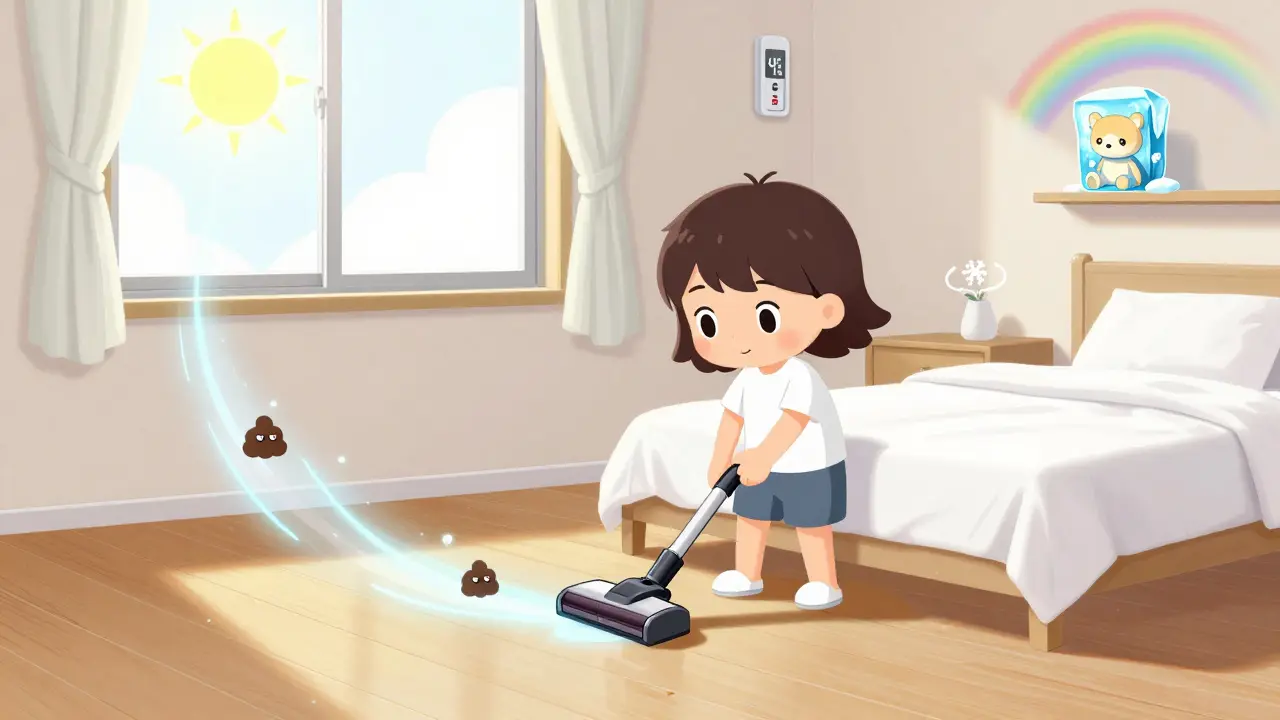
Costs and Commitment
Setting up a dust mite-free bedroom doesn’t require a fortune, but it does require upfront investment. Here’s what you’ll need:- Two mattress encasements: $80-$120
- Two pillow encasements: $40-$60
- HEPA vacuum: $180-$250
- Digital hygrometer: $25-$40
- Portable dehumidifier: $150-$200
Real Results: What People Actually Experience
One user on Asthma UK wrote: "I used to wake up coughing every morning. I thought it was post-nasal drip. I bought nasal sprays, antihistamines, even tried acupuncture. Nothing worked. Then I got a dehumidifier and encasements. Within 10 days, I slept through the night. No sneezing. No throat clearing. I haven’t bought allergy meds since." Another said: "I thought HEPA vacuuming was enough. I was wrong. My mites came back every time the humidity rose in summer. Once I added a hygrometer and kept it below 45%, the problem vanished. The vacuum was just the cherry on top." The science is clear. The methods are simple. You don’t need to live in a sterile lab. Just control the air. Wash your sheets hot. Keep your room dry. Vacuum properly. And stop wasting money on things that don’t work.Can I just wash my bedding in cold water if I dry it on high heat?
Yes. Cold water alone won’t kill dust mites, but if you follow it with a 15-minute high-heat dryer cycle, you’ll eliminate them. The heat is what kills them, not the water temperature. Just make sure the dryer reaches at least 130°F. Use a laundry thermometer if you’re unsure.
Do I need to replace my mattress to get rid of dust mites?
No. A certified allergen-proof mattress encasement is just as effective as replacing your mattress. The encasement acts as a barrier, trapping mites and allergens inside while preventing them from reaching you. Many people use encasements on mattresses that are 10+ years old with no issues.
Is a dehumidifier noisy? Will it disturb my sleep?
Most modern dehumidifiers are quiet - under 45 decibels, similar to a library. Look for models labeled "quiet operation" or with sleep mode. Place it away from your bed, near a window or door, and use a humidistat to turn it off when humidity drops below 45%. You likely won’t even notice it running.
Can I use a humidifier to help with allergies?
No. Humidifiers add moisture to the air - the exact thing that makes dust mites thrive. If you have dust mite allergies, a humidifier makes your symptoms worse. Only use one if you have dry skin or nasal passages, and even then, keep humidity below 50% and clean the unit weekly to prevent mold.
How often should I check my humidity levels?
Check daily for the first two weeks. Once you find a stable humidity level, check once a week. Humidity changes with seasons - it’s higher in summer, lower in winter. A digital hygrometer with a memory function can show you trends over time. If levels creep above 50%, turn on your dehumidifier immediately.