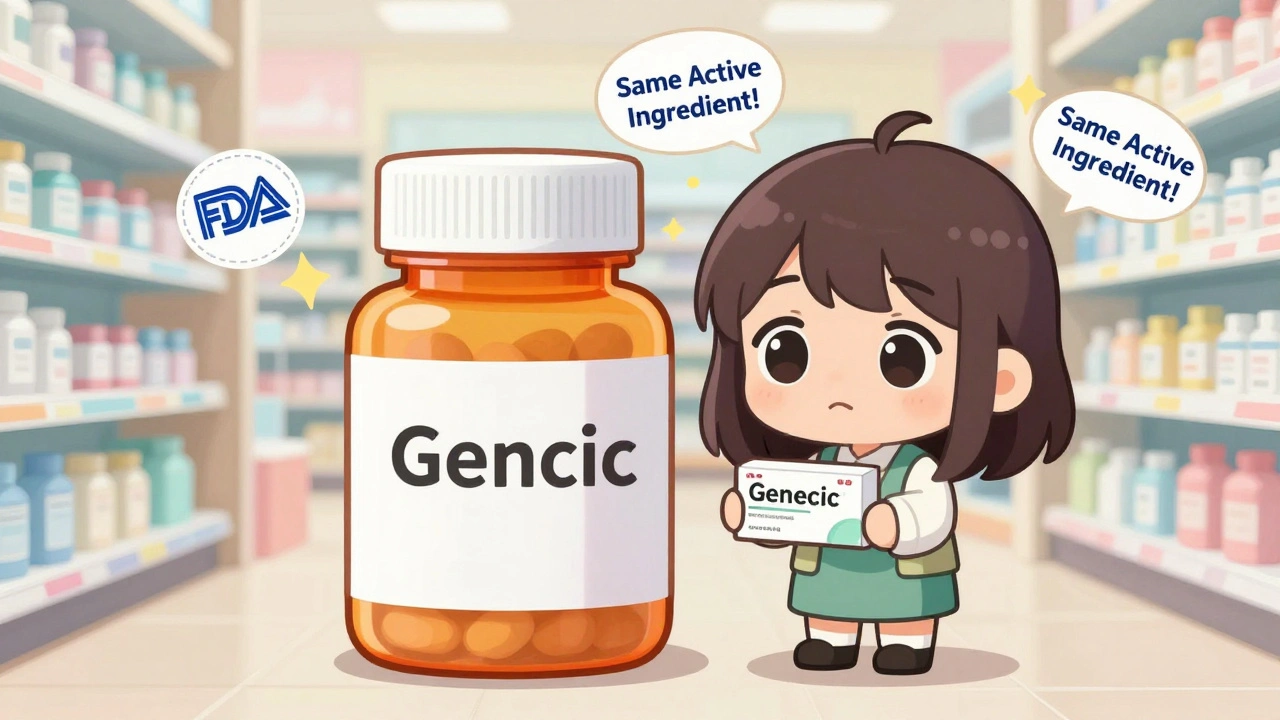
Most people don’t realize it, but generic drugs are used in 9 out of every 10 prescriptions filled in the U.S. today. Yet, despite their widespread use and proven effectiveness, many patients still hesitate-wondering if they’re getting something less than the brand-name version. Why does this gap between reality and perception still exist? And more importantly, how are we finally starting to close it?
The Truth About Generic Drugs
Generic drugs aren’t knockoffs. They’re not cheaper because they’re weaker. They’re cheaper because they don’t carry the cost of advertising, celebrity endorsements, or decades of marketing campaigns. By law, they must contain the exact same active ingredient, in the same strength, and work the same way in the body as the brand-name drug. The FDA requires them to meet the same strict standards for quality, purity, and performance. In fact, many generic drugs are made in the same factories as the brand-name versions-sometimes even by the same companies.Take denosumab, for example. In 2025, the FDA approved six new biosimilar versions of Prolia and Xgeva-drugs used to treat osteoporosis and bone complications from cancer. These aren’t simple pills. They’re complex injectables requiring advanced manufacturing, precise temperature controls, and rigorous testing. And yet, they’re priced significantly lower than the original. Patients get the same clinical results. Hospitals get to treat more people. The only difference? The label.
Why People Still Doubt Generic Drugs
The problem isn’t science. It’s psychology.A 2025 survey by the Association for Accessible Medicines found that 78% of doctors say patients express concerns about generic drugs-fearing they won’t work as well, or that they’ll cause more side effects. These fears aren’t based on experience. They’re based on imagery: the sleek packaging of a brand-name drug, the name recognition, the TV ads. It’s the same reason people pay more for a name-brand cereal even when the store brand tastes identical.
And when insurance changes, 42% of patients switch back to brand-name drugs-not because their doctor recommended it, but because they felt more comfortable with the name they recognized. That’s not a medical decision. It’s a brand decision.
Even worse, the perception that generics are "inferior" has been reinforced over decades by marketing. Brand-name companies spent billions convincing patients that their product was special. Generic manufacturers, by contrast, were never allowed to advertise directly to consumers. So while patients heard about the "miracle drug" for diabetes, they never heard about the generic version that did the same thing at a fraction of the cost.
Changing the Narrative: What’s Working Now
The tide is turning. And it’s not because of new science. It’s because of smarter communication.One of the most effective approaches is coming from hospital systems themselves. CivicaScript, a nonprofit generic drug manufacturer, bypasses traditional pharmacy channels and partners directly with hospitals to provide transparent, low-cost medications. Their pricing model is public. Their supply chain is local. And their goal isn’t to maximize profit-it’s to eliminate shortages. In 2025, they launched new specialty generics for oncology and autoimmune conditions, helping hospitals treat more patients without raising costs.
Another breakthrough? Education. A pilot program by the American Medical Association trained doctors to explain generics to patients in plain language. Instead of saying, "This is a generic," they said, "This is the exact same medicine, just without the marketing cost." After six months, patient concerns dropped by 35%. That’s not magic. That’s clarity.
The Rise of Biosimilars and Complex Generics
The next wave of perception change is coming from biosimilars. These aren’t your grandfather’s generic pills. They’re highly complex biologic drugs-made from living cells-that treat conditions like rheumatoid arthritis, Crohn’s disease, and cancer. Until recently, these were only available as expensive brand-name drugs. Now, with multiple biosimilars approved in 2025, they’re becoming more accessible.Biosimilars don’t offer 80% savings like traditional generics. They offer 15-30%. But that’s still millions of dollars saved per hospital system. And patients? They’re starting to notice. In oncology clinics, where every dollar counts, patients are choosing biosimilars when their doctors explain they’re just as effective. The key? Trust built through transparency, not just price.
What’s different this time? These aren’t just cheaper versions. They’re advanced medicines-made with the same technology, tested with the same rigor, and approved by the same agency as the originals. The stigma is fading because the science is undeniable.
Technology Is Building Trust
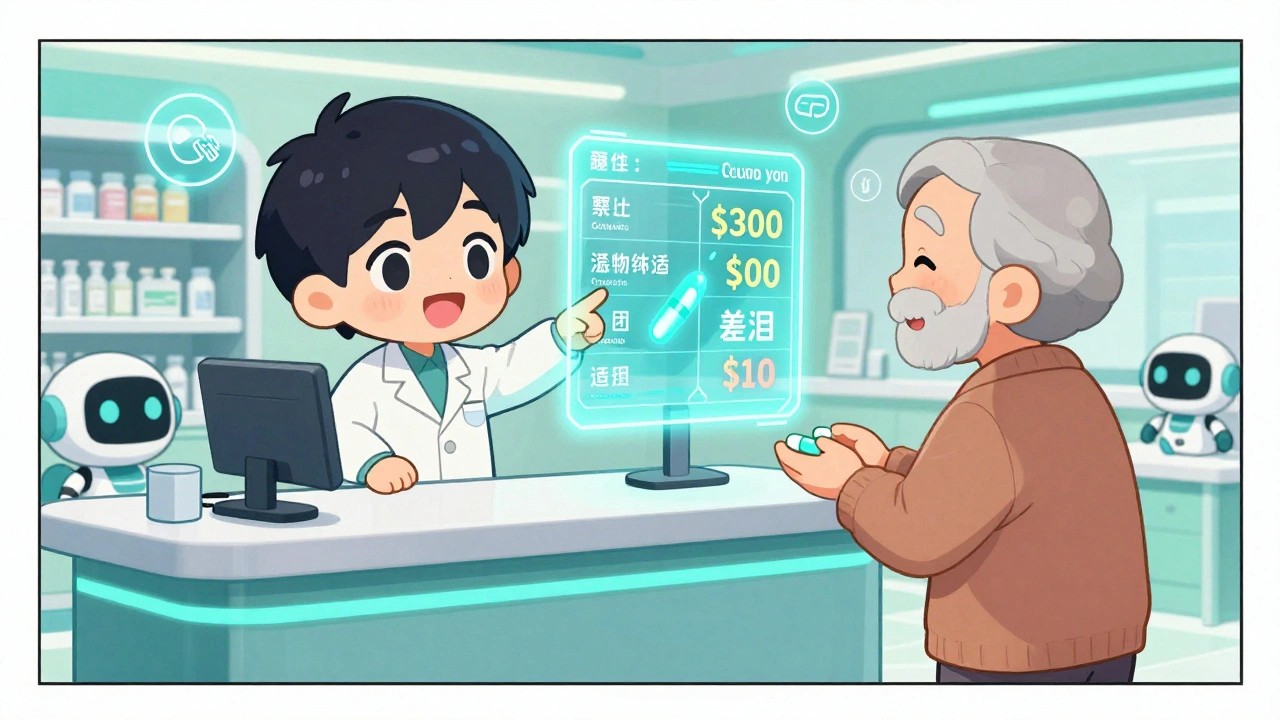
In 2025, blockchain and AI are quietly reshaping how patients view generics. Imagine scanning a pill bottle and seeing its entire journey: where it was made, when it was tested, who approved it, and how much it cost to produce. No guesswork. No mystery.Companies are starting to use digital tracking to prove the quality of their generics. Some pharmacies now show patients a digital receipt that compares the cost of the brand-name drug versus the generic-and breaks down exactly where the savings come from. It’s not about convincing people. It’s about showing them.
And when supply chains become more reliable, trust grows. In 2025, there were still 270 active drug shortages in the U.S. But thanks to domestic manufacturing efforts and better inventory forecasting, that number is dropping. When patients stop worrying about whether their medication will be available next month, they stop worrying about whether it’s "good enough."
The Bigger Picture: Why This Matters
This isn’t just about saving money. It’s about access.Chronic diseases like diabetes, high blood pressure, and asthma affect more than half of American adults. Many of these patients need daily medication for life. Paying $300 a month for a brand-name drug isn’t an option for most. Paying $10 for the generic? That’s sustainable.
And the numbers don’t lie. Generics make up 90% of prescriptions but only 12% of drug spending. That means billions of dollars are being saved every year-money that keeps people on their meds, out of the hospital, and working.
With over 100 brand-name drugs losing patent protection between 2025 and 2027, the flood of new generics is just beginning. Medicare Part D reforms in 2025 now actively encourage pharmacists to substitute generics unless the doctor specifically says no. That’s a policy shift that matches the science.
What’s Next?
The future of generic drugs isn’t about making them cheaper. It’s about making them trusted.Pharmaceutical companies, insurers, and providers are starting to realize that perception is the last barrier. The science is settled. The savings are real. The supply is improving. Now, the focus is on communication.
Doctors will keep explaining. Pharmacies will keep showing the math. Manufacturers will keep building transparency into their products. And patients? They’ll keep getting the same results-for less.
It’s not a revolution. It’s a correction. And it’s long overdue.
I used to be scared of generics too until my dad started taking them for his blood pressure. Same pill, same results, $12 instead of $180. I wish more doctors just said it like that: 'It's the same medicine, just without the ad budget.'
My pharmacist started showing me the cost breakdowns on my receipt last year. Seeing that the brand-name insulin cost $450 and the generic was $27 hit me like a truck. I didn’t even know I could’ve been saving that much for two years. Now I ask for generics first. No shame in it.
Over in the UK we’ve been on generics for ages. People still freak out about the different color pills but honestly? If it stops your heart from failing, who cares if it’s blue instead of green?
Let’s be real - generics are just pharmaceutical cosplay. The FDA? More like FDA-Approved™. Biosimilars? Yeah right. If you think a biologic made in a lab in Bangalore is equivalent to one made in a Swiss cleanroom, you’ve been drinking the Kool-Aid. 🤡
So what you’re saying is… we’re supposed to trust Big Pharma’s generic arm more than Big Pharma’s brand arm? Brilliant strategy. Next they’ll tell us the ‘discount’ BMW is just as safe as the $100k one.
This is all a psyop. The FDA, the WHO, the AMA - all controlled by the same cartel that sells you the brand name. They need you to think generics are safe so you don’t riot when your insulin goes from $30 to $300. They’re just changing the label. That’s all.
I’ve worked in community health for 15 years, and I’ve seen patients die because they skipped doses to save money. When we switched them to generics, their HbA1c dropped, their ER visits stopped, and they started smiling again. It’s not magic - it’s justice.
Truth is an illusion. The pill is a symbol. The label, the price, the packaging - these are the real drugs.
Gen Z is already over it. My niece takes her generic antidepressants with a shrug and a TikTok video titled 'Same brain, half the cash.' Meanwhile, boomers are still crying over the blue capsule they remember from 2008. We’re not fighting science. We’re fighting nostalgia.
Biosimilars are the future - and honestly, the manufacturing rigor is insane. These aren’t just ‘copies.’ They’re analytical marvels. We’re talking single-digit variant profiles, cryo-EM validation, and real-time process analytics. If your doctor says it’s equivalent, they’re not lying - they’re quoting peer-reviewed data.
It is my sincere belief that the widespread adoption of generic medications represents one of the most significant advancements in public health accessibility in modern history. The ethical imperative to prioritize patient welfare over corporate profit margins cannot be overstated.
Oh please. You think generics are safe? My cousin’s husband took a generic seizure med - and guess what? He had a seizure. The pharmacy said ‘it’s the same!’ - yeah, same active ingredient, but different fillers, different absorption rates. You’re gambling with your life for $5.
Everyone who says generics are fine has never had to take them. I’ve been on the same generic for 7 years. It’s never worked right. Brand name? Perfect. Don’t lie to people. You’re just scared of the truth.
My grandma used to say, 'If it doesn't have a name you recognize, it's not medicine.' I showed her the FDA’s bioequivalence charts. She still won’t take the generic. But she loves the sticker on the bottle that says 'Made in USA.'
My doctor told me the generic version of my cholesterol pill was made in the same factory as the brand. I looked it up. It was true. I switched. Saved $200 a month. No side effects. No drama. Just common sense.