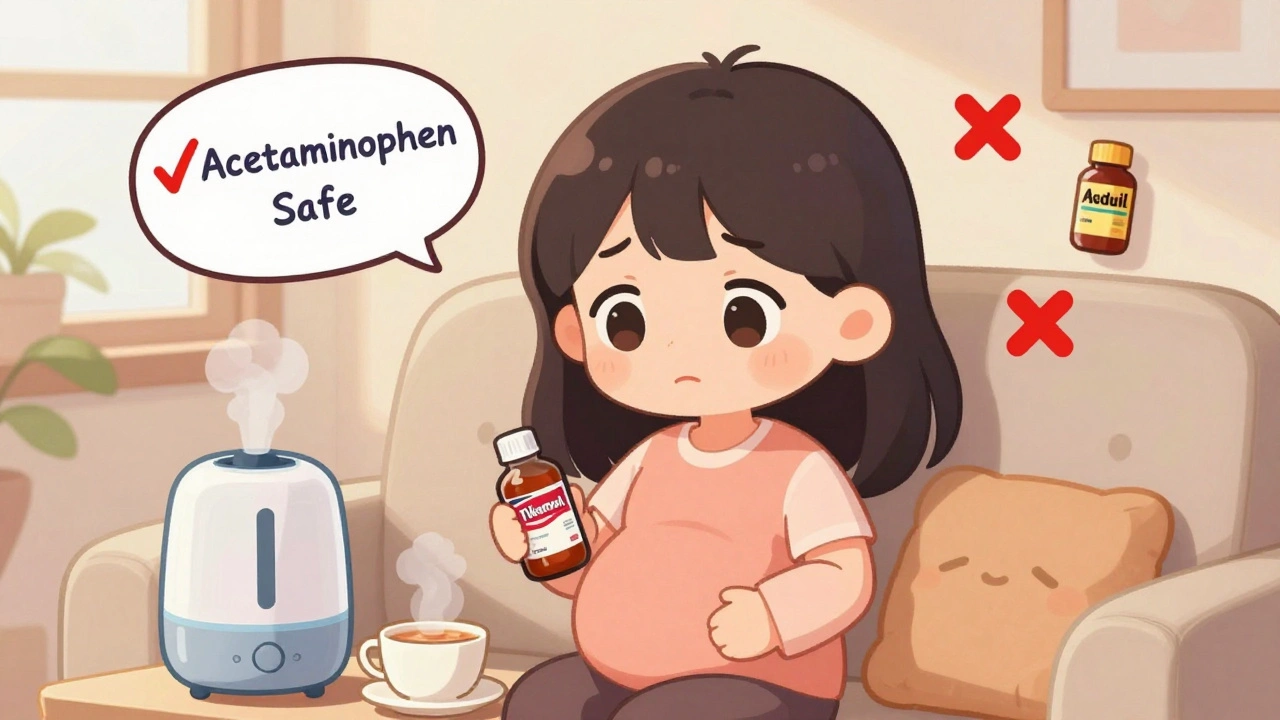
When you’re pregnant and fighting a cold or the flu, the last thing you want is to take something that could hurt your baby. But skipping treatment altogether can be just as risky. The flu isn’t just a bad cold-it can lead to pneumonia, hospitalization, or even preterm labor. The key isn’t avoiding all meds, it’s knowing which ones are safe and which ones to steer clear of.
What’s Safe: The Go-To Options
Acetaminophen (Tylenol) is your best friend when you have a fever, headache, or body aches. It’s been studied in more than 50,000 pregnancies, and no link has been found to birth defects or developmental issues-even when used in the first trimester. You can take it safely all three trimesters, but stick to the lowest effective dose and don’t exceed 3,000 mg per day.
For a stuffy nose, saline nasal sprays and humidifiers are first-line treatments. They work without any chemicals entering your bloodstream. If you need something stronger, plain guaifenesin (like Mucinex without extra ingredients) is considered safe for loosening mucus. Dextromethorphan, the cough suppressant in Robitussin, has been studied in hundreds of pregnant women and shows no increased risk of birth defects. Just make sure it’s the plain version-no alcohol, no added decongestants.
Allergies? Loratadine (Claritin) and cetirizine (Zyrtec) are the top picks. They’re non-drowsy, effective, and backed by solid research. Vicks Vapor Rub on your chest or throat is fine too. Even menthol cough drops are okay in moderation. The bottom line: if it’s a single-ingredient product and you’re using it for a few days, you’re likely in the clear.
What to Avoid: The Dangerous Ones
Never take ibuprofen (Advil, Motrin), naproxen (Aleve), or aspirin unless your doctor specifically tells you to. These NSAIDs can affect your baby’s kidney development and reduce amniotic fluid levels, especially after 20 weeks. Aspirin is especially risky unless you’re on a low-dose regimen for preeclampsia prevention.
Decongestants are tricky. Pseudoephedrine (Sudafed) is listed as safe by some providers but flagged as risky by others. Phenylephrine (Sudafed PE), which replaced pseudoephedrine in many store shelves, is consistently advised against during pregnancy. It doesn’t work as well anyway, and the data on safety is even thinner.
Combination products are the biggest trap. DayQuil, NyQuil, Mucinex FastMax-they sound convenient, but they’re loaded with multiple ingredients. NyQuil and DayQuil liquid versions contain 10-15% alcohol. That’s not just a little; it’s enough to cross the placenta and affect your baby. Even caplets may contain doxylamine or dextromethorphan in doses that aren’t ideal for pregnancy. Skip them entirely.
Codeine is a hard no. The FDA warns it can cause life-threatening breathing problems in newborns. Herbal supplements? Don’t touch them. The FDA doesn’t regulate them, so you have no idea what’s really in that “immune booster” or “natural cold remedy.” Some contain herbs like goldenseal or ephedra, which can trigger contractions or raise blood pressure.
Flu? Get the Antiviral
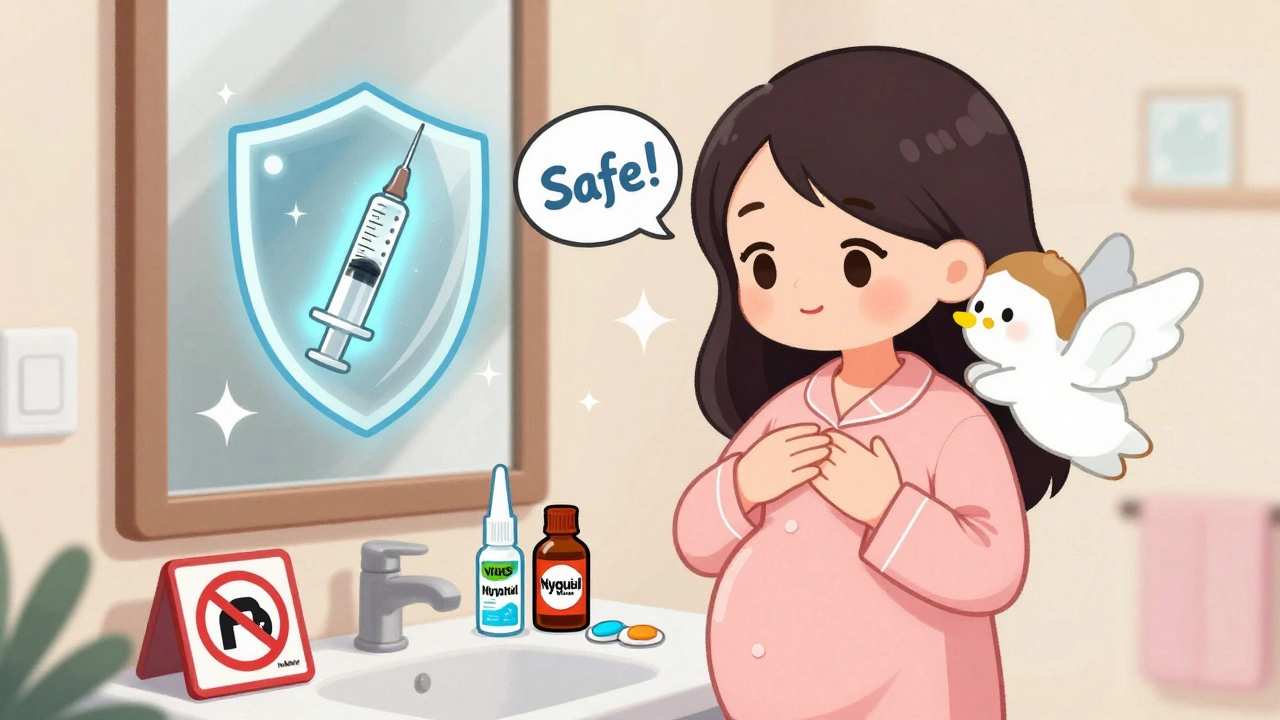
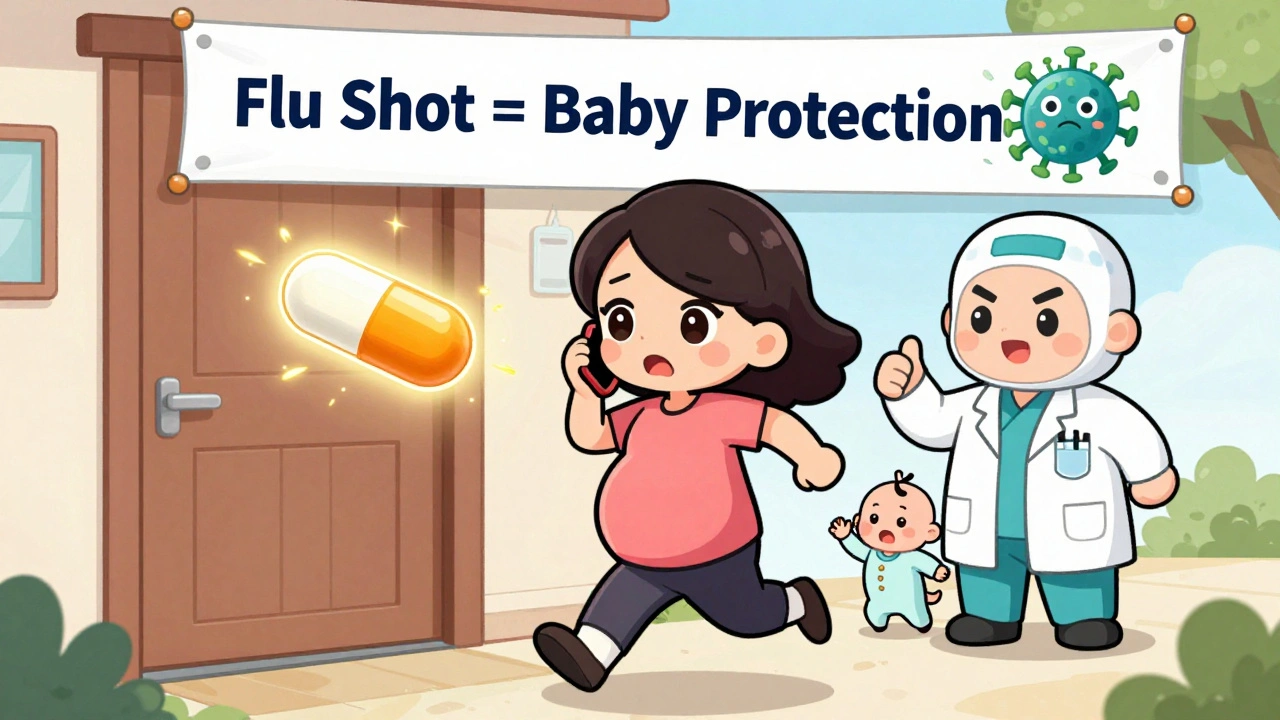
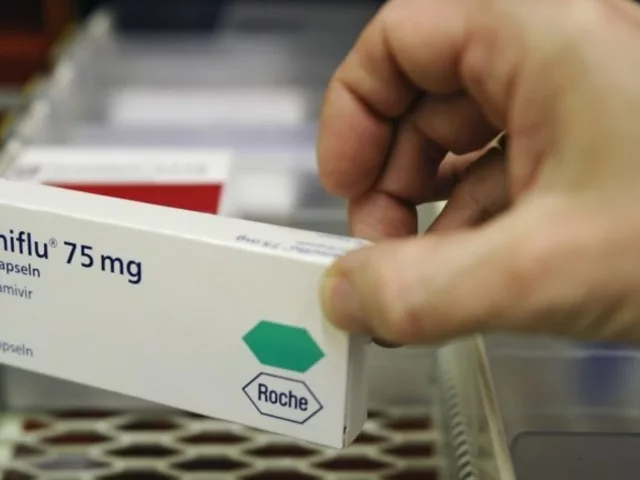
If you think you have the flu-fever, chills, muscle aches, fatigue-don’t wait. Call your provider right away. Oseltamivir (Tamiflu) is the go-to antiviral during pregnancy. Studies show it doesn’t increase the risk of birth defects, and the benefits far outweigh any theoretical risks. The CDC and ACOG agree: treat flu with antivirals even if you haven’t been tested. Start within 48 hours if you can, but even after that, it helps.
The flu vaccine is also safe and strongly recommended during any trimester. It protects you and your baby for months after birth. The newer Abrysvo vaccine for RSV is also approved for pregnant women between 32 and 36 weeks. It’s not a flu shot, but it’s another layer of protection against serious respiratory illness.
Non-Medication First
Before you reach for a bottle, try the basics: rest, drink water, sip warm broth, use a humidifier, and rinse your nose with saline. Honey for cough? Yes-after 12 weeks, a teaspoon can soothe a sore throat better than most syrups. Steam from a hot shower helps loosen congestion. Elevate your head with an extra pillow at night to reduce postnasal drip.
If you’re still struggling after 3-4 days, or if you develop a high fever, shortness of breath, or chest pain, call your provider. These aren’t normal cold symptoms-they could mean something more serious.
When in Doubt, Skip It
There’s no such thing as a perfectly safe OTC cold med during pregnancy. Even safe ones should be used sparingly. The rule of thumb: one active ingredient, lowest dose, shortest time. If a product says “multi-symptom” or “all-in-one,” leave it on the shelf. Your body is doing enough work already-don’t make it process unnecessary chemicals.
Always check with your OB or pharmacist before taking anything, even if it’s labeled “natural” or “for sensitive stomachs.” What’s safe for someone else might not be safe for you. And remember: untreated illness can be more dangerous than the medicine.
What About Breastfeeding?
If you’re nursing, most of the same rules apply. Acetaminophen and dextromethorphan are still safe. Avoid pseudoephedrine if you can-it can reduce milk supply. Stick to single-ingredient products and take them right after nursing to minimize exposure. Alcohol-based products? Skip them. Even small amounts can pass into breast milk and affect your baby’s sleep or feeding.
Flu antivirals like Tamiflu are safe during breastfeeding. The CDC says the amount that passes into milk is tiny and unlikely to cause harm. Get the flu shot-it protects your baby too, especially in those first few months before they can get vaccinated themselves.
Can I take Tylenol while pregnant?
Yes, acetaminophen (Tylenol) is the safest pain and fever reliever during pregnancy. Studies on over 50,000 pregnancies show no increased risk of birth defects. Use the lowest dose needed and don’t exceed 3,000 mg per day. Avoid long-term daily use unless directed by your doctor.
Is Sudafed safe during pregnancy?
Pseudoephedrine (Sudafed) has mixed guidance. Some providers say it’s okay in moderation after the first trimester, but others advise against it due to potential effects on fetal blood flow. Phenylephrine (Sudafed PE) is not recommended at all. Saline sprays and humidifiers are safer alternatives for congestion.
Can I take NyQuil or DayQuil while pregnant?
No. Liquid versions of NyQuil and DayQuil contain alcohol (10-15%), which is unsafe during pregnancy. Even caplets often include multiple ingredients like dextromethorphan, doxylamine, and phenylephrine, which aren’t all safe. Stick to single-ingredient options instead.
Are herbal cold remedies safe during pregnancy?
No. The FDA doesn’t regulate herbal supplements, so you can’t know what’s in them. Some contain herbs like goldenseal, ephedra, or licorice root, which may trigger contractions, raise blood pressure, or affect fetal development. Skip them entirely.
What should I do if I have the flu while pregnant?
Call your provider immediately. Oseltamivir (Tamiflu) is the recommended antiviral and is safe during pregnancy. Start treatment within 48 hours if possible, but even after that, it can reduce complications. Don’t wait for a positive test-treat based on symptoms. Also get the flu shot if you haven’t already.
Is it safe to get the flu shot while pregnant?
Yes. The inactivated flu vaccine is safe during any trimester and is strongly recommended by the CDC and ACOG. It protects you and your baby for several months after birth. The flu shot doesn’t cause the flu and reduces your risk of hospitalization by up to 40%.


So let me get this straight - Tylenol is fine but ibuprofen is evil? What about all the studies showing acetaminophen might mess with fetal hormone development? We’re just supposed to ignore that because it’s ‘the safest option’? Classic medical whiplash. You want safe? Don’t take anything. Let your body fight it. That’s what evolution designed us for.
I was so scared during my first pregnancy and read everything I could. This post literally saved me. I took Tylenol for my fever at 14 weeks and felt like a monster until I found this. You’re right - untreated flu is way scarier than a little acetaminophen. I’m now 32 weeks and just got my flu shot. Feeling so much better knowing I’m doing right by my little one. 💕
Oh, so you’re telling me I can’t take NyQuil… but I can take dextromethorphan? By itself? In a capsule? With no alcohol? But only if I read the label like a forensic scientist? And only if I don’t sneeze too hard? Wow. I feel so empowered. Just don’t breathe wrong, Karen.
Every mother wants to protect her child. Every mother wants to do the right thing. And every mother feels guilty when she doesn’t know what that is. This guide is not about perfection. It is about intention. Take one thing. One safe thing. One moment of care. That is enough. You are doing better than you think. You are enough.
You people are so naive. Tylenol is a liver toxin. The FDA doesn’t regulate supplements but they regulate Tylenol? That’s not safety that’s control. You think your OB knows anything? They get paid by pharma. Read the original studies. The 50k pregnancies? Half were in women who took it daily for depression. That’s not a cold. That’s chronic use. You’re being manipulated.
OMG I just took a DayQuil caplet last week 😱 I’m so sorry baby 😭 I thought it was just dextro and guaif but now I’m reading it has phenylephrine too?? Should I panic?? I’m 18 weeks and I’m already having nightmares about my baby being a robot 😭😭😭
Yo I’m a nurse and I’ve seen this a million times. People freak out over Tylenol but will down 6 beers and smoke weed ‘cause it’s ‘natural’. Look - if you’re sick and can’t breathe, take the damn Tylenol. Your body’s already stressed. Don’t add guilt on top. Also, honey for cough? Works better than cough syrup. Trust me.
Life is a paradox. We seek safety in chemicals, yet fear the unknown. The body knows more than science can measure. Perhaps the real question is not what to take - but why we feel we must take anything at all. 🌿💧
It is imperative to acknowledge that the medical consensus presented herein, while widely disseminated, remains subject to the limitations of observational data. The absence of evidence of teratogenicity does not constitute evidence of absence of risk. One must exercise epistemological humility when interpreting pharmacological guidelines derived from population-level studies. The precautionary principle, as articulated by the Stockholm Convention, ought to govern maternal pharmacotherapy in the absence of randomized controlled trials. Therefore, abstention remains the only truly ethically defensible course of action.