
More than 30 million adults in the U.S. fill a benzodiazepine prescription every year. These drugs - like Valium, Xanax, and Ativan - work fast. For many, they bring relief from anxiety, panic, or insomnia. But what happens after months or years of use? The cost isn’t just dependence. It’s memory that won’t stick, balance that’s off, and a brain that doesn’t bounce back like it used to.
How Benzodiazepines Attack Memory
Benzodiazepines don’t just make you sleepy. They interfere with how your brain forms new memories. This isn’t forgetting where you put your keys. This is forgetting you had breakfast, or what you were talking about five minutes ago. It’s called anterograde amnesia - the inability to create new long-term memories while the drug is active. Studies from the 1980s still hold up today: the more complex the task, the worse the memory hit. Trying to remember a list of words? Maybe you’ll do okay. Trying to learn a new route, follow a conversation with multiple people, or recall instructions from your doctor? That’s where things fall apart. The hippocampus, the brain’s memory hub, gets hit hard. When benzodiazepines bind to GABA receptors there, they slow down the electrical signals needed to lock experiences into memory. Even if you feel fine, your brain is skipping steps. And here’s the kicker - this isn’t always obvious to the person taking it. Many users think they’re just relaxed, not realizing their memory is on pause. Long-term use? It gets worse. A 2023 review of 19 studies found that people using benzodiazepines for over a year showed clear deficits in working memory, processing speed, and recent memory. The effect size? Comparable to early-stage dementia. That’s not a metaphor. That’s what the data shows.Why Falls Are a Silent Emergency
If you’re over 65 and on benzodiazepines, you’re 50% more likely to fall. That’s not a small risk. It’s a medical emergency waiting to happen. These drugs don’t just slow your thoughts - they slow your body. Reaction time drops by 25%. Balance control weakens by 30-40%. Your feet don’t adjust quickly enough when you trip. Your hands don’t catch you fast enough when you stumble. And if you break a hip? The recovery is brutal. The risk of death within a year after a hip fracture in older adults jumps by nearly 30%. High-potency benzodiazepines like alprazolam (Xanax) and lorazepam (Ativan) are especially dangerous. They act faster and leave the body slower, building up in the system. A 2014 analysis of over a million older adults showed that those on these drugs had a 60% higher fall risk than those on lower-potency versions like diazepam (Valium). The American Geriatrics Society has listed benzodiazepines as potentially inappropriate for older adults since 2012 - and they haven’t changed their mind. Every year in the U.S., benzodiazepines contribute to about 93,000 emergency room visits for falls in seniors. That’s not just a side effect. It’s a preventable crisis.Cognitive Damage Doesn’t Vanish When You Stop
Many people think: if I quit, my brain will bounce back. It’s not that simple. Even after stopping benzodiazepines, cognitive deficits linger. A 10-month study found only 45% of former users returned to normal brain function. The rest? They kept struggling with memory, attention, and processing speed - even after half a year off the drug. You might feel better emotionally. But your brain still feels foggy. You can’t focus at work. You forget names. You misplace things. You need to reread paragraphs because your mind drifts. These aren’t signs of aging - they’re signs of drug-induced brain changes. Neuroimaging shows no permanent brain damage. No shrinkage. No lesions. But brain activity patterns stay altered. The circuits that once fired quickly now drag. It’s like your computer still boots up, but everything runs in slow motion. And here’s what’s rarely told: the longer you’ve been on benzodiazepines, the longer it takes to recover. Someone on them for 2 years might see improvement in 6 months. Someone on them for 10 years? It can take 2 years or more - and some never fully return to baseline.
Tapering: The Only Safe Way Out
Quitting cold turkey? Dangerous. Seizures. Psychosis. Suicidal thoughts. It’s not worth the risk. The gold standard for tapering is the Ashton Protocol. Developed in the 1980s by Dr. Heather Ashton, it’s still the most trusted method today. Here’s how it works:- Switch from your current benzodiazepine to diazepam (Valium), if possible. Why? Diazepam has a long half-life, which means it leaves your system slowly and smoothly - reducing withdrawal spikes.
- Reduce your dose by 5-10% every 1-2 weeks. For long-term users, go slower: 2-5% per month.
- Hold at a dose if symptoms flare up. Don’t rush. Withdrawal isn’t a race.
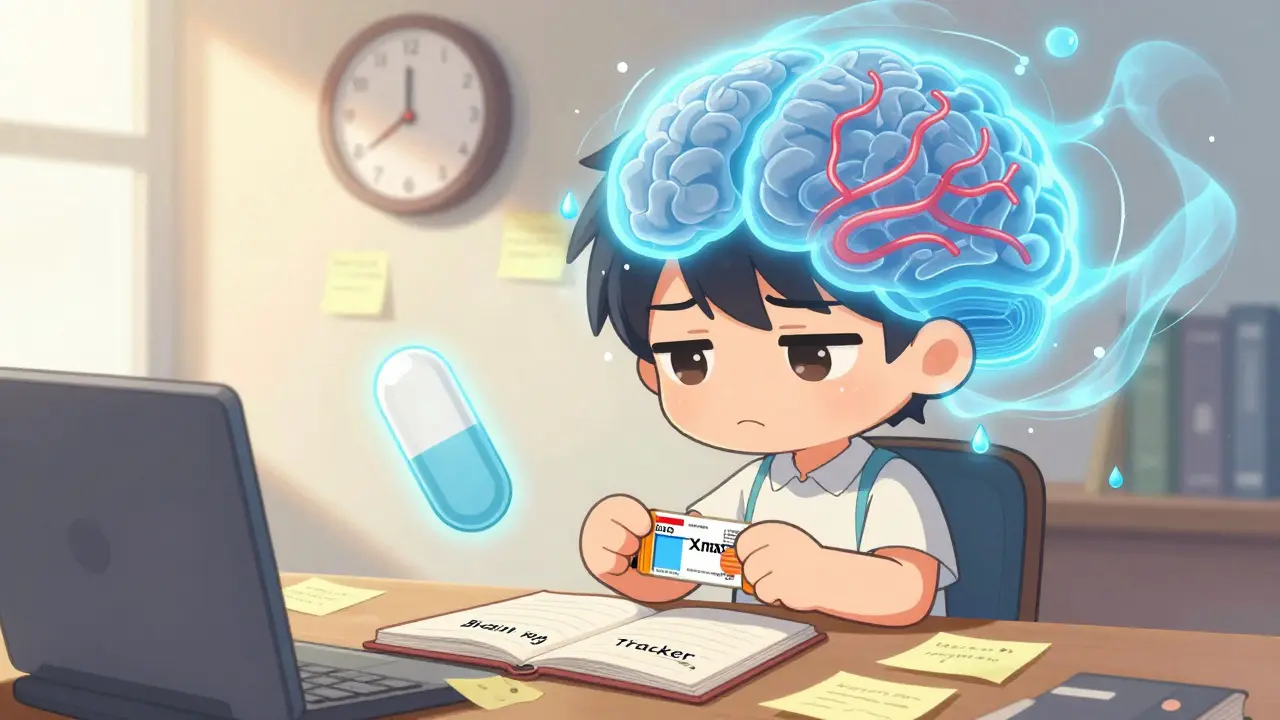
- Track your symptoms. Use a journal or app like BrainBaseline to note memory, mood, sleep, and brain fog.
What Works for Real People
Talk to anyone who’s been through it - on forums like Benzodiazepine Information Coalition or Reddit’s r/benzowithdrawal - and you’ll hear the same advice:- “Go slower than you think you need to.”
- “Diazepam is your friend. Don’t fight it.”
- “Track your progress. Even if it feels like nothing’s changing, write it down. You’ll see it later.”
- “Don’t quit cold turkey. Even if you feel fine.”
When Is It Okay to Keep Using Them?
The American Psychiatric Association says: don’t prescribe benzodiazepines for more than 4 weeks for anxiety. That’s not a suggestion. It’s a guideline based on hard evidence. But some people - especially those with severe epilepsy, treatment-resistant insomnia, or life-threatening panic - need them longer. For them, the rules are simple:- Use the lowest dose possible.
- Never exceed 5 mg diazepam equivalent per day if you’re over 65.
- Get your cognition checked every 6 months with a MoCA or MMSE test.
- If your score drops by 2-3 points, it’s time to start tapering.
The Future: Better Drugs on the Horizon
Scientists aren’t giving up. New drugs are being tested that target only the parts of the GABA receptor linked to anxiety - not memory or sedation. Phase II trials of α2/α3-selective agonists (like the one in ClinicalTrials.gov NCT04567890) showed a 70% reduction in anxiety with no memory loss. That’s huge. These drugs could be available within the next few years. Until then, the message is clear: benzodiazepines are not harmless. They’re powerful tools - but they come with heavy, lasting costs.What to Do Now
If you’re on benzodiazepines:- Don’t panic. But don’t ignore the risks.
- Ask your doctor: “What’s my current dose in diazepam equivalents?”
- Request a MoCA or MMSE test if you haven’t had one in the last 6 months.
- If you’ve been on them for more than 3 months, ask about tapering - even if you feel fine.
- Start a symptom journal. Note memory lapses, balance issues, or brain fog. You’ll need this later.
Can benzodiazepines cause permanent brain damage?
No, benzodiazepines don’t cause structural brain damage like tumors or strokes. But they do cause lasting functional changes. Brain activity patterns stay altered for months or years after stopping, leading to persistent memory, attention, and processing speed issues. These aren’t permanent in the sense of cell death, but they can feel permanent - especially if tapering is rushed or never attempted.
How long does it take to recover cognitively after stopping benzodiazepines?
Recovery varies. Most people see some improvement within 3-6 months. But for long-term users (over 5 years), full recovery can take 1-2 years or longer. A 2023 study found that 55% of users still showed cognitive deficits 10 months after quitting. Patience and slow tapering improve outcomes significantly.
Is it safe to taper off benzodiazepines at home?
It can be, but only with medical supervision. Withdrawal can trigger seizures, severe anxiety, hallucinations, or suicidal thoughts. A doctor should guide the taper, especially if you’ve been on high doses or for more than a year. Never stop suddenly. Use the Ashton Protocol and track symptoms closely. If symptoms worsen, pause the taper and consult your provider.
Why is diazepam (Valium) preferred for tapering?
Diazepam has a long half-life - meaning it stays in your system longer and leaves slowly. This smooths out the withdrawal curve, reducing spikes in anxiety, insomnia, and seizures. Short-acting drugs like alprazolam (Xanax) leave the body quickly, causing sharper withdrawal symptoms. Switching to diazepam before tapering makes the process safer and more tolerable.
Are there alternatives to benzodiazepines for anxiety or insomnia?
Yes. For anxiety, cognitive behavioral therapy (CBT) is as effective as benzodiazepines long-term, without side effects. SSRIs like sertraline or escitalopram are first-line for chronic anxiety. For insomnia, sleep hygiene, CBT-I (Cognitive Behavioral Therapy for Insomnia), melatonin, and magnesium are safer options. Always discuss alternatives with your doctor before stopping.



It’s wild how we treat these drugs like magic pills while ignoring the slow erosion they cause. I used to think my forgetfulness was just aging - turns out, it was Xanax quietly turning my brain into a sieve. The Ashton Protocol makes so much sense - slow, steady, no heroics. I tapered over 18 months. Didn’t feel like a hero, but my memory? It came back. Not perfectly, but enough to remember where I put my keys again.
Stop fearmongering. Benzodiazepines saved my life. I had panic attacks so bad I couldn’t leave the house. You think CBT is gonna fix that? Try it when your heart’s pounding like a jackhammer and you’re convinced you’re dying. These drugs aren’t perfect - but they’re not the enemy. The enemy is doctors who refuse to listen.
Thank you for writing this. I’ve been watching my dad struggle with this for years - he’s 72, on Ativan for 8 years, and I swear he’s a different person. More quiet. More lost. I didn’t know it was the meds until now. I’m taking him to his doctor next week to talk about tapering. He’s scared, but I think he’s ready. You’re right - it’s not about panic. It’s about patience. 💙
Thank you for the comprehensive overview. The Ashton Protocol is indeed the gold standard. I would like to add that switching to diazepam is not always feasible due to availability issues in some countries. In such cases, using a liquid formulation of the original benzodiazepine for micro-tapering can be equally effective. Also, hydration, magnesium glycinate, and omega-3 supplementation have shown anecdotal benefits in mitigating withdrawal symptoms. Patience is non-negotiable.
MY BRAIN FEELS LIKE A SLOW-MOTION REPLAY OF A PHONE CALL I CAN’T REMEMBER. I was on Klonopin for 11 years. 11 YEARS. I thought I was ‘just chill’ - turns out I was just… gone. The fog lifted after 14 months of tapering. I cried when I remembered my niece’s birthday. I hadn’t remembered it in three years. This isn’t just medical - it’s soul stuff. You’re not broken. Your brain just needed time to wake up. Keep going. You’re not alone.
Anterograde amnesia. Hippocampal GABA modulation. Half-life pharmacokinetics. Ashton Protocol. All valid. But let’s cut the fluff: benzodiazepines are neurotoxic with chronic use. No debate. CBT works. SSRIs work. Tapering works. Stop using them unless you’re actively dying. That’s it.
Had a mate on diazepam for 12 years. Tapered slow - 2.5% every 6 weeks. Took 2 years. He says his memory’s back to 85%. Still forgets names sometimes. But he’s back at work. Plays guitar again. Says the worst part wasn’t the withdrawal - it was the guilt. Like he’d failed himself. This post? Needed. Thanks.
OMG I’m literally crying rn 😭 I’ve been on Ativan for 7 years and I thought I was just ‘bad at remembering things’… now I realize I’ve been ghosting my own life. My husband says I don’t laugh like I used to. I didn’t even know I was supposed to. I’m scared to quit… but I’m also so tired of being a ghost. 🙏
So… what’s the deal with all the ‘brain fog’ stories? You guys are literally telling me you forgot your own breakfast? Did you eat it? Did you even know you were hungry? Or did your brain just auto-pilot through life like a confused Roomba?
^ this is harsh, but kind of true. We romanticize the fog like it’s poetic. It’s not. It’s debilitating. But I get it - we’re scared. I tapered off clonazepam after 9 years. Took 22 months. I used a journal. I tracked sleep, mood, and memory lapses daily. Some days I wanted to quit. But seeing the tiny improvements - remembering a coworker’s kid’s name, not needing to re-read a paragraph - kept me going. You’re not broken. You’re healing. Slowly. But yes. It’s real.