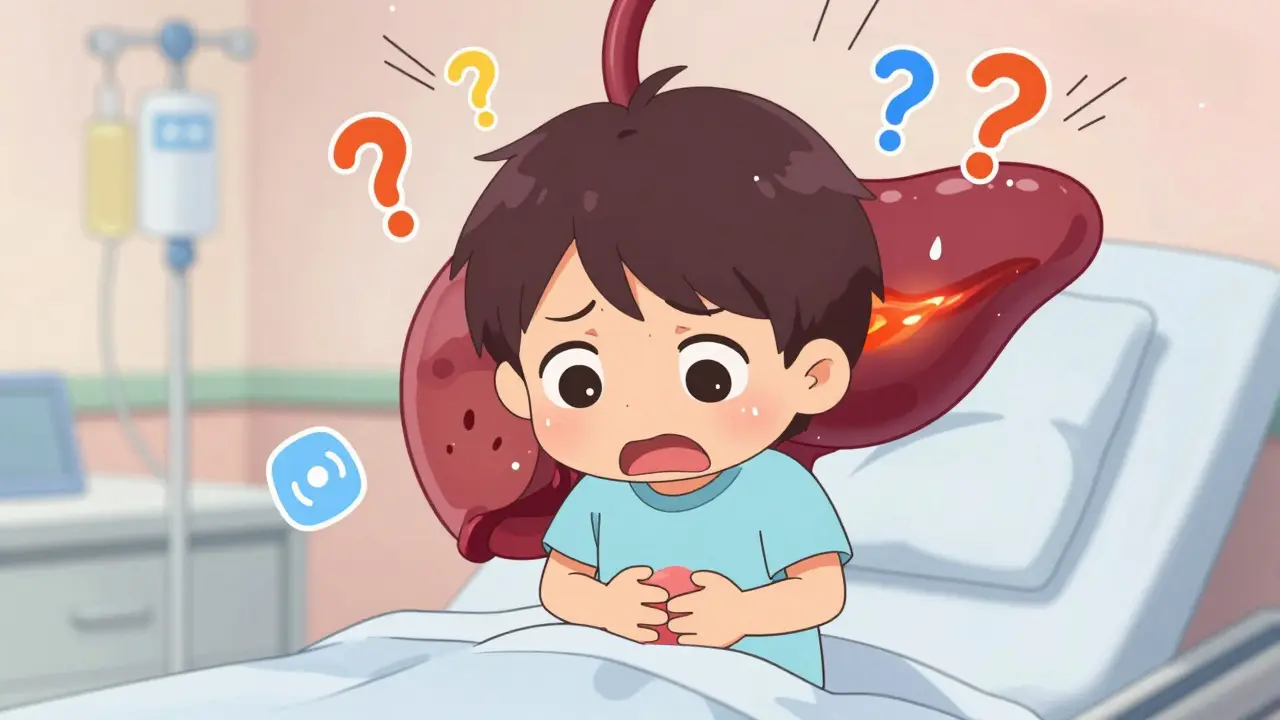
What Is Pancreatitis, and Why Does It Matter?
The pancreas sits behind your stomach and does two critical jobs: it makes enzymes to break down food and hormones like insulin to control blood sugar. When it becomes inflamed, that’s pancreatitis. It doesn’t just hurt-it can shut down your ability to digest food, regulate glucose, and even put your life at risk.
There are two main types: acute and chronic. Acute comes on fast, often after a heavy meal or a night of drinking, and usually clears up in a few days with rest and fluids. Chronic is different-it’s not a flare-up you recover from. It’s a slow, permanent damage that builds over years, often from long-term alcohol use or genetics. By the time symptoms show up, the pancreas may already be scarred and failing.
Each year in the U.S., about 275,000 people are hospitalized for acute pancreatitis. Around 80,000 more deal with chronic pancreatitis. Many don’t realize how serious this is until they’re in the hospital-or worse, until they’ve lost weight, developed diabetes, or been told they’re at higher risk for pancreatic cancer.
Acute Pancreatitis: Sudden, Severe, But Often Reversible
Acute pancreatitis hits like a thunderclap. The pain starts suddenly in the upper belly, often radiating straight through to your back. You might feel nauseous, vomit, and be too sore to lie still. Most people know something’s terribly wrong.
Doctors diagnose it with three things: pain that matches the pattern, blood tests showing lipase or amylase levels three times higher than normal, and imaging (like a CT scan) showing swelling or fluid around the pancreas. You don’t need all three, but you need at least two.
Severity matters. About 80% of cases are mild-you’ll be in the hospital for a few days, get IV fluids, and go home. But 20% turn severe. That means your organs start failing: kidneys, lungs, or heart. If that lasts more than 48 hours, your risk of death jumps to 15-30%. Necrosis-dead tissue in the pancreas-is the biggest danger here.
One of the most important things doctors do now is start aggressive IV fluids within the first 24 hours. Studies show this cuts the chance of tissue death by 35%. It’s not just about hydration-it’s about keeping blood flowing to the pancreas so it doesn’t turn on itself.
Chronic Pancreatitis: The Silent, Progressive Damage
Chronic pancreatitis doesn’t announce itself with a bang. It creeps in. You might have had a few acute attacks years ago, or maybe you drank heavily for a decade and now the pain is just… always there. It’s worse after eating, especially fatty meals.
This isn’t inflammation that goes away. This is scarring. Calcium deposits form. The ducts narrow. The pancreas shrinks. Over time, it stops making digestive enzymes and insulin. That’s why 90% of chronic patients develop exocrine insufficiency-meaning they can’t digest fat, protein, or carbs properly. And half will develop diabetes within 12 years.
Alcohol causes about 70% of cases. Smoking? That’s the other big one. Quitting smoking can cut disease progression by 50% over five years. That’s more powerful than any medication.
Genetics play a role too. Mutations in genes like PRSS1, SPINK1, or CFTR can make someone more vulnerable-even if they never drink. These cases often start earlier, sometimes in childhood or young adulthood.
Imaging tells the story: CT scans show calcifications in 30-60% of chronic cases. MRIs show twisted, blocked ducts in 85%. These aren’t just signs-they’re proof the damage is permanent.
How Nutrition Changes Everything in Recovery
What you eat isn’t just about comfort-it’s medicine.
In acute pancreatitis, the first rule is: don’t eat until the inflammation settles. You’ll get fed through an IV at first. But the moment you’re stable, you start enteral nutrition-feeding through a tube into the small intestine. This is better than IV nutrition. It cuts infection risk by 30% and helps the gut heal faster. Start within 24-48 hours if you can.
Once you’re eating again, go low-fat. No more fried food, butter, cream, or fatty meats. Aim for 20-30 grams of fat per day during the flare. Focus on lean protein, complex carbs like oats and brown rice, and small, frequent meals. Six to eight tiny meals a day are easier on your system than three big ones.
For chronic pancreatitis, nutrition becomes a lifelong management plan. Fat restriction is still key-but you can go a little higher: 40-50 grams per day. But here’s the twist: not all fats are equal. Medium-chain triglycerides (MCTs), found in coconut oil or special medical formulas, don’t need pancreatic enzymes to be absorbed. That’s why many patients are put on MCT oil supplements-it reduces diarrhea and weight loss.
Enzyme Replacement: The Lifeline for Digestion
If your pancreas isn’t making enzymes anymore, you need to replace them. That’s pancreatic enzyme replacement therapy (PERT). It’s not optional-it’s essential.
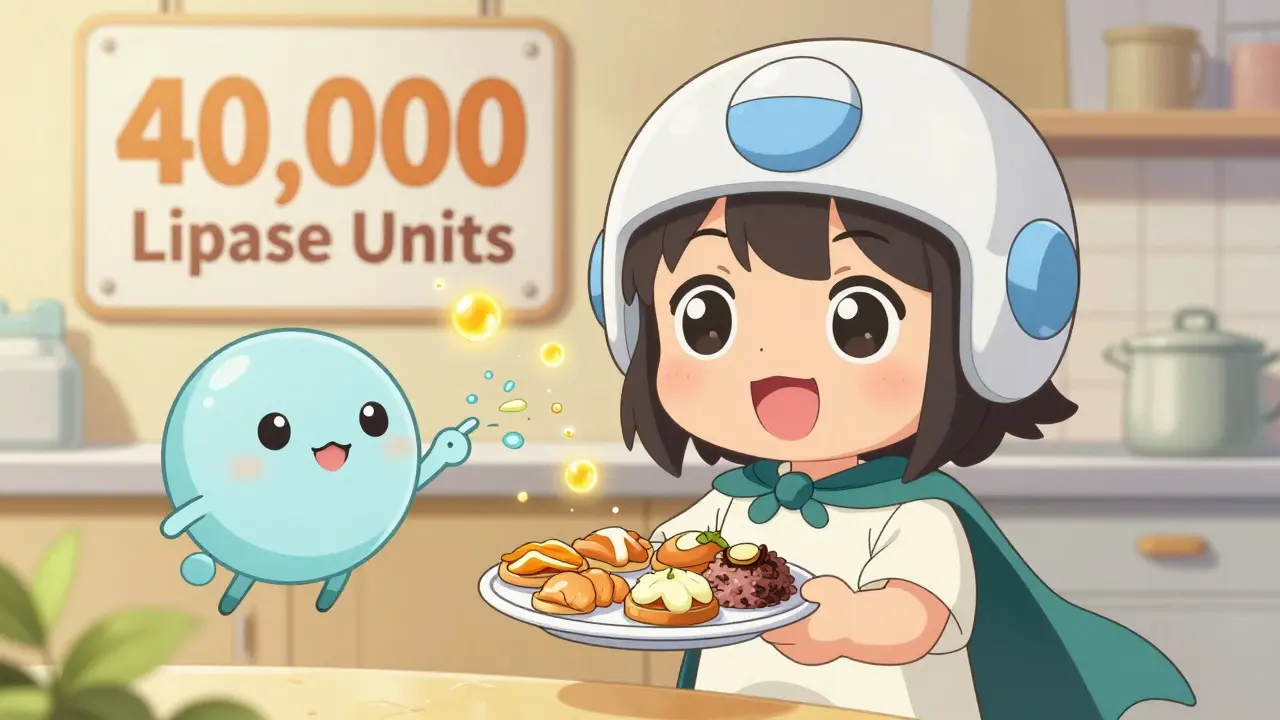
For chronic pancreatitis, you need 40,000 to 90,000 lipase units with each main meal and 25,000 with snacks. That’s a lot. Many people take too little because they don’t realize how much they need. If you’re still having greasy, foul-smelling stools (steatorrhea), your dose is too low.
Doctors check effectiveness with a 72-hour fecal fat test. If more than 7% of fat is passing through your stool, you need more enzymes. Some newer formulations like Creon 36,000 are designed to release enzymes in the right part of the intestine, improving fat absorption by 45% compared to older versions.
And don’t forget: take enzymes with every bite of food. Not before. Not after. With. If you forget one meal, you’ll pay for it later with bloating, cramps, and diarrhea.
Deficiencies You Can’t Ignore
When your pancreas fails, your body stops absorbing vitamins. It’s not just about calories-it’s about micronutrients.
Studies show 85% of chronic pancreatitis patients are low in vitamin D. That’s linked to bone loss and immune problems. Forty percent lack vitamin B12, which can cause nerve damage and fatigue. A quarter are deficient in vitamin A, affecting vision and skin.
These aren’t random. They’re predictable. That’s why every chronic pancreatitis patient should get annual blood tests for fat-soluble vitamins (A, D, E, K) and B12. Supplements aren’t optional-they’re part of your daily routine, like your enzymes.

What Doesn’t Work (And What Might)
Some people try herbal remedies, juice cleanses, or extreme low-fat diets. None of these reverse damage. In fact, going too low-fat for too long can make you malnourished. You need enough calories-even if you’re losing weight.
Probiotics? New research is promising. A 2023 study found that specific strains-Lactobacillus rhamnosus GG and Bifidobacterium lactis-reduced pain by 40% over six months. That’s not a cure, but it’s a real improvement for quality of life.
And then there’s the future. The REGENERATE-CP trial is testing stem cell therapy to repair pancreatic tissue. Early results show a 30% improvement in enzyme production after a year. It’s still experimental, but it’s hope.
For diabetes caused by pancreatitis (called type 3c), the FDA approved the Dexcom G7 continuous glucose monitor in early 2024. It’s the first system designed specifically for the wild blood sugar swings these patients get-rising fast after meals, crashing hours later. Standard diabetes monitors don’t catch this pattern. This one does.
The Hidden Costs-Physical, Emotional, Financial
Acute pancreatitis costs about $10,500 per hospital stay. Severe cases? Up to $35,000. Chronic pancreatitis? $28,400 per year-meds, doctor visits, lost work, hospitalizations.
But money is only part of it. Pain is constant for many. A 2022 study found 42% of chronic patients lost over 10% of their body weight because they were scared to eat. One in three develops opioid dependence within five years.
And then there’s the loneliness. On patient forums, 60% say they’ve struggled to find a doctor who understands. Wait times to see a pancreatic specialist? Over four months. That’s not just inconvenient-it’s dangerous.
But there are centers that change everything. Johns Hopkins, Mayo Clinic, University of Pittsburgh-they run multidisciplinary clinics with gastroenterologists, nutritionists, pain specialists, and psychologists. Patients there report life-changing results: fewer hospital stays, better weight, less pain.
What You Can Do Right Now
- If you’ve had acute pancreatitis: stop drinking. Stop smoking. Get your enzymes tested. Start eating small, low-fat meals. Don’t wait for it to come back.
- If you have chronic pancreatitis: take your enzymes with every meal. Get your vitamins checked yearly. Find a specialist. Join a support group. You’re not alone.
- If you’re at risk (family history, heavy drinking, smoking): get screened. A simple MRI or CT can catch early changes before you feel pain.
Pancreatitis isn’t something you beat once and forget. It’s a condition you learn to manage. The difference between survival and thriving? It’s not just medicine. It’s what you eat, what you quit, and who you trust to help you.

Okay but can we talk about how no one tells you that enzyme dosing is basically a full-time job? I thought ‘take with meals’ meant like, at the start. Turns out you gotta crush them into your mashed potatoes, your oatmeal, even your coffee creamer if it’s not powdered. Miss one bite and it’s like a greasy, gassy apocalypse. I’ve started keeping a little pill organizer next to my fork now. It’s sad. It’s real. It’s life.
so i had acute pancreatitis after a bbq binge and the doc was like ‘stop drinking’ and i was like ‘ok’ and then he said ‘and smoking’ and i was like ‘...but i only smoke like 3 cigarettes a week??’ and he just stared. i quit both. 2 years later and i haven’t had a flare. not saying it’s easy, but it’s the only thing that actually works.
Y’ALL. I just wanna say I’m so proud of everyone reading this who’s managing this. 🙌 It’s not just about the enzymes or the diet or the blood tests-it’s about showing up every single day when your body feels like it’s betraying you. I was diagnosed with chronic 5 years ago and I cried for three days straight. Now? I meal prep like a boss, I take my vitamins like they’re my kids’ bedtime meds, and I even joined a support group on Zoom. You’re not broken. You’re just recalibrating. And that’s brave. 💪❤️
The part about MCT oil being absorbed without pancreatic enzymes is game-changing. I didn’t know that. I’ve been avoiding all fats for years thinking it was the only way, but now I’m slowly adding coconut oil to my smoothies. No more diarrhea. No more weight loss. Just… better. Why isn’t this more widely taught in med school?
Let’s be real-half the people on here are probably taking half the enzymes they need because they’re too lazy or too broke to refill. I’ve seen it. You think you’re fine until you’re in the ER with a 10/10 pain and your stool’s floating like a greasy raft. The doc doesn’t care if you ‘forgot’-your pancreas doesn’t care either. Take. The. Pills. With. Every. Bite. No excuses.
Stop pretending this is just ‘diet and meds.’ This is a death sentence with a side of insurance battles. You think you’re doing everything right? Congrats. You’re still 5x more likely to get pancreatic cancer than someone who never had pancreatitis. And yeah, the G7 monitor helps-but it doesn’t pay your rent or stop your boss from thinking you’re ‘just lazy.’ This isn’t a lifestyle tweak. It’s a lifelong prison sentence with no parole.
As an American, I’m disgusted. We have the best medical tech in the world-G7 monitors, stem cell trials, MCT formulas-and yet people are still dying because they can’t afford enzymes or can’t find a specialist who takes their insurance. Meanwhile, the VA gives veterans full coverage for this. Why? Because they know it’s not a ‘lifestyle choice.’ It’s a medical emergency. We’re failing people. Not because they’re not trying. Because the system is broken.
In India, we don’t have access to Creon or MCT oil… but we use coconut oil, ginger tea, and small meals of dal and rice. My uncle had chronic pancreatitis for 15 years-he never took enzymes, but he lived until 78. Maybe it’s not just about the science? Maybe tradition, patience, and food as medicine still matter?