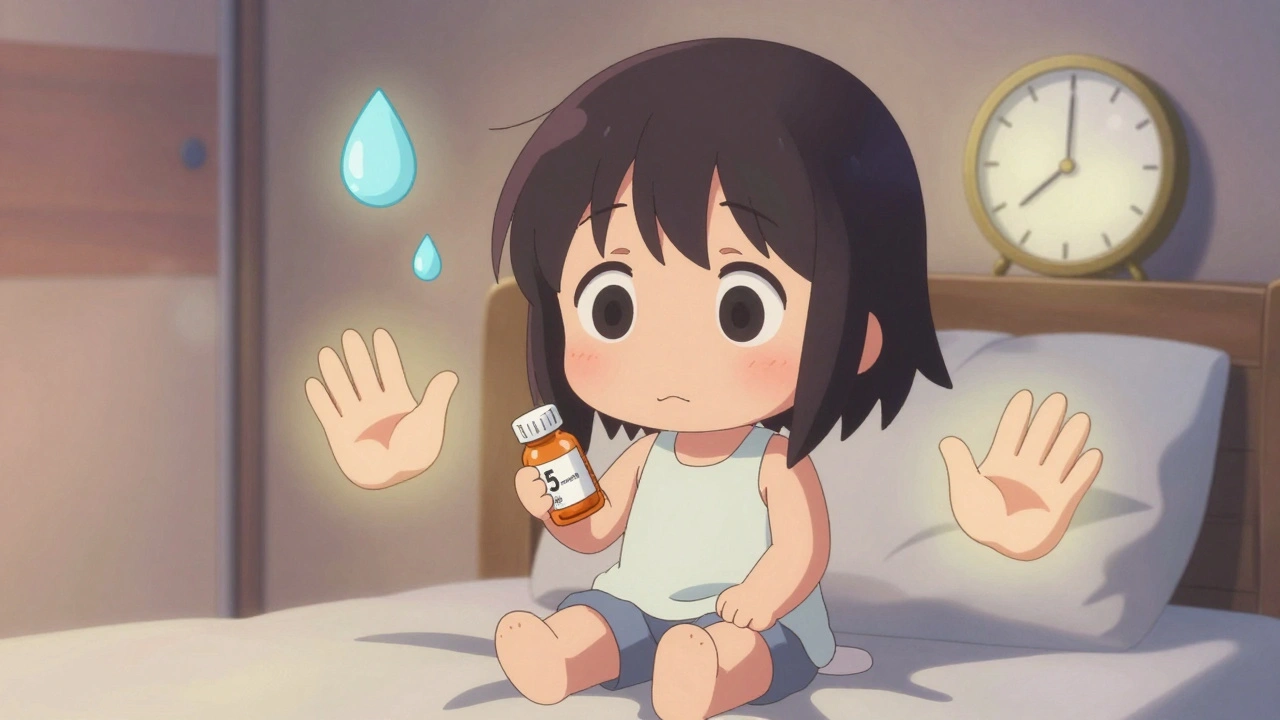
Stopping opioids after long-term use isn’t as simple as just quitting. Your body adapts. When you suddenly cut back or stop, it reacts-with intense physical and emotional symptoms that can feel overwhelming. Many people are told to reduce their dose quickly, sometimes by insurers or even well-meaning doctors. But rapid tapering can lead to severe withdrawal, increased pain, panic attacks, and even suicidal thoughts. The truth is, opioid withdrawal is manageable-but only if done right.
Why Tapering Matters
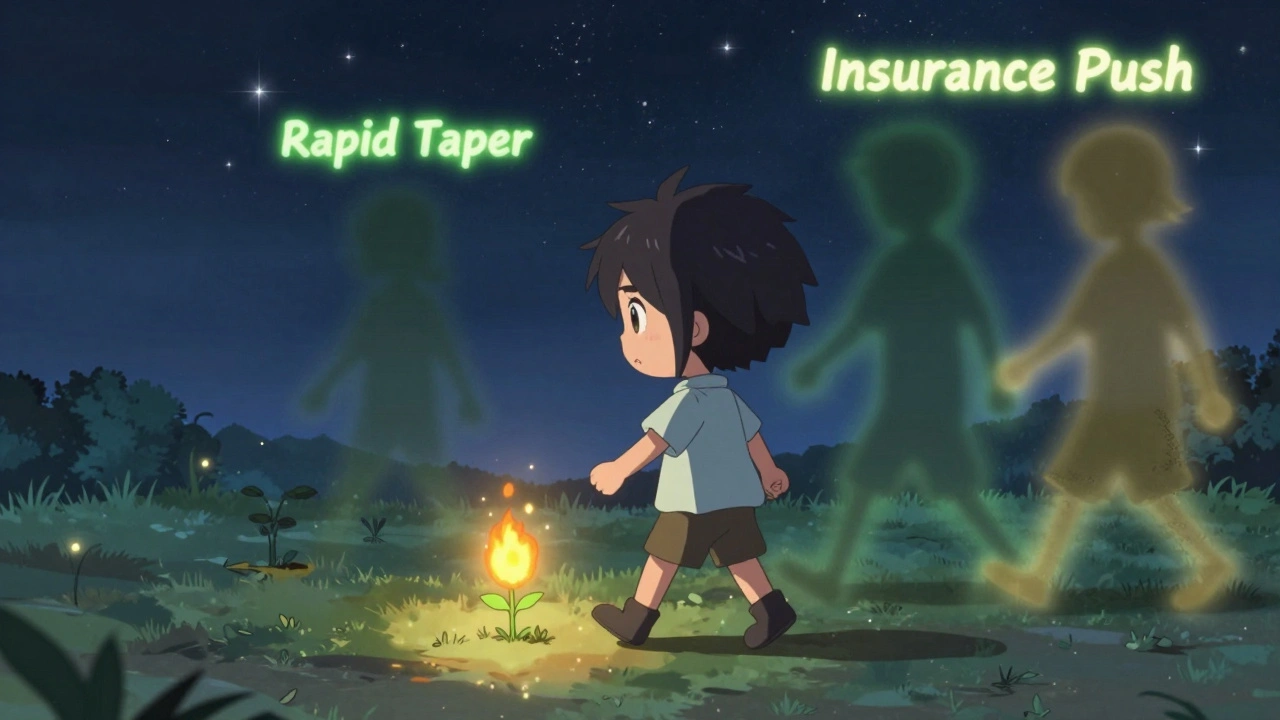
Tapering isn’t about punishment or forcing someone off medication. It’s about safety. When someone takes opioids daily for weeks or months, their brain changes. It stops making natural painkillers (endorphins) and becomes reliant on the drug to feel normal. Suddenly removing it triggers a cascade of symptoms because the nervous system is out of balance. The CDC’s 2022 guidelines made it clear: tapering should never be rushed. Fast tapers-like cutting dose by 20-25% every few days-lead to 68% more severe symptoms, according to a 2018 JAMA study. People who go too fast are also 3.5 times more likely to have suicidal thoughts. That’s not just a risk. It’s a crisis. Slower tapers, on the other hand, work better. A 2020 Oregon Health Authority report found that reducing by just 5-10% per month led to 73% better adherence and far fewer emergency room visits. The goal isn’t speed. It’s survival and quality of life.When Should You Consider Tapering?
Not everyone on opioids needs to taper. If your pain is controlled, your function is improved, and you’re not experiencing dangerous side effects, staying on your current dose may be the safest choice. The CDC says tapering should only happen when:- You’ve recovered from surgery or injury and no longer need pain meds
- You’re having serious side effects like constipation, drowsiness, or confusion
- Your pain hasn’t improved despite stable doses
- There are signs of misuse-taking extra doses, running out early, or getting prescriptions from multiple doctors
- You’ve chosen a different treatment, like physical therapy or acupuncture
How Slow Is Slow Enough?
There’s no one-size-fits-all schedule. But here’s what works for most people:- Short-term users (under 6 months): Reduce by 10-25% every 3-4 days. For example, if you’re taking 8 pills a day, drop to 6 after 3-4 days, then 5, then 4, etc.
- Long-term users (over a year): Reduce by 5-10% per month. Some people take 6 months to a year to fully taper.
- High-dose users (over 90 mg morphine equivalent daily): Tapers may last over a year. The VA recommends pausing or slowing down if symptoms get worse.

Common Withdrawal Symptoms and How to Handle Them
Withdrawal isn’t just “feeling sick.” It’s a full-body reaction. Here’s what you might experience-and how to manage it:- Nausea and vomiting (87% of cases): Ginger tea, peppermint oil, or small sips of electrolyte drinks help. Anti-nausea meds like ondansetron may be prescribed.
- Muscle aches and cramps (85%): Heat packs, warm baths, and light stretching help. Baclofen (5 mg 3x/day, up to 40 mg daily) can reduce muscle spasms.
- Anxiety and restlessness (80%): Breathing exercises, meditation, and therapy work better than sedatives. Cognitive behavioral therapy (CBT) is used by 41% of people who succeed in tapering.
- Insomnia (78%): Avoid caffeine after noon. Try melatonin (3-5 mg at bedtime) or gabapentin (100-300 mg at night, increased gradually up to 1,800-2,100 mg/day).
- Diarrhea (75%): Stay hydrated. Loperamide (Imodium) can help short-term. Avoid high-fiber foods until symptoms ease.
What Doesn’t Work
Some approaches sound good but are dangerous:- Going cold turkey: This is the fastest way to trigger severe withdrawal, panic, and relapse. Don’t do it.
- Using alcohol or benzodiazepines to cope: These can be deadly when mixed with opioids or during withdrawal.
- Switching to another opioid like tramadol or kratom: This just replaces one dependency with another. It doesn’t solve the problem.
- Letting insurance dictate your pace: If they push you to cut 50% in 2 weeks, push back. Your health isn’t a cost-saving metric.
Support Systems That Actually Help
You don’t have to do this alone. The most successful taperers use multiple tools:- Therapy: CBT helps rewire how you think about pain and stress. It’s not “just talking.” It’s training your brain to cope without drugs.
- Acupuncture: A 2021 Oregon registry found 33% of tapering patients said it helped reduce anxiety and muscle pain.
- Support groups: Reddit’s r/OpiatesRecovery has 145,000 members. One top post details a 6-month taper from 120 mg morphine daily using 10% monthly cuts. Symptoms were mild: slight insomnia, low energy, but no panic.
- Physical activity: Even 15-minute walks improve sleep, reduce anxiety, and boost endorphins naturally.
What Your Doctor Should Do
A good clinician doesn’t hand you a taper schedule and walk away. They:- Discuss your goals: Do you want to reduce pain? Sleep better? Feel more in control?
- Write a flexible plan-not a rigid one. You should be able to pause or slow down without judgment.
- Check in every 2-4 weeks to assess pain, mood, sleep, and function.
- Use motivational interviewing: asking open questions, listening, and guiding-not ordering.
- Coordinate with other providers: therapists, pharmacists, physical therapists.
What to Do If You’ve Already Been Rushed
If you’ve been forced into a fast taper and are struggling:- Call your doctor immediately. Say: “I’m having severe withdrawal. I need to pause or slow down.”
- Go to an urgent care center if symptoms are overwhelming-nausea, vomiting, rapid heartbeat, or thoughts of self-harm.
- Reach out to a support group. You’re not alone. People have been here and recovered.
- Document everything. Write down dates, doses, symptoms, and who told you to taper fast. This protects you if you need to file a complaint.

Just wanted to say this post saved my life. I tapered over 9 months at 7% a month and yes, it was slow-but I didn’t end up in the ER or crying in the shower every night. You’re not weak for going slow. You’re smart.
Also, gabapentin at night was a game changer. Not a cure, but it let me sleep enough to keep going.
Been there. Did the 6-month taper. Took walks every day. Started with 10 mins, now I do 45. Endorphins don’t need a script. Also, acupuncture? Surprisingly helpful. Not magic, but it calmed my nerves.
And yeah-Reddit’s r/OpiatesRecovery is the real MVP. People there get it.
My brother went cold turkey last year. Didn’t survive the week. This post should be mandatory reading for every doctor who thinks ‘just quit’ is a treatment plan.
Stop treating addiction like a moral failure. It’s neurobiology.
Big up to the CDC guidelines. Finally, someone in power gets it. I was told to drop from 120mg to 40mg in 2 weeks. I said no. They threatened to cut my script. I found a new doctor. Best decision I ever made.
Also, ginger tea. Don’t knock it till you’ve tried it during the sweats.
TO EVERYONE WHO’S TAPERING: YOU’RE DOING AMAZING. Even if you feel like you’re crawling, you’re moving forward. Progress isn’t linear. Some days you’ll feel like crap. That’s normal. Keep going.
And if someone tells you to ‘just be strong’? Tell them to read this post. Then block them.
Let me just say, as someone who’s studied neuropharmacology at Johns Hopkins, the notion that ‘slow tapering is better’ is not just anecdotal-it’s empirically validated. The mu-opioid receptor downregulation curve is well-documented, and abrupt cessation triggers a glutamate surge that mimics PTSD neurobiology. The VA’s 2023 protocol aligns with synaptic plasticity principles. If your doctor doesn’t understand receptor kinetics, find a new one.
Also, lofexidine is underutilized. It’s not a magic bullet, but it modulates locus coeruleus hyperactivity far better than clonidine. Why? Because it’s selective. Clonidine causes rebound hypertension. Lofexidine doesn’t. This isn’t opinion. It’s pharmacokinetics.
Wait-so you’re telling me we shouldn’t just force people off opioids because insurance wants to save $200 a month? What’s next? Should we stop giving insulin because diabetics are ‘too expensive’?
Actually, no, wait-I know the answer. We already do. This is just the opioid version of the same broken system. We punish people for being sick. Then wonder why they relapse.
Also, ‘support groups’? Please. Most of them are just people trading trauma porn. But hey, at least they’re not on meds, right? 😏
While I commend the clinical rigor of this piece, one must not overlook the foundational moral imperative: dependency, regardless of etiology, is a surrender of autonomy. The body’s adaptation to exogenous substances is not an illness-it is a consequence of choice. The real crisis is not withdrawal, but the cultural normalization of chemical escape.
One cannot heal by replacing one dependency with another-be it acupuncture, gabapentin, or Reddit threads. True recovery begins when the individual chooses to stand unassisted by pharmacology or digital comfort. The data may support slow tapers, but wisdom demands we ask: why did they reach for opioids in the first place?
Life is pain. Opioids just hide it. The real fix? Accept suffering. Then it loses power.
Stop chasing comfort. Find meaning.
As a clinician with 18 years in pain management, I’ve seen both sides. Rapid tapers are not just ineffective-they’re unethical. I’ve written letters to insurers on behalf of patients, citing CDC guidelines and JAMA data. It’s not about being ‘soft.’ It’s about being competent.
One of my patients, a veteran, tapered over 14 months. He now runs marathons. He says the withdrawal was hard, but the worst part was the stigma-not the symptoms.
If you’re a provider reading this: your job isn’t to reduce pill counts. It’s to reduce suffering.
I’m not religious, but I swear, this post felt like a sermon. The part about ‘your health isn’t a cost-saving metric’? That hit me in the chest.
My mom was forced off her meds in 2021. She ended up in hospice-not from overdose, but from depression. No one asked if she was okay. They just wanted the script gone.
Thank you for writing this. I’m sharing it with everyone I know.
Let’s be real. Most people on long-term opioids aren’t ‘managing pain.’ They’re addicted. This whole ‘slow taper’ narrative is just sugarcoating dependency. You don’t need a 12-month plan-you need rehab.
And don’t get me started on acupuncture. That’s just witchcraft with a price tag. If you’re still on meds after 6 months, you’re not healing. You’re delaying the inevitable.
Stop romanticizing addiction. It’s not a journey. It’s a trap.
From a physiotherapist’s POV: movement is the most underutilized tool in opioid tapering. Not just walking-breathing drills, diaphragmatic activation, graded exposure to load. These modulate the autonomic nervous system better than most meds.
Also, ‘low-dose naltrexone’ (LDN) is gaining traction in chronic pain circles. Not for withdrawal, but for neuroinflammation. It’s not FDA-approved for this, but pilot data is promising. Worth discussing with your doc if you’re stuck.
Oh wow. Another sanctimonious, data-dumping manifesto on how to ‘do opioids right.’
Let me guess-you’ve never had to work a 12-hour shift while your spine screams, and your insurance says ‘try yoga.’
And now you’re here, typing about ‘receptor kinetics’ like you’re Dr. House while the rest of us are just trying to breathe without a pill.
Maybe if you’d lived it, you’d know that ‘slow taper’ doesn’t mean ‘safe.’ It just means ‘longer suffering.’
And lofexidine? Cute. I tried it. It made me dizzy. Didn’t stop the sweats. Didn’t stop the panic.
So yeah. Thanks for the lecture. I’ll stick to my 5mg oxycodone and my dignity.
im on day 87 of my taper and i still cry at night but im proud of myself. thanks for this post. also gabapentin is a godsend. dont listen to the people who say its just a crutch. if it lets me sleep, its working.