Medication Photosensitivity Risk & Safety Tool
Step 1: Check Your Medications
Select any drugs you are currently taking.Step 2: Environment
If taking Amiodarone, sensitivity can persist for up to 20 years after stopping the drug.
Your Personalized Photoprotection Plan
Recommended Shield Strategy
What To Avoid
Always consult your doctor before changing medication regimens.
The Hidden Risk Hiding in Your Medicine Cabinet
You might spend twenty minutes applying sunscreen before heading outside, yet walk away with a blistering burn anyway. This isn't always because you skipped a step. Sometimes, the culprit is sitting in your pill organizer. Drug-induced photosensitivity is a cutaneous adverse drug reaction resulting from the interaction between ultraviolet radiation and medications. It turns a normal dose of sunlight into a dangerous hazard for skin health.
Current data from 2026 suggests that over 1,000 common medications can trigger this reaction. Approximately 8-20% of the general population experiences some degree of medication-related sensitivity without realizing why. If you recently started a new prescription and noticed your skin reacting differently to the sun, this could be the reason. Understanding how these chemicals interact with UV light is the first step toward protecting yourself.
Phototoxicity Versus Photoallergy: What's Actually Happening?
Not all skin reactions are created equal. To treat or prevent them effectively, you need to understand the two primary mechanisms driving these issues. Think of them as two different ways the sun and medicine conspire against your cells.
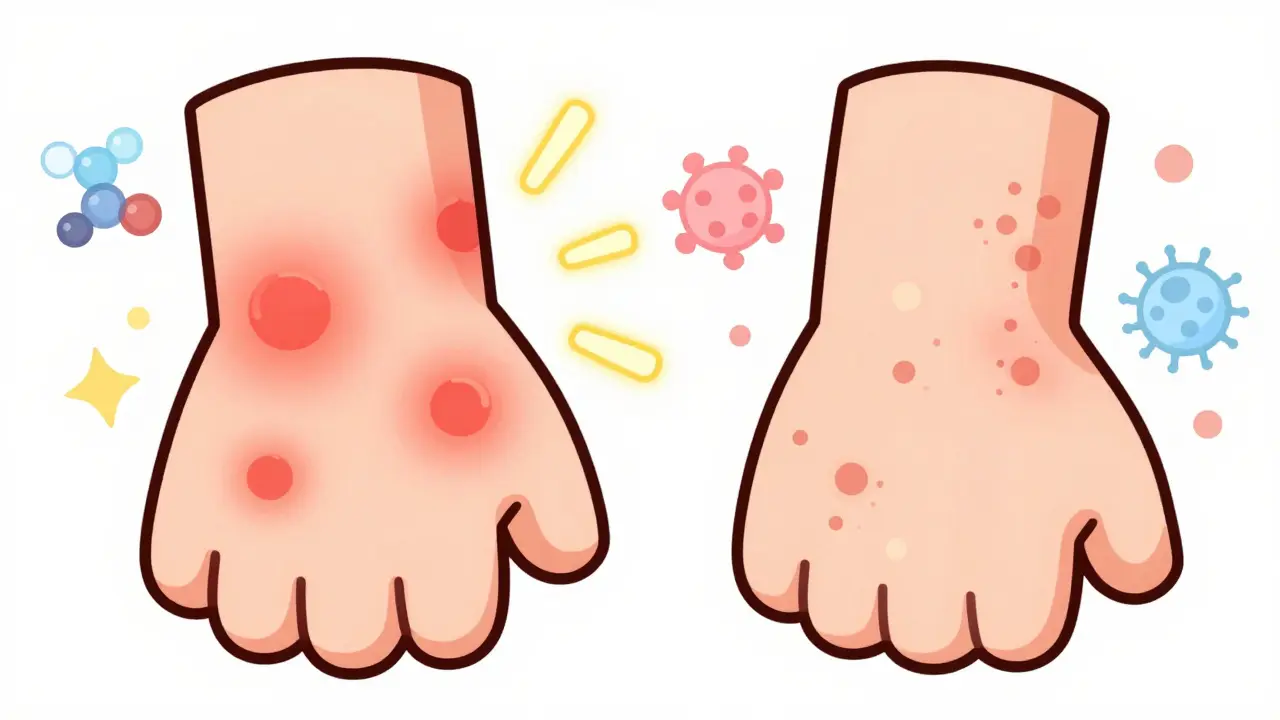
Phototoxicity is the most common form, accounting for roughly 95% of cases. This reaction occurs when a drug molecule absorbs UV radiation-specifically UVA wavelengths-and generates reactive oxygen species. These free radicals cause direct cellular damage through lipid peroxidation. Imagine your skin burning much faster and deeper than a standard sunburn. You often see this occur within 30 minutes to 2 hours of exposure. Symptoms include intense redness, swelling, and sometimes blisters. Unlike a simple sunburn, this damage happens even if you haven't been out long enough to normally burn.
Photoallergy is rarer, affecting only about 5% of cases, but it behaves very differently. This is a Type IV delayed hypersensitivity response. Here, UV exposure converts the drug into a photoantigen that binds to skin proteins, triggering an immune system attack. Instead of immediate pain, you might get an itchy, eczematous rash 24 to 72 hours after exposure. A confusing twist? This rash can spread beyond the areas where the sun hit your skin, appearing in folds of clothing or covered areas.
| Feature | Phototoxic Reaction | Photoallergic Reaction |
|---|---|---|
| Prevalence | ~95% of cases | ~5% of cases |
| Onset Time | 30 min - 2 hours | 24 - 72 hours |
| Symptoms | Burning, Blistering, Edema | Itching, Eczematous Rash |
| Cause | Direct Cellular Damage | Immune System Response |
Which Medications Trigger Dangerous Reactions?
You don't need to memorize every chemical compound, but knowing high-risk categories saves you trouble. Dermatologists have identified specific classes of drugs that frequently cause trouble under the midday sun. These aren't just niche prescriptions; many are available over-the-counter or are commonly prescribed by primary care physicians.
Tetracycline Antibiotics include medications like doxycycline and minocycline often used for acne and infections. Doxycycline alone causes phototoxic reactions in 10-20% of users. People often take these for short-term acne flare-ups but fail to connect their severe "sunburns" to the bottle in the bathroom cabinet. Even a single course can leave your skin vulnerable for weeks.
Next are NSAIDs Non-steroidal anti-inflammatory drugs such as ketoprofen and ibuprofen. While oral versions pose a moderate risk, topical formulations can increase local absorption of the allergen. Ketoprofen specifically has been flagged in studies for causing photoallergic contact dermatitis in 1-3% of users. If you apply a pain relief gel to your shoulders before going to the beach, you are essentially painting a target on that skin.
Cardiovascular medications are another major contributor. Amiodarone an antiarrhythmic drug known for severe long-term photosensitivity, causes reactions in 25-75% of long-term users. Interestingly, the FDA confirms that this sensitivity can persist for up to 20 years after stopping the medication. Statins and diuretics also show lower incidence rates but remain part of the conversation, especially for older adults managing multiple chronic conditions.
Finally, look at your list for ACE inhibitors, fluoroquinolones like ciprofloxacin, and certain antidepressants. With women experiencing photoallergic reactions at twice the rate of men due to higher use of cosmetic and topical agents, paying attention to both pills and creams is vital.
Effective Sun Safety Protocols for Protected Skin
If your doctor puts you on a high-risk medication, standard sunscreen habits often aren't enough. You need a multi-layered defense strategy. The goal isn't just avoiding a burn; it is preventing long-term DNA damage that raises skin cancer risk. Studies indicate photosensitizing medications can increase non-melanoma skin cancer risk by up to 60% in chronically exposed patients.
Optimize Your Sunscreen Ingredients
Chemical sunscreens absorb UV rays, which might sound good, but they can sometimes penetrate sensitive skin and react further with the offending drug. For photosensitive patients, physical blockers are superior. Look for formulas containing Zinc Oxide a mineral filter providing broad-spectrum UV protection or titanium dioxide. Specifically, aim for minimum 15% concentration of zinc oxide. The FDA recommends applying 2 mg/cm² coverage, which translates to about one ounce for a full body application. Most people apply only 25-50% of this amount, so be generous and reapply every two hours.
Incorporate Physical Barriers
Clothing offers far better protection than you think. Regular t-shirts might block only 3-20% of UV radiation depending on weave and color. You want UPF 50+ Clothing garments tested to block at least 98% of UV radiation. Brands like Coolibar or Solbari demonstrate consistent performance in independent testing. Long sleeves, wide-brimmed hats, and sunglasses are not just style choices; they are medical necessity devices while you are on sensitizing therapy.
Monitor the Environment
The sun isn't constant. UV index monitoring apps like UVLens provide real-time exposure risk assessment. Limit outdoor activity during times when the UV index exceeds 3. It sounds restrictive, but data shows a 40% reduction in reactions when patients heed these signals. Remember, clouds do not stop UVA radiation, which penetrates deep into the dermis regardless of visibility.

Recognizing Symptoms and Seeking Diagnosis
Unfortunately, these reactions are significantly underdiagnosed. Up to 70% of cases are misidentified as idiopathic photosensitivity or polymorphic light eruption. If you notice an exaggerated burn pattern, especially one that stops abruptly where your shirt line begins, tell your provider immediately.
Some patients report persistent dark spots or changes in pigmentation known as Pseudoporphyria a blistering condition resembling porphyria cutanea tarda without metabolic disease. Other signs include nail separation (photo-onycholysis) or lichenoid eruptions. If you suspect a reaction, doctors may suggest photopatch testing. This procedure involves applying small amounts of suspected agents to the skin and exposing them to UV light to confirm the diagnosis. Keep in mind this test confirms the cause in only 30-40% of suspected cases, making a thorough medication history review essential.
Fresh Developments and Future Management
Medical science is catching up with these challenges. As we move through 2026, personalized protection is becoming reality. In 2023, companies began launching genetic testing panels to identify variants like MC1R associated with increased reaction risk. Though still emerging, this helps tailor prevention strategies before the first pill is even taken.
We are also seeing regulatory shifts. The FDA now mandates photosensitivity warnings on over 200 high-risk medications, impacting 150 million annual prescriptions. Meanwhile, the European Commission has updated regulations requiring specific UVA protection labeling, pushing the industry toward PA++++ rating systems. There is also hope for new pharmaceutical aids; the FDA approved Lumitrex, a targeted photoprotective medication in late 2023, designed to reduce UV-induced reactive oxygen species directly.
With climate change increasing ambient UV levels by 0.5-1.0% annually, these protections are becoming more critical. Better management of drug-induced photosensitivity could prevent thousands of non-melanoma skin cancer cases by the end of the decade. Being informed is your strongest shield.
Does photosensitivity last forever after stopping the medication?
For most drugs, the risk returns to normal once the medication leaves your system, which takes anywhere from days to weeks depending on the half-life. However, for powerful agents like amiodarone, sensitivity can persist for up to 20 years after discontinuation.
Can I use my regular sunscreen if I take antibiotics?
Standard SPF 30 chemical sunscreens often fail to prevent phototoxic reactions because they let UVA rays pass through. Switch to a broad-spectrum physical blocker containing at least 15% zinc oxide or titanium dioxide for adequate protection.
What should I do if I get a blistering rash?
Avoid further sun exposure immediately and consult a dermatologist. Do not pick at blisters to prevent infection. Severe reactions like pseudoporphyria require medical evaluation to rule out other underlying causes.
Are natural remedies effective for prevention?
While antioxidants help general skin health, no herbal tea or diet supplement replaces the need for UV-blocking barriers. Clinical data supports physical blockers and regulated sunscreen concentrations for actual protection.
Why do I burn through my clothes?
This is a hallmark of phototoxicity. Standard fabric provides minimal protection against concentrated UV rays interacting with drugs. Wearing UPF 50+ rated clothing creates the necessary density to block the radiation.