
For decades, diagnosing and tracking cancer meant invasive surgery-drilling into tumors, removing tissue, and waiting weeks for results. But now, a simple blood draw can reveal what’s happening inside a tumor, often before scans even show changes. This isn’t science fiction. It’s circulating tumor DNA, or ctDNA, and it’s reshaping how cancer is monitored today.
What Is Circulating Tumor DNA?
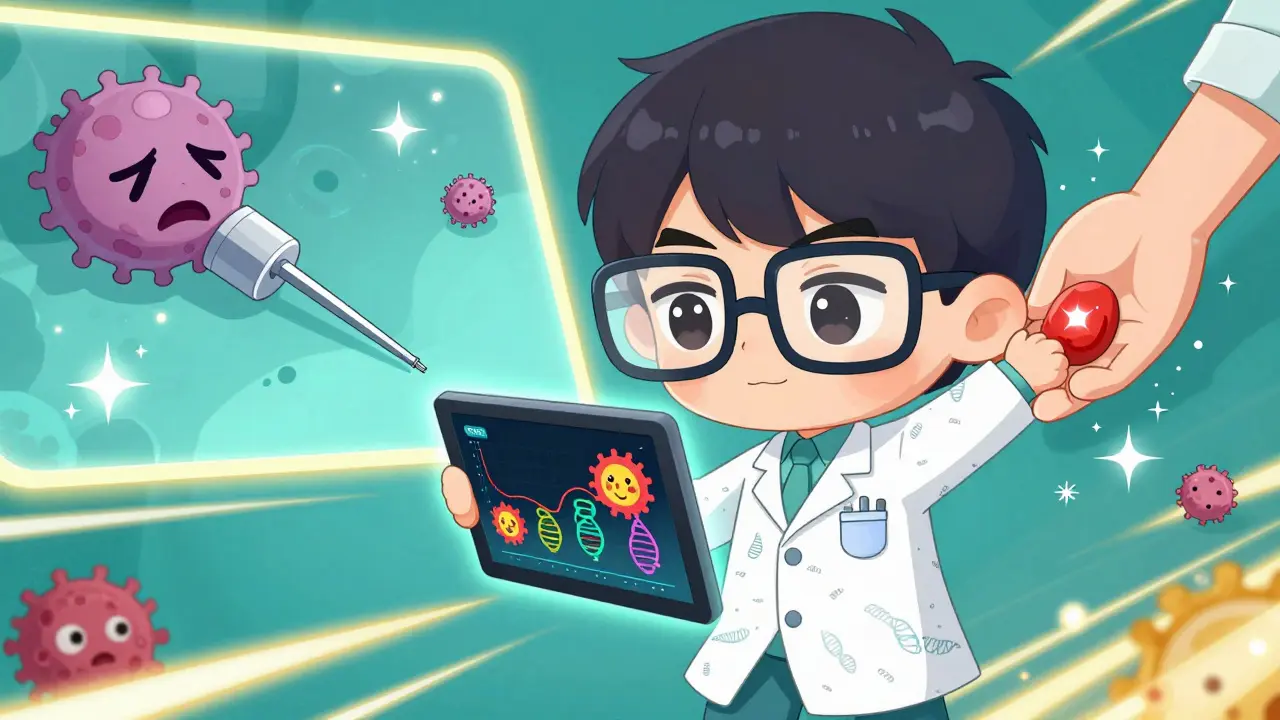
When cancer cells die, they break apart and spill bits of their DNA into the bloodstream. These fragments are called circulating tumor DNA, or ctDNA. Unlike healthy DNA floating around in your blood, ctDNA carries the exact genetic mutations that make a tumor grow and spread. Detecting these tiny signals-sometimes just one mutant molecule in a sea of 10,000 normal ones-is what makes liquid biopsy possible.
It’s not just DNA. Liquid biopsies can also catch tumor cells, RNA, and even platelets trained by cancer. But ctDNA is the star. It’s stable, abundant in many cancers, and changes fast. That means it doesn’t just tell you if cancer is there-it shows you how it’s evolving.
Why Liquid Biopsy Beats Traditional Biopsies
Traditional tissue biopsies are like taking a single photo of a painting. The tumor might be spreading in different directions, but you only see one spot. That’s why up to 30% of mutations get missed. Liquid biopsy, on the other hand, collects DNA from every part of the tumor. It’s a full-screen view.
Plus, it’s safer. A lung biopsy can cause a collapsed lung. A liver biopsy risks bleeding. Liquid biopsy? Just a needle in your arm. No hospital stay. No recovery time. Patients can get tested every few weeks, not once every few months.
For metastatic cancer patients, this is huge. When treatment stops working, you need to know fast. Waiting for a scan to show growth can mean months of ineffective therapy. ctDNA can spot resistance mutations up to six months earlier. That’s time you can use to switch drugs before the cancer gets worse.
How It Works: From Blood to Diagnosis
Here’s how it actually happens in a clinic:
- A blood sample is drawn-usually 10-20 milliliters.
- The plasma is separated from blood cells using centrifugation.
- ctDNA is extracted and analyzed using advanced tools like digital droplet PCR (ddPCR) or next-generation sequencing (NGS).
- Results are compared to the patient’s original tumor profile (if available) or looked for known cancer mutations.
Some tests are tumor-informed. That means they start with a tissue biopsy to map the tumor’s mutations, then design a custom blood test to track those exact changes. Others are tumor-agnostic-they scan for hundreds of cancer-related genes at once, useful when no tissue is available.
Advanced methods now look at more than just mutations. Fragment size-ctDNA is usually shorter than normal DNA. Methylation patterns-chemical tags that turn genes on or off-can signal cancer even before mutations appear. These extra layers boost detection rates by 20-30%.
Where It’s Making the Biggest Difference
Not all cancers shed ctDNA equally. Some give off plenty. Others barely whisper.
Best performers:
- Non-small cell lung cancer: ctDNA detects EGFR, ALK, and ROS1 mutations in 92% of cases where tissue is too small or damaged.
- Colorectal cancer: ctDNA levels rise and fall with tumor burden. Used to check for recurrence after surgery with 85-90% accuracy.
- Breast cancer: Helps spot ESR1 mutations that cause resistance to hormone therapy.
Weak performers:
- Brain tumors: The blood-brain barrier blocks most ctDNA from escaping.
- Prostate cancer: Often sheds very little DNA, making detection harder.
- Indolent lymphomas: Slow-growing tumors don’t kill many cells, so little DNA enters the blood.
For lung and colorectal cancer, liquid biopsy is now in official guidelines. The NCCN and ASCO both say it’s acceptable as a first-line test when tissue isn’t available.
Real-World Impact: What Doctors Are Seeing
At MD Anderson, about 40% of early-phase clinical trials now use ctDNA as a key measure. Oncologists report a 25-30% drop in repeat tissue biopsies. That’s fewer complications, lower costs, and happier patients.
One case: a 58-year-old woman with stage IV colon cancer. After six months of chemo, her CT scan showed no change. But her ctDNA levels dropped by 80%. Her doctor kept the treatment. Three months later, the scan confirmed shrinkage. She’s still in remission.
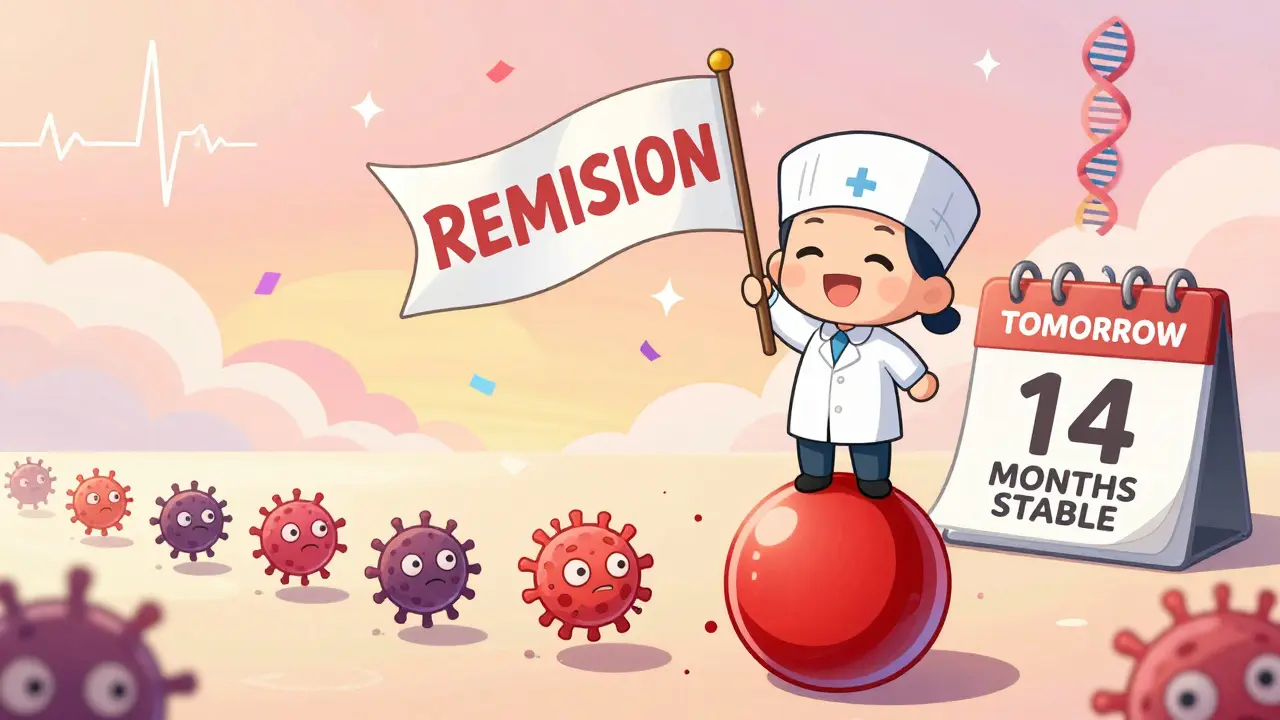
Another: a 62-year-old man with lung cancer. His ctDNA showed a new EGFR mutation-resistance to his current drug. He switched to osimertinib before his scan even showed progression. He’s been stable for 14 months.
And then there’s minimal residual disease (MRD). After surgery, ctDNA can detect leftover cancer cells with 85-90% sensitivity. In one study, patients with detectable ctDNA after surgery had a 90% chance of recurrence within two years. Those with undetectable ctDNA? Only 10%.
Challenges and Pitfalls
It’s not perfect.
Early-stage cancers (Stage I) only shed enough ctDNA for detection in 50-70% of cases. That’s why it’s not yet used for screening healthy people.
False positives happen. Age-related mutations in blood cells-called clonal hematopoiesis-can look like cancer. About 10-15% of people over 65 have these harmless mutations. Labs now use special filters to remove them, but it’s still a challenge.
And then there’s the “variant of unknown significance” (VUS). About 15-20% of reports show a mutation no one knows if it matters. That leaves doctors and patients in limbo.
Another issue: consistency. Different labs use different machines, reagents, and thresholds. In multicenter studies, up to 25% of results vary between labs. Standardization is the next big hurdle.
The Future: Where ctDNA Is Headed
The field is moving fast.
Multi-analyte tests-combining ctDNA, methylation, and fragment patterns-are already hitting 95% sensitivity in early trials. That could make liquid biopsy viable for screening high-risk groups: smokers, people with BRCA mutations, those with Lynch syndrome.
AI is being trained to read ctDNA fragmentation patterns. Early results show AI can spot cancer signals missed by traditional analysis, improving accuracy by 15-20%.
Costs are dropping. A ctDNA test that cost $5,000 in 2020 now runs under $1,000 in many centers. Insurance coverage is expanding. Medicare now covers ctDNA testing for advanced lung and colorectal cancer when tissue is insufficient.
By 2030, the global liquid biopsy market is expected to hit $19.5 billion. That’s not hype-it’s demand. More oncologists are asking for it. More patients are demanding it.
What This Means for Patients
If you’re living with cancer, liquid biopsy gives you more control. You don’t have to wait for a scan. You don’t have to endure another surgery. You get faster answers, more options, and a clearer picture of what’s working.
If you’ve finished treatment, it gives you peace of mind-or a heads-up. Detecting recurrence months earlier means you can act before it’s advanced.
And if you’re worried about cancer risk? It’s not ready for routine screening yet. But in five years, it might be.
This isn’t just a new test. It’s a shift in how we think about cancer. No longer a static disease you diagnose once and treat forever. Now it’s a living, changing system you monitor in real time. And ctDNA is the window into that system.
Can liquid biopsy replace tissue biopsy completely?
No, not yet. Tissue biopsy is still needed for initial diagnosis, especially for rare cancers or when the tumor type is unclear. Liquid biopsy works best after diagnosis, for monitoring. But in cases where tissue is too risky or unavailable, liquid biopsy can take over as the primary tool for guiding treatment.
How often should ctDNA be tested during treatment?
It depends on the cancer type and stage. During active treatment for metastatic disease, testing every 4-8 weeks is common. After treatment ends, surveillance tests are usually done every 3-6 months. Some centers test at every clinic visit for high-risk patients. The goal is to catch changes early without overtesting.
Is liquid biopsy covered by insurance?
Yes, for certain cancers. Medicare and most private insurers cover ctDNA testing for advanced non-small cell lung cancer and colorectal cancer when tissue biopsy isn’t possible. Coverage for other cancers or for monitoring is still growing. Always check with your provider and lab before testing.
Can liquid biopsy detect cancer before symptoms appear?
Not reliably yet. For early-stage cancers (Stage I), detection rates are only 50-70%. That’s not good enough for population-wide screening. But for high-risk groups-like people with inherited cancer syndromes or strong family history-clinical trials are showing promise. Wider use for early detection is expected within the next 5-7 years.
What’s the difference between ctDNA and CTCs?
ctDNA is fragmented DNA from dead cancer cells floating in the blood. CTCs are whole, living cancer cells that have broken off from the tumor. CTCs are rarer and harder to capture, but they can be grown in the lab to test drug sensitivity. ctDNA is more common and easier to analyze genetically. Most current tests focus on ctDNA because it’s more reliable and scalable.
Final Thoughts
Liquid biopsy isn’t magic. It’s science-advanced, precise, and still evolving. But it’s already changing lives. It’s turning cancer from a mystery into a measurable condition. No longer do patients have to guess whether treatment is working. They can see it, in real time, from a single blood draw.
The future of cancer care isn’t just about better drugs. It’s about better information. And ctDNA is giving us that information-faster, safer, and smarter than ever before.

This is literally life-changing. I watched my mom go through 3 biopsies in 6 months-each one scarier than the last. Now? Just a blood draw. I cried reading this. 🥹
In India we still wait 3 months for tissue reports and doctors act like its a miracle if you get results at all. This tech is for rich countries only
This is why America leads in medical innovation! No other country has the infrastructure, funding, or regulatory clarity to implement this at scale. The EU? Still stuck in analog paperwork. Pathetic.
Interesting, though the clinical utility remains overstated. The literature shows inconsistent sensitivity across platforms. A well-informed clinician would never rely solely on ctDNA.
This gives me so much hope. I’ve been in remission for two years, and knowing I can catch a return early-without another surgery-is everything. Thank you for sharing this.
The technical breakdown here is excellent. I particularly appreciate the distinction between tumor-informed and tumor-agnostic assays. The fragment size and methylation analysis points are underdiscussed in mainstream media.
This isn’t just a test-it’s a paradigm shift. Imagine cancer as a symphony you can tune in to in real time, not a silent bomb ticking away. The poetry of molecular surveillance is breathtaking. We’re witnessing the dawn of a new era.
Why do we waste money on this when our villages don’t have clean water? This is Western vanity. Save the rich. Let the poor die quietly.
It’s fascinating how we’ve moved from seeing cancer as a fixed enemy to something fluid, evolving, almost alive. We don’t fight it like a war anymore-we observe it like weather. And that changes everything about how we cope.
ctDNA detection limits are still ~0.01% VAF for most NGS panels, right? And ddPCR can go lower but lacks multiplexing. Also, clonal hematopoiesis of indeterminate potential (CHIP) is a massive confounder-especially in older pts. Labs need better bioinformatic filters.
This is exactly the kind of innovation that justifies investment in biomedical research. Every dollar spent here saves ten in long-term care. We need more of this-not less.
in india we dont even have basic cancer care but this tech sounds cool. maybe one day
I’m just glad we’re moving toward less invasive care. I know people who avoided checkups because they were terrified of biopsies. This could save lives just by getting more people tested.
I just wish this was cheaper and available everywhere. Not everyone can afford to live in a city with a top cancer center.
I just got my first ctDNA test back. Undetectable. After 18 months of chemo. I’m not celebrating yet… but I’m breathing easier tonight. Thank you for this post.