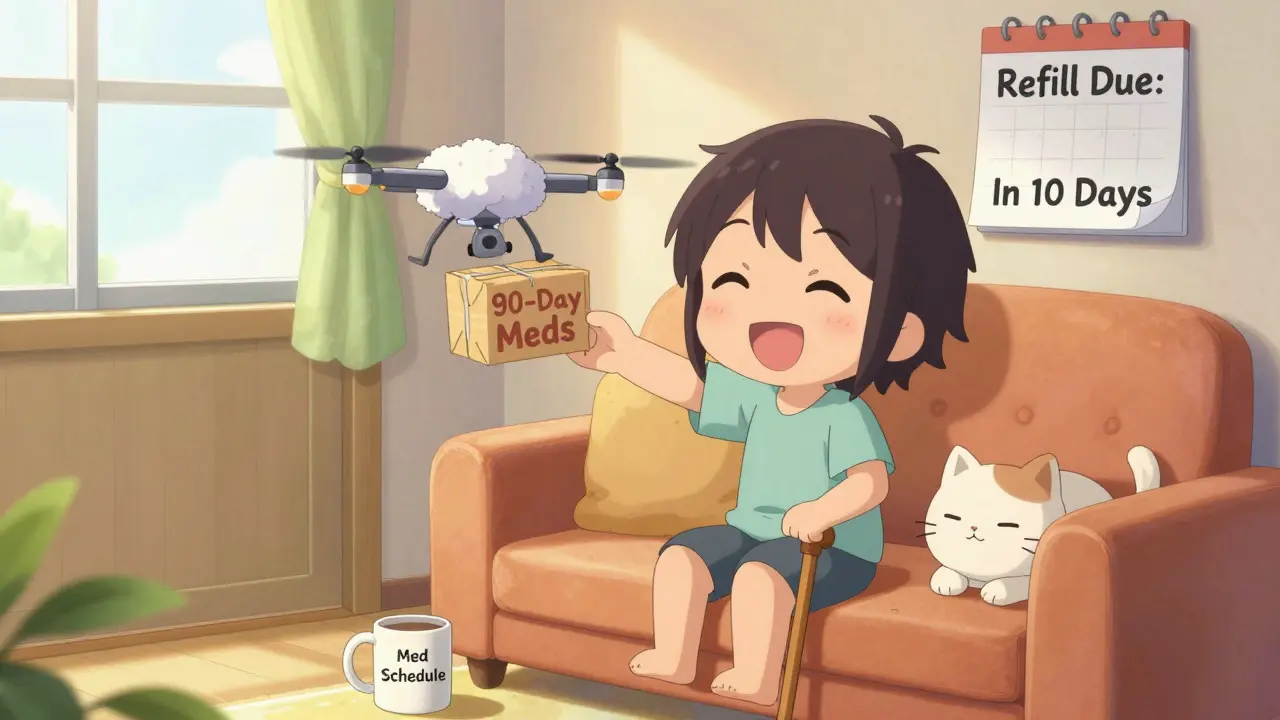
Getting your prescriptions filled shouldn’t feel like a chore. If you’ve ever rushed to the pharmacy after work, waited in line for 20 minutes, only to find out your medication isn’t ready yet-you know how frustrating it can be. For people managing long-term conditions like diabetes, high blood pressure, or cholesterol, this routine adds up. That’s where pharmacy delivery and mail-order pharmacy services come in. They’re not just convenient-they’re changing how people stick to their meds, and the data proves it.
Why Mail-Order Works Better for Chronic Medications
Most retail pharmacies give you a 30-day supply. That means you’re going back every month, sometimes more often if you miss a refill. But mail-order pharmacies typically offer 90-day supplies. Sounds simple? It’s one of the biggest reasons people stay on track. According to Blue Cross NC, patients using mail-order for chronic conditions have an 82% adherence rate. That’s compared to just 52% for those filling 30-day scripts at a local pharmacy. Why does this happen? It’s not magic. It’s structure. When you get three months of meds at once, you’re less likely to run out. No last-minute panic. No forgetting to refill. No driving across town when you’re tired or feeling off. For people with mobility issues, busy schedules, or those living in areas without easy pharmacy access-this is a game-changer. Nearly 30 million Americans live in what’s called a “pharmacy desert,” meaning they don’t have a pharmacy within a reasonable distance. Mail-order closes that gap.How Much Money Can You Save?
You don’t have to pay more to get better service. In fact, you usually pay less. A 90-day supply through mail-order often costs the same as two 30-day copays. That’s a 25-35% savings compared to buying the same amount in smaller batches. For someone taking a brand-name medication like a statin or insulin, that can mean $150-$300 saved per year. Most major health plans include mail-order as part of their pharmacy benefits-no extra cost. If you’re on Medicare, nearly half of beneficiaries already use it. Employers are catching on too: 85% of Fortune 500 companies now offer mail-order as a standard benefit. Even if you’re paying cash, many mail-order pharmacies offer prices lower than retail pharmacies. Patient Direct Pharmacy, for example, has seen 4.7 out of 5 stars from over 300 users, mainly because of consistent savings and fast delivery.How It Works: A Step-by-Step Guide
Getting started is easier than you think. Here’s how:- Check your insurance-Most plans cover mail-order at no extra charge. Look in your member portal or call the number on your card.
- Transfer your prescriptions-You can do this online, over the phone, or even ask your current pharmacy to send it over. It usually takes 3-5 business days.
- Set up your account-You’ll need to create a profile with your address, insurance info, and payment method. Some services let you link your pharmacy benefit manager (like Express Scripts or OptumRx) directly.
- Order your first 90-day supply-Most platforms let you order 24/7. You’ll get tracking info once it ships.
- Set up automatic refills-Turn on auto-renewal so you never have to remember. Most services send reminders 10-14 days before you run out.
Some services, like Birdi Pharmacy (used by the University of Michigan), even let you chat with a pharmacist online. That’s huge if you have questions about side effects or interactions.
What Medications Can You Get?
Not all prescriptions can be mailed. Controlled substances like opioids, stimulants (e.g., Adderall), and certain sedatives are excluded due to federal rules. These still need to be picked up in person. But for the vast majority of maintenance meds-blood pressure pills, thyroid medication, antidepressants, diabetes drugs, cholesterol-lowering agents-mail-order is perfect. Even temperature-sensitive biologics (like injectables for MS or rheumatoid arthritis) are shipped in insulated packaging with cold packs to stay stable during transit.Delivery and Reliability
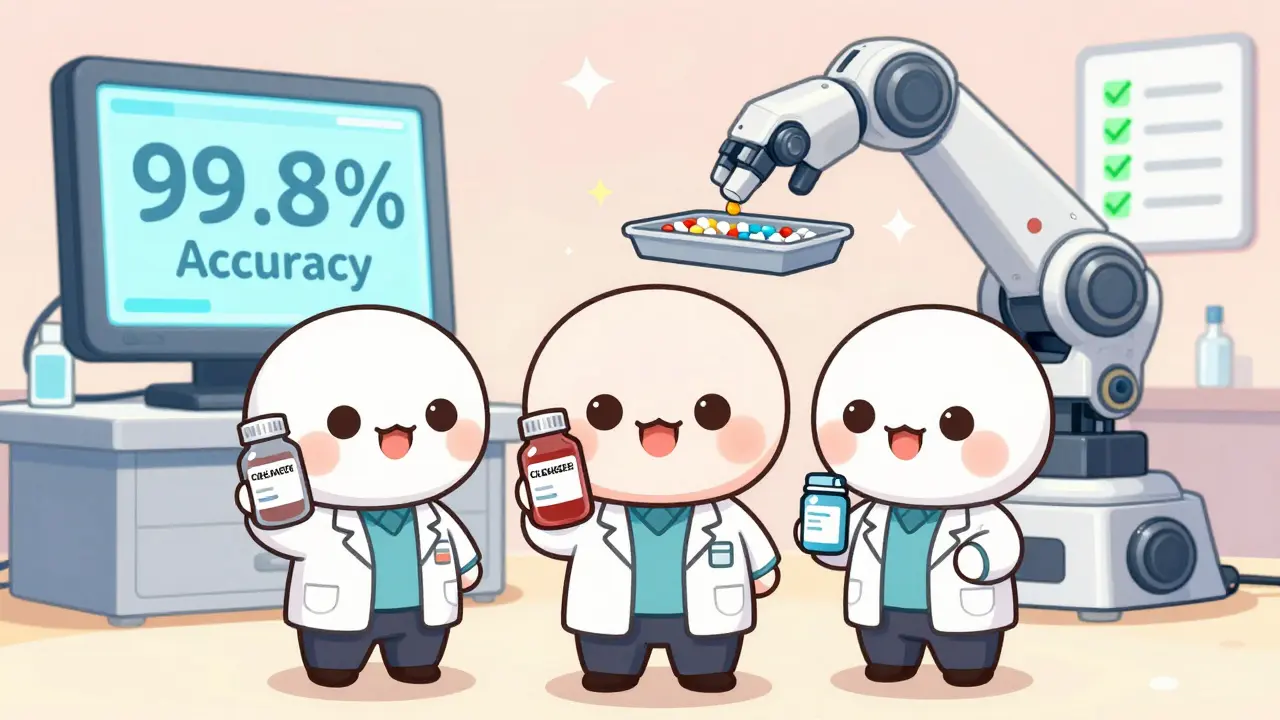
Standard delivery takes 3-5 business days. But if you need something sooner, some services like Patient Direct Pharmacy offer next-day delivery for urgent refills. That’s especially helpful if you’re traveling or just ran out early. Accuracy is another big win. Mail-order pharmacies use robotic dispensing systems and automated checks. According to PCMA, they’re 23 times more accurate than retail pharmacies. Fewer wrong doses. Fewer mix-ups. Fewer calls to your doctor. Still, things can go wrong. About 1.2% of shipments get lost or damaged. If that happens, most services will replace the meds at no cost and often send them again with expedited shipping. Users on forums like GoodRx report delays 8.3% of the time, so always order ahead. The golden rule? Order your refill at least 10 days before you run out.When to Stick With Your Local Pharmacy
Mail-order isn’t for everything. If you’re starting a new medication, especially antibiotics or something with tricky side effects, you’re better off seeing your local pharmacist. They can answer questions on the spot, check for interactions, and even give you a starter pack while you wait for your mail-order to arrive. Also, if you need a medication right away-like an asthma inhaler during a flare-up or a painkiller after surgery-don’t wait for a package. Retail pharmacies are still the best option for acute needs. A GoodRx survey found 87% of doctors recommend picking these up in person.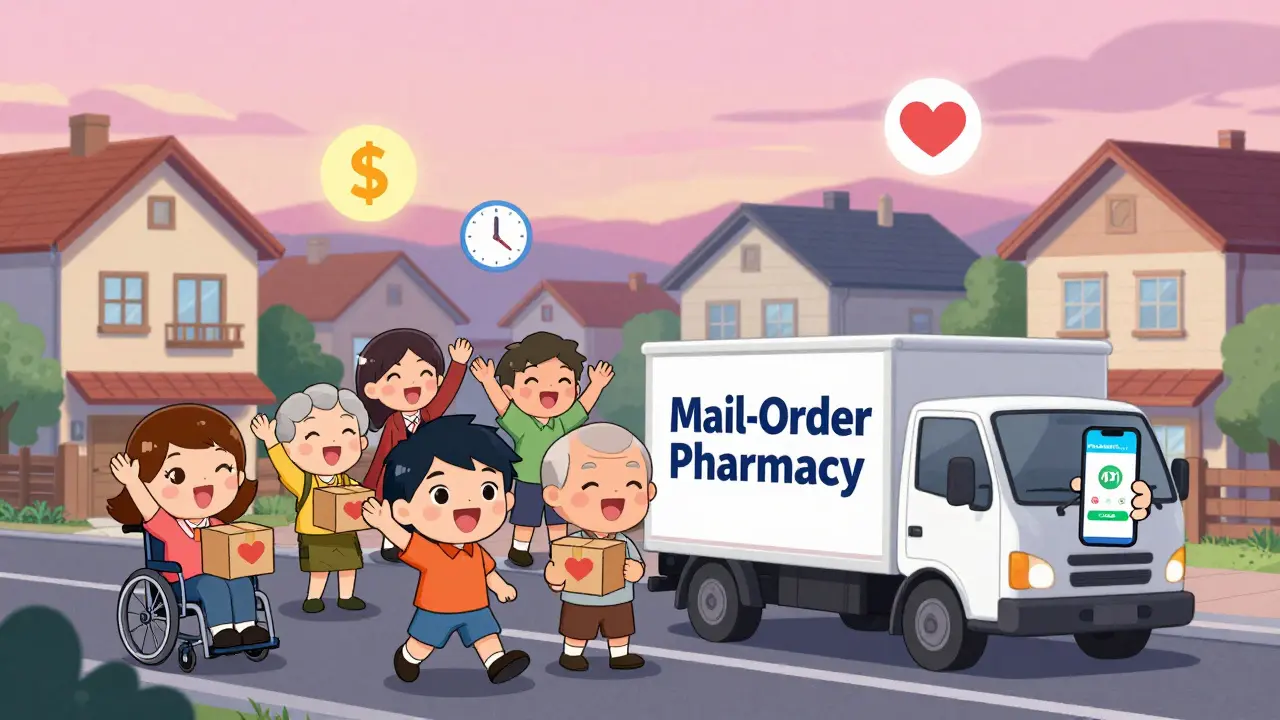
What Users Are Saying
Real people are already using this system-and they’re thankful. One Reddit user, u/ChronicWarrior2020, wrote: “As someone with mobility issues from MS, mail-order pharmacy has been life-changing. I get my 90-day supply of disease-modifying drugs delivered without struggling to get to the pharmacy.” Another user on Trustpilot said: “Next-day delivery saved me when my insurance changed. The pharmacist even called to make sure I got the right dose.” These aren’t isolated stories. The data backs them up: 97% of users say they save time using mail-order. And with AI tools now predicting when someone might miss a dose, companies like UnitedHealthcare are seeing a 17% drop in therapy gaps.What’s Next for Mail-Order Pharmacy?
The industry is growing fast. The U.S. mail-order market hit $102.7 billion in 2022 and is on track to hit $189.3 billion by 2028. More insurers are expanding coverage to include specialty drugs. Some are testing drone delivery in rural areas. Others are bundling mail-order with telehealth visits so you can get a prescription, counseling, and delivery all in one go. But the real win? Health outcomes. Better adherence means fewer hospital visits, fewer ER trips, and lower long-term costs. The PCMA estimates mail-order could save the U.S. healthcare system $23.5 billion over the next decade.Final Tips to Get the Most Out of It
- Always order refills at least 10 days before you run out.
- Use the automated refill system-it’s free and foolproof.
- Keep a list of all your meds and their dosages handy in case you need to call a pharmacist.
- Don’t use mail-order for antibiotics, painkillers, or new prescriptions-stick with your local pharmacy for those.
- Check if your plan offers a preferred mail-order provider. Switching can save you even more.
Pharmacy delivery isn’t about replacing your local pharmacist. It’s about giving you more control, more convenience, and better health outcomes. If you’re on long-term meds, it’s one of the easiest ways to make your treatment plan stick.
Can I use mail-order pharmacy if I’m on Medicare?
Yes. Nearly 42% of Medicare beneficiaries use mail-order pharmacies. Most Medicare Part D plans include mail-order as a standard benefit, often at lower copays than retail pharmacies. You can enroll through your plan’s website or by calling their pharmacy services line.
Are mail-order pharmacies safe and licensed?
Yes. All major mail-order pharmacies are licensed in multiple states and must follow strict federal and state regulations. They’re inspected regularly and must comply with HIPAA for privacy. Look for the VIPPS (Verified Internet Pharmacy Practice Sites) seal on their website-it’s a mark of legitimacy.
Can I get my controlled substances through mail-order?
No. Federal law prohibits mailing controlled substances like opioids, benzodiazepines, and stimulants (e.g., Adderall, oxycodone). These must be picked up in person at a licensed pharmacy. Some states allow exceptions for long-term pain management under strict conditions, but these are rare and require special paperwork.
What if my medication arrives damaged or wrong?
Contact the pharmacy immediately. Most offer free replacements and expedited shipping. You’ll usually need to return the damaged package, but they’ll cover the cost. Keep the packaging and any labels-it helps them investigate. Less than 1.2% of shipments have issues, and most are resolved within 24-48 hours.
Do I need insurance to use mail-order pharmacy?
No. While most people use insurance, you can also pay cash. Many mail-order pharmacies offer cash prices that are lower than retail pharmacies. Check their website for a price list or call their customer service. Services like Patient Direct Pharmacy and Birdi Pharmacy clearly list cash prices for common medications.
This is straight-up life-changing for anyone on chronic meds. I switched to mail-order last year and haven't had to leave the house for a prescription since. Best decision ever.
The statistical evidence presented here is not merely compelling-it is irrefutable. Mail-order pharmacy adherence rates, when contextualized within the broader framework of pharmacoeconomic modeling, demonstrate a statistically significant improvement in therapeutic compliance, particularly among populations with comorbidities. The 82% figure cited is not an outlier but a reflection of systemic behavioral reinforcement enabled by structural logistics. One must consider the opportunity cost of retail pharmacy visits-not merely in time, but in cognitive load, transportation expenditure, and emotional fatigue-all of which compound over time and disproportionately affect elderly and disabled populations. This is not convenience. This is public health optimization.
I find it amusing how Americans treat this like some revolutionary breakthrough. In Ireland, we’ve had postal pharmacy services since the 1980s. You’d think the US had invented the wheel.
I work with seniors who struggle with mobility, and this has been a game-changer. One woman told me she hadn’t missed a dose in three years since switching. That’s not just convenience-it’s dignity.
Let me tell you something. Most of these mail-order services are run by corporate behemoths that outsource everything to India. Your pills? Probably assembled by someone in a warehouse in Hyderabad with no oversight. And don’t get me started on how they track your data. You think your privacy matters? You’re just another data point in their AI-driven profit engine. The fact that you’re okay with this says more about your complacency than your health.
So you’re telling me I should trust some faceless company with my insulin instead of my local pharmacist who knows my name? Yeah right. You’re one bad shipment away from a hospital trip. This isn’t innovation-it’s negligence dressed up as convenience.
They say 23x more accurate but what about the 1.2% that go wrong? That’s 1 in 83 people getting the wrong meds. Thats 12000 people a day in the US alone. And you call this safe? The system is built on probability not care
Look, the ROI on mail-order is undeniable from a systems perspective. You’re reducing non-adherence-induced hospitalizations, which are among the top 5 avoidable cost drivers in the US healthcare ecosystem. The PCMA’s $23.5B projection? That’s conservative. The real value is in the reduction of downstream care events-ER visits, readmissions, ICU admissions-all of which are exponentially more expensive than the marginal cost of shipping. This isn’t just logistics. It’s predictive health economics.
I’m from Nigeria and we don’t have this here. My sister had to walk 12km to get her blood pressure meds last month. I’m so glad people in the US have access to this. It’s not just about saving time-it’s about saving lives.
I switched and OMG it’s like magic 🥹📦 I get my pills and sometimes they even throw in a free snack. I’m not crying you’re crying
If you’re on long-term meds and not using mail-order, you’re making things harder than they need to be. It’s free, it’s reliable, and it gives you back hours every month. Stop overthinking it. Just do it.
The notion that mail-order pharmacy is somehow antithetical to personal care is a mischaracterization. The human element persists-pharmacists remain accessible via telehealth, refill protocols are automated to ensure continuity, and clinical oversight is institutionalized. The reduction in human error, the standardization of dosing, and the elimination of logistical friction are not dehumanizing-they are elevating. To cling to the ritual of the 30-day trip is to romanticize inefficiency.
I hate to say it but I’m so mad. My dad died because he missed a dose. He was too proud to use mail-order. I wish someone had told him this sooner.