Generic drugs make up 90% of all prescriptions filled in the U.S., yet they account for just 10% of total drug spending. That’s not a typo. The math is simple: more pills, less money. But behind that number is a broken system. Manufacturers are losing money on the very drugs that keep healthcare affordable. In 2025, Teva posted a negative profit margin of -4.6%. Meanwhile, smaller players like Viatris are barely scraping by with 4.3%. How is this possible? And more importantly-how are these companies still in business?
The Commodity Trap
The easiest path into generic manufacturing used to be simple: copy a drug, get FDA approval, sell it cheap. That model worked for decades. But now, dozens of companies are making the same pill. The result? A race to the bottom. A single tablet of metformin, used by millions with type 2 diabetes, can cost as little as 2 cents per dose. Some manufacturers sell it for less than production cost just to stay in the game. Gross margins have dropped from 50-60% in the 2000s to under 30% today. When every competitor is undercutting you, there’s no room for innovation, R&D, or even reliable supply chains.It’s not just about price. It’s about volume. A generic manufacturer might produce 500 million tablets of a single drug, but if each one earns 1 cent in profit, that’s only $5 million. Meanwhile, the FDA approval cost for one drug (an ANDA) averages $2.6 million. Add in a $100 million cGMP-compliant factory, raw material swings, and supply chain delays, and you’re staring at a loss before you even ship the first box.
That’s why 65% of new entrants focused on commodity generics fail within two years. They don’t run out of money-they run out of time. Getting a drug approved takes 18-24 months. By then, five other companies have already flooded the market. There’s no first-mover advantage. Only a first-mover penalty.
The Shift to Complex Generics
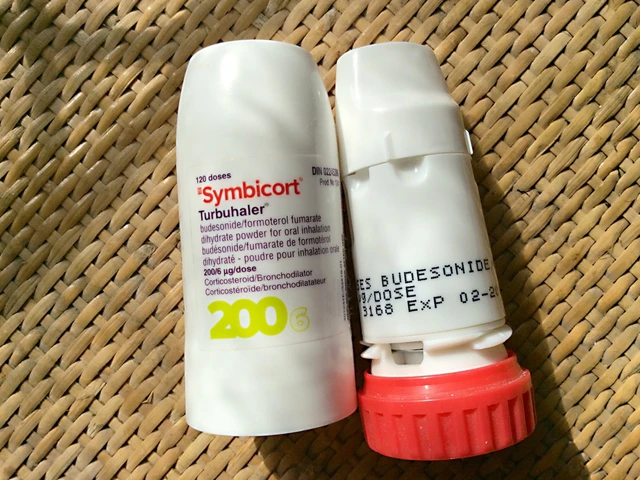
The smart players aren’t competing on price anymore. They’re competing on complexity. Think of it like this: anyone can make a simple tablet. But making a long-acting injectable that delivers a drug over 30 days? Or a patch that releases medication through the skin at a steady rate? That’s hard. And not everyone can do it.These are called complex generics. They include inhalers, injectables, topical creams, and combination products. The barriers to entry? High. The profit margins? Often 40-60%. Teva’s turnaround started here. In 2024, they poured $998 million into R&D-not for new brand drugs, but for complex generics like Austedo XR for movement disorders and lenalidomide for multiple myeloma. These aren’t just copies. They’re reformulations with clinical advantages. And because fewer manufacturers can produce them, pricing pressure eases.
Viatris took a different route. Instead of building complexity, they sold off their least profitable divisions: their OTC brand, their active ingredient business, even their biosimilars unit. They kept only what worked: high-volume, high-margin generics with stable demand. It’s not glamorous, but it’s sustainable. Their 2024 revenue grew 2% after shedding $3 billion in non-core assets. Sometimes, less really is more.
The Rise of Contract Manufacturing
Another path out of the profit squeeze? Don’t make your own drugs. Make them for others.Contract manufacturing organizations (CMOs) are booming. The global market for generic drug contract manufacturing is projected to grow from $56.5 billion in 2025 to $90.9 billion by 2030. Why? Because big pharma companies don’t want to run factories anymore. They want to focus on R&D and sales. So they outsource production to specialists.
Companies like Egis Pharmaceuticals launched Egis Pharma Services in late 2023 specifically to serve this demand. They don’t sell branded drugs. They don’t compete with their clients. They just make APIs and finished products to exact specs. It’s a low-risk, high-margin model. No ANDA costs. No formulary battles. No price wars. Just steady contracts with predictable volumes.
For a generic manufacturer stuck in the commodity trap, this is a lifeline. You keep your factory running. You keep your team employed. You avoid the chaos of selling directly to PBMs and pharmacies. And you get paid reliably-often with multi-year agreements.
Why the U.S. Market Is Broken
The U.S. isn’t just competitive-it’s structurally broken. Pharmacy Benefit Managers (PBMs) control 80% of drug purchasing. They negotiate rebates, not prices. And they reward volume over value. The lowest bidder wins the contract-even if that bidder is losing money. That’s why you see drug shortages for essential medicines like insulin or antibiotics. No one wants to make them because they can’t profit.Drug manufacturers don’t set the final price. PBMs do. And they take a cut. The manufacturer gets paid a fraction. The rest goes to middlemen. The FDA estimates generics saved $408 billion in 2022. But who paid the price? The companies making the drugs.
Meanwhile, “pay-for-delay” deals still happen. Brand-name companies pay generic makers to delay launching cheaper versions. The Actuarial Research Corporation estimates banning these deals would save $45 billion over 10 years. But they’re still legal. And they keep margins squeezed.
Global Differences Matter
The U.S. isn’t the whole world. In Europe, pricing is regulated. Governments set reimbursement rates. Manufacturers get predictable returns. In India and China, lower labor and production costs allow for higher margins even on simple generics. Emerging markets like Brazil and Indonesia are seeing rapid growth in generic demand-but they come with currency risks, regulatory delays, and corruption.That’s why the global generics market is projected to hit $600 billion by 2033. But the U.S. market? It’s expected to keep shrinking. The future isn’t in selling 10-cent pills to American pharmacies. It’s in exporting complex generics to Asia, supplying CMO contracts to European brands, or developing novel delivery systems that no one else can replicate.
The Path Forward
There’s no single fix. But there are clear patterns among survivors:- Move away from commodity generics unless you have massive scale and low-cost production.
- Invest in complex generics with technical barriers-injectables, patches, inhalers.
- Consider contract manufacturing as a stable revenue stream.
- Divest non-core assets. Focus on what you do best.
- Build relationships with international buyers. Don’t rely on U.S. PBMs alone.
Some manufacturers are betting on biosimilars-generic versions of biologic drugs. But those require even more R&D and regulatory expertise. It’s a high-stakes game.
The bottom line? Generic drug manufacturing isn’t dying. It’s evolving. The companies that survive won’t be the ones making the cheapest pills. They’ll be the ones making the hardest ones-or making them for others.
Why are generic drug manufacturers losing money despite high demand?
Demand is high, but so is competition. Thousands of companies produce the same simple generic drugs, forcing prices down to unsustainable levels. Manufacturing costs-FDA approval, cGMP compliance, raw materials-haven’t dropped, but selling prices have. Many manufacturers sell below cost just to stay in the market, leading to negative margins. The U.S. pharmacy benefit manager (PBM) system rewards the lowest bid, not quality or reliability, which worsens the problem.
What’s the difference between commodity and complex generics?
Commodity generics are simple, off-patent pills like metformin or atorvastatin that hundreds of companies make. They have low technical barriers and razor-thin margins. Complex generics include injectables, inhalers, topical gels, or combination products that are harder to formulate or manufacture. They require specialized equipment, deeper regulatory knowledge, and more R&D. Fewer companies can make them, so competition is lower-and profit margins are higher, often 40-60%.
How do contract manufacturing organizations (CMOs) make money?
CMOs don’t sell their own drugs. They manufacture drugs for other companies-brand-name pharma, generic makers, or biotech startups. They charge fees for production, packaging, and quality control. Their clients handle sales, marketing, and regulatory filings. This removes the risk of price competition and FDA approval costs. CMOs earn steady, long-term contracts with predictable volumes, making their business model more stable than traditional generic manufacturing.
Why are drug shortages happening with generic medicines?
When a generic drug’s price drops below the cost to produce it, manufacturers stop making it. This is especially common for low-margin drugs like antibiotics or older heart medications. With no profit incentive, companies shut down production lines. The FDA has identified over 100 drugs in chronic shortage since 2020. Experts like Dr. Aaron Kesselheim call this a market failure: society needs the drug, but no one can profitably supply it.
Is the generic drug industry sustainable in the long term?
Yes-but only if companies stop competing on price and start competing on complexity, efficiency, and global reach. The future belongs to those making complex generics, providing contract manufacturing services, or targeting emerging markets. Traditional commodity generics will keep shrinking in the U.S. But globally, demand is rising due to aging populations and expanding healthcare access. Sustainability depends on innovation, not volume.
What role do patent expirations play in generic drug profitability?
Patent expirations are the lifeblood of the generic industry. Every time a brand-name drug loses patent protection, dozens of generic manufacturers rush in to copy it. Between 2025 and 2033, over 50 blockbuster drugs will expire, including major ones in diabetes, heart disease, and cancer. This creates massive opportunities-but only for companies ready to move fast. Those still stuck in commodity generics will face the same price wars. The winners will be those targeting complex versions or partnering with brand companies for authorized generics.
What Comes Next?
The next five years will separate the survivors from the casualties. Companies clinging to the old model of making 10-cent pills will disappear. Those investing in complex formulations, global supply chains, and contract manufacturing will thrive. The U.S. may keep losing ground, but the rest of the world won’t. India, China, and Eastern Europe are building world-class manufacturing capacity. If you want to make generic drugs profitably, you can’t just serve American pharmacies anymore. You need to think globally, specialize deeply, and stop playing the price game.The system isn’t fair. But it’s not broken beyond repair. The tools to fix it already exist. It just takes courage to walk away from the lowest bid-and build something better instead.

Let me tell you-this isn’t just a business problem, it’s a moral failure. We’re letting people die because a PBM got greedy and picked the cheapest pill, even if it’s made in a factory with rats running through the pipes. And yet, we call this ‘free market’? Nah. It’s a rigged game where the only winners are the middlemen who never touch a single tablet.
Commodity generics are dead. The math is brutal: ANDA cost = $2.6M, revenue per drug = $5M at 1 cent profit/unit. That’s a 52% loss on capital deployment before you even factor in labor or logistics. The only rational strategy is vertical integration into complex delivery systems-injectables, transdermal patches, or even nasal sprays with proprietary polymers. Anything else is just gambling with shareholder capital.
It’s fascinating, isn’t it? The same market that celebrates innovation in biologics simultaneously crushes the very infrastructure that makes affordable medicine possible. One could argue that the U.S. healthcare system has engineered a paradox: it demands low-cost drugs while punishing those who deliver them. The irony is not lost on those of us who work in supply chain logistics-every time a plant shuts down, we lose resilience, not just revenue.
Let’s be real-this whole system is a CIA-PBM-pharma cabal. Why do you think every generic maker in the U.S. is bleeding out? Because they’re being deliberately starved to force consolidation. Then, when only three players are left, they’ll raise prices under the guise of ‘innovation.’ It’s not capitalism. It’s a planned collapse. And India? They’re just the new factory floor for the global oligopoly. Wake up.
Wait-so you’re telling me someone made a 2-cent pill that saves diabetics’ lives… and they’re going bankrupt? That’s not capitalism. That’s a soap opera written by Dickens and directed by the FDA. Someone needs to sue these PBMs. Like, NOW. I’m crying into my oat milk latte.
I’ve worked in three different generic plants. The real issue isn’t price-it’s volume volatility. You get a big PBM contract, ramp up to 500M tablets, hire 200 people, then six months later they switch to the next lowbidding vendor. No loyalty. No warning. Just a spreadsheet change. CMOs? They’re the only ones with stable cash flow. Smart move.
Hey, if you’re still trying to compete on price, you’re already behind. Look at Egis-they didn’t try to outdo Teva on metformin. They built a reputation for flawless API production and now they’re locked into 5-year contracts with European pharma giants. No bidding wars. No FDA lottery. Just steady work. Sometimes the best move is to stop fighting the tide and build your own boat.
Respectfully, the global perspective is often overlooked. In India, labor is cheaper, but regulatory compliance is a labyrinth. In China, scale is king, but IP theft remains a risk. In the EU, margins are lower, but predictability is high. The real winners will be those who blend agility with compliance-operating in multiple jurisdictions, not just chasing the next U.S. rebate. Sustainability isn’t about one market-it’s about a portfolio of strategies.
What if the problem isn’t the manufacturers? What if it’s the assumption that medicine should be a commodity at all? We treat insulin like toilet paper-cheap, replaceable, disposable. But it’s not. It’s life. Maybe the real innovation isn’t in the pill-but in how we value it.
This is why I believe in the future of complex generics. It’s not glamorous, but it’s real. Building a long-acting injectable that lasts 30 days? That’s science. That’s engineering. That’s worth something. And if you can do it, you don’t need to beg PBMs for scraps-you get to set the terms. The future belongs to those who make hard things, not cheap ones.