
When a patient gets a biosimilar instead of the original biologic drug, they’re not getting a copy like a generic pill. Biosimilars are made from living cells-complex, delicate, and hard to replicate exactly. That’s why safety monitoring for them isn’t just a formality. It’s a critical, ongoing system designed to catch subtle differences that could affect patient health. Unlike generics, which are chemically identical to their brand-name counterparts, biosimilars can vary slightly in structure, which might lead to different immune responses. And those differences? They don’t show up in clinical trials. They only appear once thousands of real patients start using the drug. That’s where adverse event monitoring comes in.
Why Biosimilars Need Special Safety Tracking
Think of a biologic drug like a handmade silk scarf. Even if two scarves look identical, the weave, dye batch, or thread source might differ slightly. A biosimilar is like that second scarf. It’s close enough to work the same way, but tiny variations can trigger unexpected reactions in some people-especially immune responses like antibody formation. These reactions can reduce effectiveness or cause serious side effects like infusion reactions, autoimmune disorders, or even anaphylaxis.
The FDA and EMA both require biosimilars to prove they’re "highly similar" to the reference product with no clinically meaningful differences. But "no meaningful difference" doesn’t mean "identical." That’s why regulators treat biosimilars differently from generics. Generics go through bioequivalence studies and are considered interchangeable by default. Biosimilars? They need years of post-market surveillance just to confirm safety.
Immunogenicity is the biggest red flag. A patient might respond fine to the reference drug but develop antibodies after switching to a biosimilar. Or vice versa. Without a way to track exactly which product a patient received, you can’t tell if a reaction came from the biosimilar or the original. That’s why traceability isn’t optional-it’s the backbone of safety.
How Adverse Events Are Collected and Tracked
There are two main ways adverse events are caught: spontaneous reporting and active surveillance.
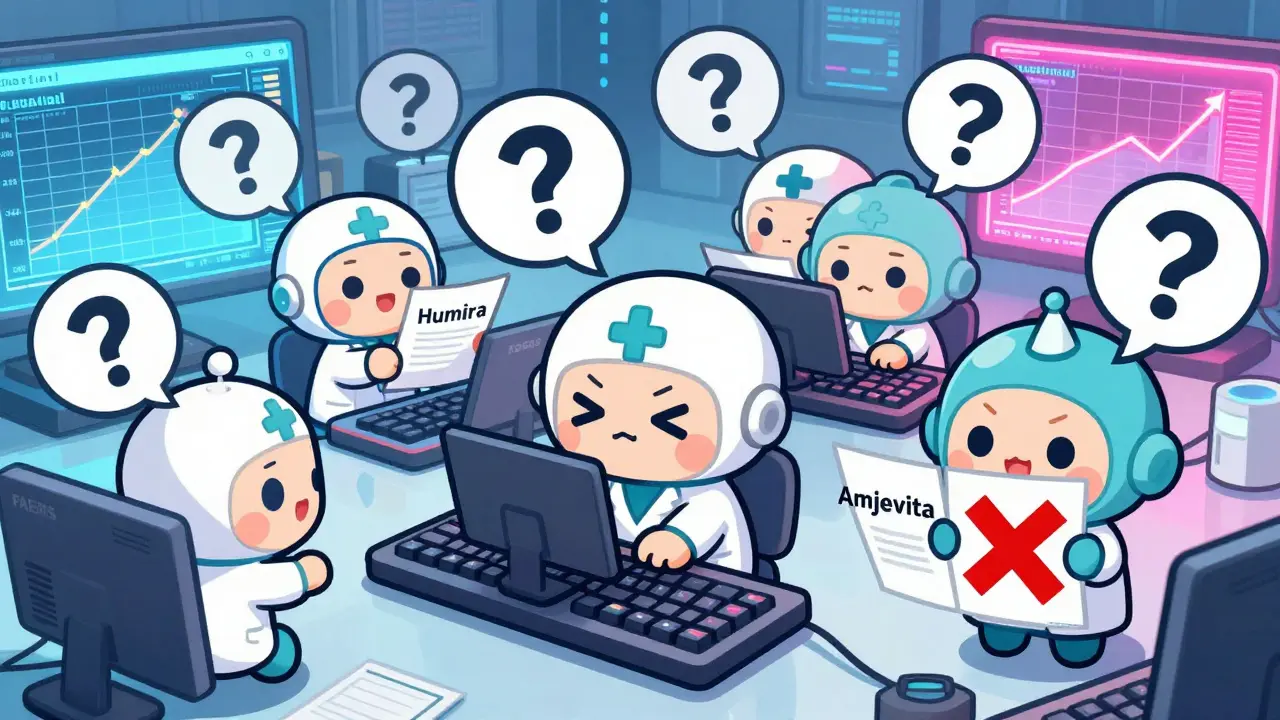
Spontaneous reporting is what happens when a doctor, pharmacist, or patient reports a side effect to a national database. In the U.S., that’s the FDA’s FAERS system. In Europe, it’s EudraVigilance. These systems rely on people to notice and report problems. But here’s the problem: most reports still use brand names. A 2022 Health Canada report showed 87.3% of biologic adverse event reports were submitted using the reference product’s brand name-not the biosimilar’s. That means if a patient has a reaction after taking Amjevita (the biosimilar version of Humira), but the doctor writes "Humira" on the form, the system can’t tell which one caused it.
Active surveillance is the smarter, more proactive approach. Systems like the FDA’s Sentinel Initiative pull data from millions of electronic health records and insurance claims. Instead of waiting for someone to report a problem, these systems scan for patterns-like a spike in hospital visits for joint pain after a certain biosimilar was prescribed. This method can catch rare side effects that spontaneous reporting misses. For example, if 50 patients across five states develop a rare skin rash within 30 days of starting a new biosimilar, Sentinel can flag that before anyone even files a formal report.
The Naming Problem: Why Letters at the End Matter
In 2017, the FDA introduced a rule: every biosimilar must have a unique four-letter suffix. So instead of just "adalimumab," you get "adalimumab-abda" or "adalimumab-atto." The idea was to make it easier to track which product caused a reaction.
But in practice, it hasn’t worked as well as hoped. A 2022 survey of 1,247 U.S. physicians found that 63.4% were confused about which name to use when documenting adverse events. Oncologists and hematologists-who often treat patients with multiple biosimilars-had the highest confusion rates, at 81.7%. Why? Because many pharmacists still substitute biosimilars without telling the prescriber or patient. And patients? Most don’t know the difference.
Health Canada took a different approach. Instead of relying on suffixes, they require pharmacists to document the exact brand name and manufacturer in all reports. That’s why Canada’s reporting accuracy for biosimilars is higher. In Spain, after electronic health records started requiring mandatory biosimilar identification in 2020, reporting accuracy jumped from 58% to 92%.
Here’s the bottom line: if you can’t tell which product a patient took, you can’t tell if a side effect came from the biosimilar or the reference drug. And that’s a major gap in safety.
What Happens When a Safety Signal Is Found
When a potential safety issue pops up-say, a cluster of severe allergic reactions linked to a specific biosimilar batch-the system kicks into gear. The manufacturer must investigate. They check lot numbers, review patient records, and analyze whether the reaction is tied to a specific manufacturing change or storage condition.
Regulators then decide what to do. Options include:
- Adding a new warning to the drug label
- Issuing a safety alert to healthcare providers
- Requiring a Risk Management Plan (RMP) with extra monitoring
- Withdrawing the product from the market
For example, in 2021, a biosimilar for rheumatoid arthritis showed a slight increase in injection-site reactions. The manufacturer updated its RMP to include mandatory patient education on proper injection technique. Within six months, the reaction rate dropped by 40%.
But here’s the catch: most biosimilars are monitored under the same RMP as their reference product. That means if the original drug has a warning for lupus-like syndrome, the biosimilar inherits it-even if there’s no evidence the biosimilar causes it. This can create unnecessary fear and reduce prescribing.
Real-World Data Shows Biosimilars Are Safe-Mostly
Despite the complexity, the data is reassuring. A 2016 Danish study analyzed over 10,000 patients using biosimilars and found no difference in safety compared to the original biologics. The same was true for epoetin, somatropin, and filgrastim biosimilars in the U.S. and Europe.
But numbers can be misleading. In 2021, IQVIA found that biosimilars made up 8.7% of biologic prescriptions in the U.S., yet only 0.3% of adverse event reports were linked to them. That suggests underreporting. Why? Because patients don’t know what they’re taking. Doctors don’t always document it correctly. Pharmacies don’t always track substitutions.
A 2022 Arthritis Foundation survey found that 41.2% of patients on biosimilars couldn’t say whether they received the reference product or the biosimilar. That’s not just a data problem-it’s a patient safety problem.
What’s Changing in 2025 and Beyond
Regulators are waking up. On January 1, 2023, Health Canada made it mandatory to include the manufacturer’s name in every adverse event report. Non-compliance can cost up to $500,000. The FDA is moving in the same direction with its 2023 draft guidance on interchangeable biosimilars, requiring post-market studies to track what happens when patients switch between products.
Technology is helping too. The EMA launched VigiLyze in 2022-an AI tool that scans 1.2 million new safety reports every year and flags potential signals with 92.4% accuracy. Some companies are now using natural language processing to pull safety data from doctors’ handwritten notes in electronic records. It’s expensive-$250,000 to $500,000 for mid-sized firms-but it’s necessary.
The World Health Organization is pushing for a global unique identifier system for biologics by 2026-like a barcode on every vial that tracks the lot, manufacturer, and patient. Early pilots in Switzerland show this could cut attribution errors by 73.5%.
But the biggest challenge isn’t technology. It’s culture. Until healthcare providers, pharmacists, and patients understand that biosimilars aren’t generics, and until systems are built to track them properly, safety monitoring will always be playing catch-up.
What Patients and Providers Should Do Now
If you’re a patient taking a biosimilar:
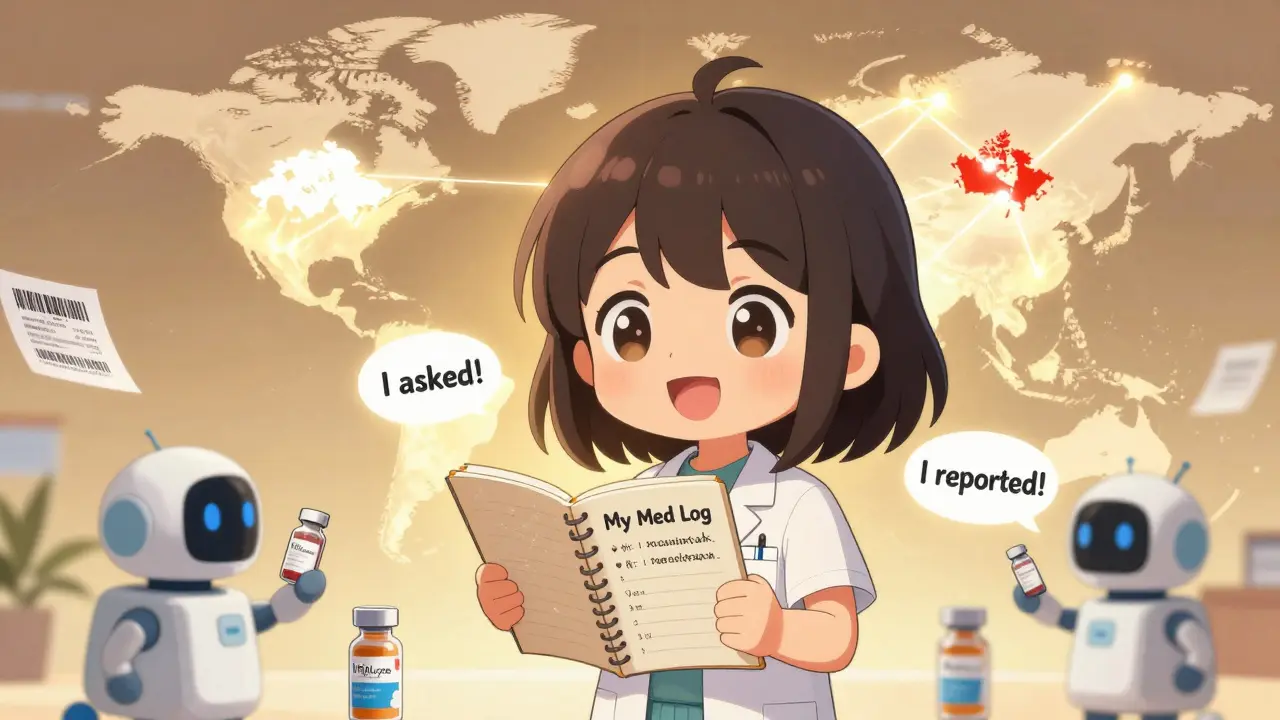
- Ask your pharmacist: "Which exact product am I getting?"
- Write down the name and manufacturer on your medication log.
- If you have a reaction, report it-and be specific about the product name.
If you’re a provider:
- Always prescribe by brand name, not just the generic name.
- Document the manufacturer and lot number in the chart.
- Ask patients if they’ve had any new symptoms since their last refill.
- Push for EHR systems that capture biosimilar details automatically.
It’s not complicated. It just takes attention to detail. And in biosimilar safety, attention to detail saves lives.

Wow, this is such an important topic-and honestly, I didn’t realize how much nuance goes into biosimilar safety. It’s not just about cost savings; it’s about real people’s immune systems reacting in ways we can’t fully predict. Thanks for laying this out so clearly.
Given the structural heterogeneity inherent in biosimilar manufacturing processes, the absence of standardized, granular pharmacovigilance protocols constitutes a systemic vulnerability in post-marketing surveillance-particularly when non-unique nomenclature is employed, as evidenced by the FAERS data cited herein.
Let’s be honest: the FDA’s four-letter suffixes are a joke. If your pharmacists can’t even spell the damn names correctly, how are you expecting accurate reporting? This isn’t rocket science-it’s basic documentation. India’s system is better because we don’t rely on gimmicks-we enforce accountability.
I’ve seen this play out in my clinic. Patients get switched without knowing and then come back with weird rashes. We don’t even know if it’s the drug or the new batch. We need better tools. Simple. No jargon. Just track what’s given. It’s not that hard.
People treat biosimilars like they’re just cheaper versions of the same thing but they’re not. It’s like saying two snowflakes are identical because they’re both white. The universe doesn’t work that way. We’re playing God with biology and pretending we can control it with barcodes.
Canada’s approach-mandating manufacturer names in reports-is the gold standard. Why hasn’t the U.S. adopted it? It’s not about cost; it’s about inertia. We’re clinging to outdated systems while patients risk unknown reactions. This is a policy failure, not a technical one.
Wait-so if a patient gets a biosimilar and has a reaction, but the doctor writes the brand name, the system can’t trace it? That’s insane. How many people have been misdiagnosed because of this? I need to check what I’m on right now.
biologics are like love. you can copy the feeling but not the soul. biosimilars? they look the same but your body might feel the difference. and no one tells you. that’s scary.
I switched to a biosimilar last year and had zero issues-but I had no idea which one I was getting until I asked my pharmacist. Why isn’t this info on the bottle? Why aren’t we taught this in med school? This needs to be easier.
THEY’RE LYING TO US. THEY SAY BIOSIMILARS ARE SAFE BUT THEY DON’T EVEN KNOW WHICH DRUG YOU GOT. WHAT KIND OF HEALTHCARE IS THIS? I’M NOT A LAB RAT. MY BODY ISN’T A DATA POINT.
I’ve been on a biosimilar for 3 years. I never knew there was a difference until I read this. Now I write down the name every time I refill. I wish I’d known sooner. This should be mandatory info at the pharmacy.
This is so important 😔 I had no idea! I’m telling my rheumatologist tomorrow. And I’m starting a log. 📓💉 #BiosimilarSafety #KnowYourMeds
Let’s not romanticize this. The system is broken. We’re using a 1980s reporting model for 2025 biologics. The lack of traceability isn’t an oversight-it’s negligence. And no, emoticons won’t fix it.
The Americans are too reliant on technology. In the UK, we’ve always had clear prescribing standards. We don’t need AI or barcodes-we need discipline. If doctors wrote down the exact product, we wouldn’t be having this conversation.
It’s not just about tracking-it’s about power. Pharma companies don’t want you to know which biosimilar you’re on. It’s a profit play. They profit from confusion. They profit from patients who can’t prove which drug caused the reaction. This is corporate malpractice disguised as innovation.